Category Archives: Science & Technology

The tale of an unsung doctor

Ratnam Pillai
Ratnam Pillai

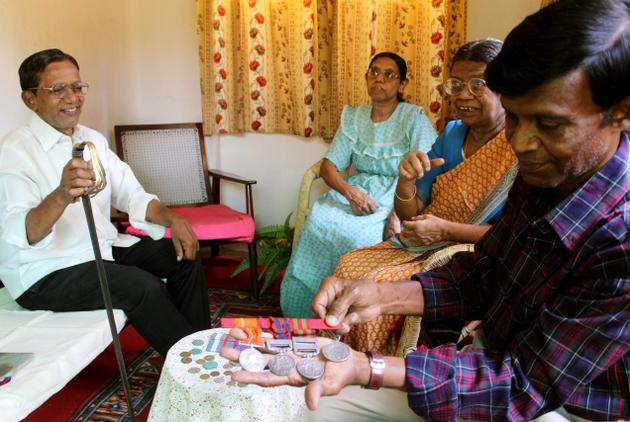
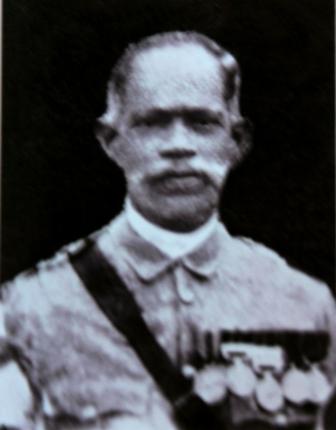
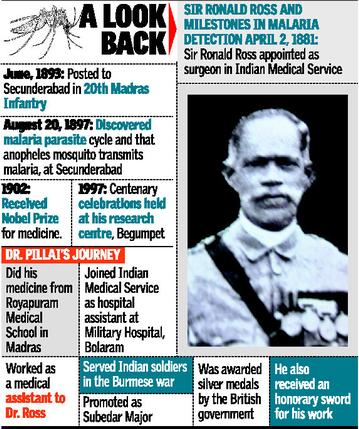
Ratnam Pillai, a Hyderabad-based doctor, worked as medical assistant to Sir Ronald Ross who linked mosquito bite to malaria in 1897. The proud possession for the four grandchildren of Dr. Pillai – Shela, Shirley, Franklin and Samuel – are the medals.

The whole world remembers the contribution of Sir Ronald Ross, the doctor who linked mosquito bite to malaria on August 20, 1897 and won a Nobel Prize for the discovery. A very few, however, know that there was a Hyderabad-based doctor, Ratnam Pillai, who was a medical assistant to Dr. Ross at the military hospital for Indian soldiers in Begumpet during the epochal discovery.

While the contribution of Dr. Pillai was largely left unsung, his grandchildren still cherish his priceless memorabilia, which they could salvage from getting lost in time. Staying in a modest house in West Marredpally, Secunderabad, Dr. Pillai’s grandchildren have been fighting for due recognition to their grandfather’s work for quite some time.

“He did his medicine from Royapuram Medical School in Madras and joined Indian Medical Service as hospital assistant at Military Hospital, Bolaram and later at Begumpet hospital with Dr. Ross. He has served Indian soldiers in the Burmese war and was promoted as Subedar Major,” says his granddaughter, Shela Paupens.

The proud possession for the four grandchildren of Dr. Pillai – Shela, Shirley, Franklin and Samuel – are the medals.

“My grandfather was awarded silver medals by the British Government for his meritorious service. In fact, he also has received an honorary sword for his work. You can clearly see his name written on the edges of these medals,” says a proud Samuel.

RatnamMedalsTELANGANA23aug2014

‘Contribution has gone unnoticed’
Historians point out that the contribution of Indian soldiers and the doctor in malaria research has largely gone unnoticed.

“The hospital was meant for Indian soldiers, who had malaria and the research was done on them. In fact, Dr. Pillai had played a vital role in malaria research, but his contribution was not acknowledged,” says historian Anuradha Reddy.

Interestingly, a large number of members from Tamil-speaking community had migrated to Secunderabad in the early 1800s after the signing of subsidiary alliance between Nizams and the British. “We believe that Dr. Pillai too migrated from Madras to Secunderabad during this period,” she says.

Family memebers of Rathna Pillai, who worked as a deputy under Ronald Ross, showing his medals and Sword of Honour in Hyderabad on Tuesday. Photo: D. Chakravarthy

The family members too lament lack of recognition.

“When he died in 1943, we were told by our relatives that he was draped in the British flag and laid to rest in Bhoiguda cemetery. We have tried to find the grave, but unfortunately could not succeed. All we have are his medals and accounts of his work with Dr. Ross. The government should commemorate Dr. Pillai’s contribution too,” the grandchildren demand.

source: http://www.thehindu.com / The Hindu / Home> News> Cities> Hyderabad / by M. Sai Gopal / Hyderabad – August 09th, 2014

100 MW Solar Power Plant Opened at KITS

Warangal :

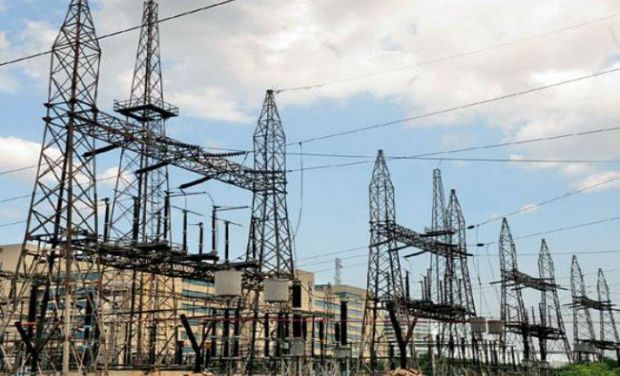
Telangana Power Generation Corporation Limited (TPGENO) Chairman and Managing Director D Prabhakar Rao inaugurated the 100 MW capacity solar power generation plan at Kakatiya Institute of Technology & Sciences (KITS) here on Thursday.

Speaking to media persons, soon after inauguration he said, Telangana needs about 6000 MW power. To meet the present requirement an action plan to import 2000 MW power from neighbouring Chattisgarh state is being prepared, he said. In Bhupalpally, Warangal third phase power generation will soon begin, he further added.

On the occasion Prabhakar Rao appreciated KITS management and advised other engineering colleges in the state to establish solar power plants.

K Venkata Narayana, CMD of Telangana Northern power Distribution Company of Telangana (TSNPDCL) said the government is planning to ensure and continuous power to people.

source: http://www.newindianexpress.com / The New Indian Express / Home> States> Telangana / by Express News Service / August 22nd, 2014

Hyderabad Metro rail alignment shift to protect monuments

Coaches of the Hyderabad Metro (Photo: PTI/File)

Hyderabad:

Telangana Chief Minister K. Chandrasekhar Rao on Sunday said that the Hyderabad Metro Rail alignment was being changed to protect Sultan Bazaar, Moazzamjahi market and the Telangana martyrs’ memorial.

He said that the government had already conveyed its decision to L&T.

L&T has requested to alter the Metro Rail route by the Telangana government.

“We have suggested that the Metro route should be diverted towards Kacheguda at Narayanguda to avoid Sultan Bazaar. Besides, we are looking at diverting the Metro to behind the Assembly building to avoid the Telangana martyrs’ memorial. Also, realigning the Moazzamjahi market route is being worked out,” Chief Minister Mr K. Chandrasekhar Rao said.

He added that he had had detailed discussions with HMR and L&T officials over realigning the route and they were convinced with the alternatives proposed by the government.

However, the government has softened it’s earlier stand on taking the Metro underground at these localities and has instead pitched for realignment after builder L&T cited huge financial repercussion that would make the project unviable.

Mr Rao blamed the previous government for entering into an agreement with L&T without addressing Sultan Bazaar and other contentious issues. “When I proposed the alternate routes they were convinced. They said that the then government had not brought these issues to their notice, else they would have planned accordingly,” Mr Rao said.

source: http://www.deccanchronicle.com / Deccan Chronicle / Home> Nation> Current Affairs / DC Correspondent / August 18th, 2014

‘Entrepreneurs should be dreamers, and they should dream big’

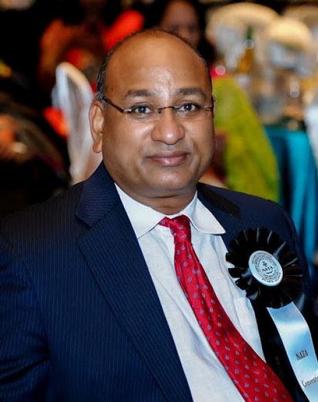
FOR MEET-- Gurram Srinivas Reddy, TEA founder. .PHOTO: BY ARRANGMENT
FOR MEET– Gurram Srinivas Reddy, TEA founder. .PHOTO: BY ARRANGMENT

Entrepreneurship is the buzzword now and Indians, unfortunately, have not made much impact on this front despite possessing sufficient knowledge and making huge strides in the IT sector across the world.

Gurram Srinivas Reddy, a first generation entrepreneur who formed Telugu Entrepreneurs’ Association (TEA) in the U.S. to promote entrepreneurs among Telugus, recently received Excellence Award at the North America Telugu Association (NATA), 2014 meet. A Hyderabadi by heart, he tells R. Ravikanth Reddy that its time engineering colleges provide platform to encourage entrepreneurs among students than just churning out degree holders.

How should engineering or management students go about developing entrepreneurship skills while in college?

First they should offer more courses in entrepreneurship and then conduct workshops by inviting industry experts in chosen fields. Invite first generation entrepreneurs as a motivational speakers and role models.

No, there has to be a paradigm shift in the approach of the educational institutions. An institution can create such environment just like Telugu Entrepreneurs’ Association (TEA) does by inviting open competition for students to prepare business plans, preparing best business practices, inviting bankers and venture capitalists to institutions as judges of those business plans. This will give an opportunity for students to interact with experts. TEA does all these activities as part of fostering entrepreneurship among Telugus around the world on a regular basis.

Entrepreneurs have to be a dreamers and when they dream, they have to dream big. There a big difference between businessmen and entrepreneurs. A businessman always thinks of profit. Most of them are not dreamers and there won’t be much of innovation in what they do. On the other hand, entrepreneurs always come up with new ideas and their approach always deals with improving peoples’ or end users’ lives.

If you take last 20 years, new innovations in Information Technology have helped in improving productivity and changing the loves of end users or customers. There is so much productivity growth in many industry sectors and all this was possible because of the entrepreneurs.

For example, Bill Gates of Microsoft, Steve Jobs of Apple, Micheal Dell of Dell computers, Google founders Larry Page and Sergey Brin and Mark Zuckerberg of Facebook have several things in common, they all are young and they wanted to change the world using technology to help all the human beings. They also started their entrepreneurial activity at a very young age. They had some idea about their products and they worked on it day and night without giving up. Also, they never lost focus or hope and started developing their products from their garages and they did whatever it took. None of these people have rich background.

All the students must do internship in their chosen industry as part of their course. By doing this, students will have firsthand experience out there in the real world and they will know dos and don’ts of the entrepreneurship.

There is no instant success to anything that we do. One should have a complete belief and trust in himself no matter what they go through. They should just move on. One should have the tenacity, perseverance and stubbornness to make it happen.

The mistake is to not dream, to not have self confidence, discipline, self control, developing skills, and to not have proper role models as they do not read bios of some of these successful entrepreneurs.

source: http://www.thehindu.com / The Hindu / Home> News> Cities> Hyderabad / by R. Ravikanth Reddy / August 17th, 2014

Indian doctors to open hospital in Guinea

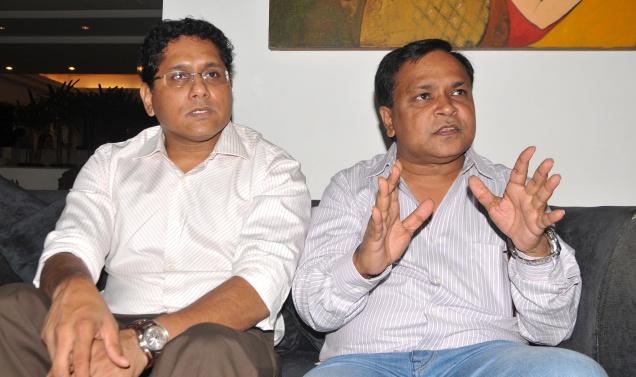
Uday Rachakonda and A.M.V. Sai Kumar feel that a fool-proof screening programme for Ebola virus is vital at entry points. Photo: G. Ramakrishna / The Hindu

Owners of Livewell Healthcare struck PPP deal with Conakry to revive govt. medical centre

Even amid the Ebola outbreak in West Africa, two Hyderabad-based doctors plan to open a hospital in the Guinean capital of Conakry, where the first case of the virus was reported in February. In a public-private partnership, A.M.V. Sai Kumar and Uday Rachakonda have entered into an agreement with the Government of Guinea to revive, operate and manage the local government hospital Jean Paul II.

The doctors, who have floated Livewell Healthcare, have obtained Private Equity funding from Exhilway Global Opportunities Private Equity Fund and would be spending close to Rs. 30 crore to set up a 250-bed hospital.

“We are doctors with a dream to have our own hospital. There is a need for quality healthcare in Guinea and we want to provide it. It’s our duty to serve and we are not worried about any outbreak or health emergency. We are in the process of recruiting nurses, paramedics and experienced doctors from India. Healthcare workers in India do not have any reservations to work in West Africa,” says Dr. Sai Kumar. Outpatient services at Livewell Jean Paul Hospitals are slated to be launched by the month-end. “The Government of Guinea has trust in us and gave us this opportunity. We have already shipped close to Rs. 3 crore worth of medical equipment from India. Till July, we were in Conakry and nothing happened to us. In another four to five months, we will offer all multi-specialities in Conakry,” said Dr. Uday Rachakonda.

Conakry receives a lot of visitors from neighbouring countries such as Liberia, Sierra Leone and Nigeria, the countries identified by WHO as the worst hit by the Ebola outbreak. Doctors pointed out that the reason for so many fatalities is lack of healthcare infrastructure and Ebola awareness among the locals.

“There is only one CT scan machine in Guinea and it costs around $250 for a single scan. There are only two private hospitals with combined bed strength of 35 and only three government hospitals. They are definitely 15 to 20 years behind us in medical infrastructure. We have also taken up the responsibility to train the local population in our hospital,” said the doctors, both of whom will fly to West Africain a week’s time.

source: http://www.thehindu.com / The Hindu / Home> News> Cities> Hyderabad / by M. Sai Gopal / Hyderabad – August 15th, 2014

2 Indians quit high-paying jobs in the US to tackle India’s mounting garbage crisis

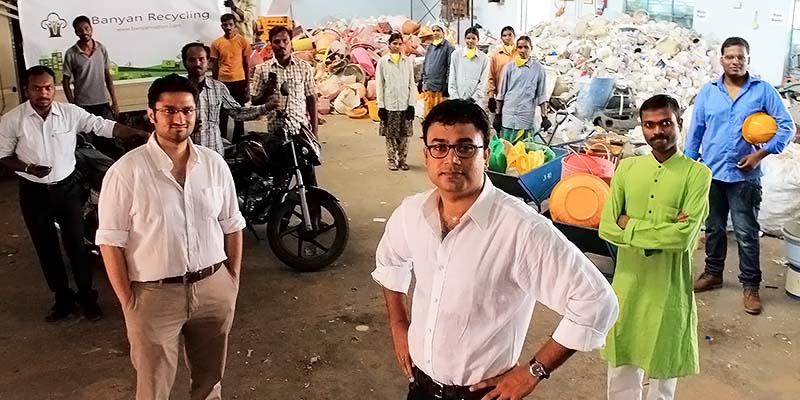
Banyan is an informal sector inclusive high technology social venture which aims to solve the problems in the Indian recycling value chain through technology innovations that encourage source segregation and maximize landfill diversion.

The startup aspires to root out inefficiencies in the recycling value chain by innovating across all aspects of the recycling process from pre-sorting and collection to post-sorting and processing of recyclates.
BanyanTELAN13aug2014

“Our mission is to identify and nurture progressive recyclers within the informal sector, improving their quality of life through technology solutions that give them ample opportunities to maximize their growth and earning potential,” says Mani Vajipey, Co-founder & CEO, Banyan.

The Beginning

Banyan was born during one of Mani’s travels in India where the general filth and squalor across the nation deeply disturbed him and inspired him to build an organization that will transform the solid waste management landscape in India through technological innovations, better practices and grassroots activism.

Mani developed Banyan’s business model at Steve Blank’s Lean Launch Pad Program and Columbia Business School’s Greenhouse Incubator. Raj Madangopal, a technologist, with a passion for applying technology to solve socially relevant problems plaguing India, came aboard 6 months later.

“Our association dates back to the year 2002 in the university town of Newark, Delaware, where we bunked classes together, and becoming thick friends,” says Mani. Mani was then pursuing a PhD in electrical engineering (wireless communications) and Raj a masters in mechanical engineering (robotics) at the University of Delaware.

Post college, their paths diverged — Mani ended up at Qualcomm in San Diego while Raj joined a mobile startup in Seattle. Ten years later over a casual phone conversation, Mani shared his vision for solving India’s waste management issues and the business model that he was developing at Berkeley and Columbia Business Schools.

As part of Columbia’s Greenhouse Incubator, Mani and Raj travelled to Hyderabad and Bangalore on customer discovery and activation. “We spoke to dozens of facilities managers at large MNCs, visited several townships in Hyderabad, and met with city municipal commissioners, private waste management contractors, rag pickers, raddiwalas and kabadiwalas in the city,” adds Mani.

Over the course of three months of thorough market research and talking to people, the duo realized that the country desperately needed an integrated solid waste management company that could innovate across the entire value chain — right from collection and transportation to landfill management, recycling and generating energy from waste.

After returning to the US, the duo spent three months to understand waste management processes in there, visiting landfills, waste to energy plants and recycling centers across the Bay Area and New York City.

The founders quit their jobs, returned to India and launched Banyan in July 2013 – primarily focusing on handling municipal solid waste. “We reviewed tenders across the country and participated in a waste to energy contract with Rourkela Steel Plant forging a partnership with a leading Biogas to Energy Company in San Francisco,” points out Raj.

Red tape and lack of autonomy make things difficult for Indian startups

India’s red tape combined with the lack of autonomy on part of the officials involved caused the tender process and negotiations to drag on for over five months. The tender that was floated around June 2013 by Rourkela Steel Plant remains open to date. “This episode taught us a valuable lesson – although there was a grave need for an integrated solid waste management company, urban local bodies had a limited appetite for innovation and risk,” says Mani.

Why Indian startups stay away from government?

This led to the next pivot — entering the solid waste management space via a model that did not depend on the government or urban local bodies for its top line revenues. “Recycling was a natural fit for us. Each year, the nation dumps 6.7 million tons of recyclable material (worth $3.1billion i.e. Rs. 19000 crores) in its unsanitary landfills causing serious environmental degradation,” adds Mani.

The informal sector forms the backbone of the recycling value chain and is responsible for achieving recycling rates of 70%, one of the highest in the world. Ironically, rag pickers are treated as social outcasts, and itinerant waste collectors and neighborhood kabariwalas (small scale stationary aggregators) — who are at the bottom of the chain — depend on middlemen (large traders) for their livelihood and working capital requirements.

These middlemen trap the rag pickers, itinerant waste collectors and kabariwalas by extending informal loans and pressurizing them to sell exclusively to them well below fair market rates.

These factors led Mani and Raj to develop a business model to disrupt the recycling value chain in India. Once Mani and Raj were clear on the recycling business model for India – friends and family pledged $100K within one week of their fundraising efforts.

Technology is genesis of Banyan

Banyan’s proprietary software platform consists of several pieces such as the Android based informal sector lead generator app and an SMS based trading platform to identify and nurture progressive recyclers from the informal sector, data analytics engine that gives the company complete control over operations to optimize, iterate and improve performance on a daily basis. It also has a GPS based routing and tracking engine for reduced collection and transportation costs.

Banyan uses the data it collects at every touch point in the value chain to periodically generate waste analytics reports to build awareness among citizens and businesses and to also provide urban local bodies with valuable insights that can power policy changes and spur sustainability initiatives in the region.

Revenue model

It generates revenue primarily through the sale of processed recyclates in the form of bales, pellets and chips to reprocessors and producers in the local, national and international commodities markets.

Differentiators and USPs

The company differentiates itself from competition by providing an end-to-end professional service right from collection and transportation to processing and sales giving it tight control over the entire supply chain and empowering the informal sector by including it in its network of suppliers.

The startup plans to integrate 1500 plus kabariwalas in the area into the company’s supplier network by the end of this month. By October, Banyan will expand simultaneously into other major cities of Telangana and Andhra Pradesh.

source: http://www.social.yourstory.com / YourStory.com / Home> Social Story / by Jai Vardhan / June 29th, 2014
New officer takes charge of TSTransco

Picture for representational purpose

Hyderabad:

The Telangana government appointed Ahmed Nadeem as the chairman and managing director of Telangana Transco. Ahmed Nadeem, a 1997 batch IAS officer, will have the full additional charge of Transco. He is currently serving as the commissioner of prohibition and excise.

He will replace Syed Ali Murtaza Rizvi, who has been placed at the disposal of the Government of India for appointment as director in the Cabinet Secretariat under the central staffing scheme, for a period of five years, on Central Deputation.

source: http://www.deccanchronicle.com / Deccan Chronicle / Home> Nation> Current Affairs / DC Correspondent / August 11th, 2014

Suven Life secures two product patents

Hyderabad :

Hyderabad-based biopharmaceutical company Suven Life Sciences Ltd on Wednesday said it has secured one patent each from Australia and Eurasia for its new chemical entities (NCEs). The NCEs will be used in the treatment of neurodegenerative diseases and these patents are valid through 2030 and 2029.

“The granted claims of the patents include the class of selective 5-HT compounds discovered by Suven that are being developed as therapeutic agents and are useful in the treatment of cognitive impairment associated with neurodegenerative disorders like Alzheimer’s disease, Attention deficient hyperactivity disorder (ADHD), Huntington’s disease, Parkinson and Schizophrenia,” the company informed the bourses.

Commenting on the development, Suven chief executive officer Venkat Jasti, said, “We are very pleased by the grant of these patents to Suven for our pipeline of molecules in CNS arena that are being developed for cognitive disorders with high unmet medical need with huge market potential globally.”

With these new patents, Suven has a total of 18 granted patents from Australia and 12 product patents from Eurasia. “These granted patents are exclusive intellectual property of Suven and are achieved through the internal discovery research efforts. Products out of these inventions may be out-licensed at various phases of clinical development like at phase-I or phase-II,” the company statement said.

The company has twelve internally-discovered therapeutic drug candidates currently in pre-clinical stage of development targeting conditions such as ADHD, dementia, depression, Huntington’s disease, Parkinson’s disease and obesity.

source: http://www.timesofindia.indiatimes.com / The Times of India / Home> City> Hyderabad / Swati Rathor, TNN / August 06th, 2014

India’s first eyeball implant surgery at Hyderabad’s L.V. Prasad

Picture for representational purpose

Hyderabad:

A one-year-old child, born with only one eye, was implanted with an artificial eyeball in the second eye socket. This procedure made L.V. Prasad Eye Hospital the first in the country to implant an “Inflatable Orbital Tissue Expander.”

The implant allows the proper growth of skull bones around the eyeball and keeps the face from becoming distorted. Most of the children born with only one eye have asymmetrical facial bone growth.

This child was lucky as the mother was insistent and despite resistance from the family opted for the implant. This technology has been developed recently and 13 children in the US have got this implant.

Dr Tarjani Dave, consultant at L.V. Prasad Eye Hospital, said, “It’s an inflated silicon implant, which is filled with saline and as the child grows, the saline needs to refilled from time to time. So far, the reports from the US have been positive.”

source: http://www.deccanchronicle.com / Deccan Chronicle / Home> Nation> Current Affairs / DC Correspondent / August 06th, 2014

Singareni Collieries: Telangana’s Ladder to Uninterrupted Development

Hyderabad :

The recent decision of the Telangana CM to buy the 49 % share of the Government of India in Singareni Collieries Company Limited (SCCL) is to be welcomed. In 2012-13, SCCL had revenues of `10, 129 crore, realised a net profit of Rs. 401 crore and paid Rs. 140 crore in income tax. It paid a dividend of `86 crore and royalties of Rs. 3,500 crore to the State and Centre. It also owns Andhra Pradesh Heavy Machinery Corporation (APHMCL) at Kondapalli, Krishna. SCCL operations are spread across four North Telangana districts — Khamman, Warangal, Karimnagar and Adilabad — where SCCL is the largest employer. SCCL, founded by the Nizam’s Government, has been in existence for over a hundred years and owns the only coal deposits in South India.

It also possesses large tracts of rural and urban land. SCCL’s non-mining activities such as schools, colleges, clinics and hospitals should be spun off to a taxexempt Singareni Foundation. Right now the top management of SCCL does not have expertise in education and health care. The Foundation will be run by experts who are wholly and solely dedicated to these specific tasks who will manage them more efficiently. An annual grant by SCCL will maintain existing services to SCCL workers and families. Moreover, the Foundation can generate additional resources from the State and Central Government and other sources to extend these services to the rest of the population of North Telangana.

The towns of Bellampally, Kothagudam, Munguru, Ramagundam, Mancherial and Yellandu are SCCL townships heavily dependent on expenditures of SCCL and its workers. Much of the land surrounding these towns is owned by SCCL. Singareni Foundation can take responsibility for developing these towns by providing sturdy roads and efficient drains, water and sewerage supplies and power. Funding can be sought from State and Central Government’s urban plan allocations In rural areas, the vast land owned by SCCL needs to be protected, as present and future mining operations will be conducted below these lands. However, these areas can be developed as fruit-bearing and fuelwood plantations.

These orchards and trees would stabilise the overburden and make underground mining less dangerous and improve the environment. These plantations could be developed on 3-5 acre plots leased from SCCL with the Foundation providing the initial costs of grafts, etc and the farmers providing the necessary labour and care. Preference should be given to SCCL workers either as post-retirement benefits or as a part of VRS package. Some land should be kept for future employees. Once the Foundation takes over all its social and development services, SCCL’s strategy should be to transform itself from a coal-mining operator to a power-generating one. SCCL should not sell any coal at all but convert all its mined coal to power and sell that power. This would increase its valueaddition and profitability.

This focused operation will enable SCCL to tap additional loan and equity funds from the market for expansion of mining and also for setting up pithead power plants. As for SCCL’s subsidiary APHMCL, this company holds vast extent of land in Kondapalli, Krishna district of residual Andhra Pradesh and it can perhaps dispose the same at a good price or develop the same. With all the suggested restructuring, purchase of 49% Central shares, hiving off the social services to the Foundation, disposal of APHML, raising of fresh equity and loans and setting up of pithead power plants , the future for the people of Telangana will take a new turn . Singareni Collieries Company already a gem, will then become the “Kohinoor” in the crown of the Telangana State.

source: http://www.newindianexpress.com / The New Indian Express / Home> States> Telangana / by Gautam Pingle / July 29th, 2014