Category Archives: Agriculture

Banks in Telangana clock 62% growth rate in crop loan disbursement

Hyderabad :

Banks in Telangana have disbursed fresh crop loans worth Rs 16,997 crore clocking a growth rate of 62.29% after the government implemented the farm loan waiver scheme last year. In a meeting of State Level Bankers Committee (SLBC) on Monday, agriculture minister Pocharam Srinivas Reddy took stock of farm loan disbursement during October-December for 2014-15. SLBC officials appraised the minister on farm loan disbursements according to which banks have advanced or renewed fresh loans worth Rs 16,997 crore.

The review revealed that banks achieved 81% of the total agricultural target of Rs 27,233 crore by lending Rs 21,989 crore. While the number of branches in the state has reached 4,758, banks have collectively achieved total deposits of Rs 304,560 crore recording a growth rate of 8.71%. The annual credit plan target for the current financial year has been surpassed by banks with an achievement of 134% as on December 31, 2014.

source: http://www.timesofindia.indiatimes.com / The Times of India / Home> City> Hyderabad / TNN / March 31st, 2015

3-day Millet Fest in City from February 27

Hyderabad :

The Directorate of Agriculture and Home Science College of Professor Jayashankar Telangana State Agriculture University (PJTSAU) is organising a Millet Fest-2015 from February 27 to March 1 at People’s Plaza here.

“To popularise the cultivation of millets, production of millet-based products and to popularise consumption of foods prepared with millets among public, the Millet Fest is being held,” commissioner and director of agriculture GD Priyadarsini told reporters here on Tuesday. Millets are not only easy to cultivate when compared to other crops but are also very nutritious. As people are becoming more health conscious, millet-based foods will be a perfect option for them. The fest would create awareness among visitors about various millet-based foods available now, she said.

This is the fourth edition of the Millet Fest. Various millet based foods like multigrain atta, ragi malt, jowar flour, jowar noodles, jowar pasta, ragi vermicelli, cookies, extruded snacks among others will be made available in about 50 stalls. All these products are designed by the scientists at incubation centre of PJTSAU and manufactured and marketed by entrepreneurs.

About 50 entrepreneurs dealing in millet- based food products from all over the state would participate in the fest. PJTSAU will conduct awareness sessions for farmers on millets cultivation and value added products during the fest.

A food court also will be set up at the fest dishing out delicious recipes made from millets like jowar rotis, ragi sankati, jowar upma, jowar noodles, among others. V Praveen Rao, special officer of PJTSAU, D Raji Reddy, director of research PJTSAU, Anurag Chaturvedi, Dean of Home Sciences College, were present at the press conference.

source: http://www.newindianexpress.com / The New Indian Express / Home> Cities> Hyderabad / by Express News Service / February 25th, 2015

Gubba Group launches Germplasm Bank

First such bank in the private sector to help preserve seeds

A Germplasm Bank for use by seed companies, farmers, scientists and research institutions is the latest business venture of Gubba, a Hyderabad-based Group specialising in cold storage services.

Announcing the launch of the bank established with an investment outlay of Rs. 4 crore, senior members of the management team led by the Group CEO, Gubba Kiran, on Wednesday said it was the first such facility in the private sector in India. It has two vaults that together offer 107 lockers in which Germplasm will be stored for five to 40 years under minus 20 degree Celsius. Explaining the process, Gubba Prashanth, Research and Technical Head, said on receiving the Germplasm seeds, it is sent to the laboratory to record the details and create a database. This is followed by x-ray analysis, cold drying, packing and preservation. The stored material will be subjected to quality checks periodically.

In tune with its role of custodian of the seeds, for which it will charge monthly rentals in the Rs. 20,000 – Rs. 25,000 band per locker, the company, he said, assures high levels of confidentiality of the database. Unless permitted by the customer, the information would not be shared, he added. A few lockers will be provided free of cost to individuals and NGOs working in the area of seed preservation. The facility over time is expected to generate and provide new scientific knowledge and information on ecosystems, species and genes.

source: http://www.thehindu.com / The Hindu / Home> News> Cities> Hyderabad / by Special Correspondent/ Hyderabad – January 29th, 2015

Harita Haaram to Commence Soon

plantationTELANGANA30dec2014

Hyderabad :

The government plans to employ National Rural Employment Generation Scheme workers in a big way to implement ‘Telanganaku Harita Haaram’, a project conceived to increase the green cover in the state.

Having set itself a huge target of planting 130-crore seedlings outside forest areas in the state, the government, for the first-time, intends to involve even big farmers in the plantation drive.

In the united AP, the plantation drives held on smaller scales were confined to the participation of only small and marginal farmers as the targets set for the purpose were minimal. For instance, last year only 5 crore saplings were planted in 23 districts, officials in the rural development commissionerate pointed out.

As per the modalities worked out, field assistants of the rural development department will identify suitable places for planting the saplings. It can be on government offices’ premises, government-owned vacant lands or even lands owned by individual farmers.

For plantation in fields, each farmer will be given a maximum number of 160 saplings per acre for bund plantation and 600 saplings for block plantation. These saplings, mostly teak, are being raised at government and private nurseries in districts and will be ready by July when the first spell of monsoon is expected.

“Authorities of the concerned government office would be made responsible for a healthy growth of the plantations on their respective office premises,” a senior official in the department added, disclosing the guidelines finalised for the implementation of the programme at a high-level meeting held recently.

To ensure that the planted saplings are taken care of well, the government has laid down strict norms before paying the farmers. As per the rates finalised by the government, farmers will be paid `10 for digging a pit and `4 for planting a sapling. They will be paid `5 per plant at the end of every month for two years. However, this comes with a strict rider: they should ensure that at least half of of the saplings they plant should survive.

“That means there should be proper maintenance. Farmers should water the plants and clear the debris regularly to make sure that they receive the payment for two full years,” he pointed out.

source: http://www.newindianexpress.com / The New Indian Express / Home> States> Telangana / by Vikram Mukka / December 29th, 2014

Karimnagar Farmer Shows the Way Out of Darkness

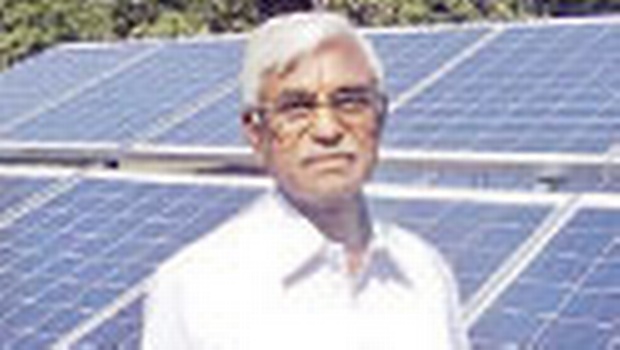
Veerla Prabhakar Rao stands beside the solar panels at his farm land in Velichala | expressphoto

Karimnagar :

At a time when many farmers in the State are struggling to irrigate crops due to erratic power supply, Veerla Prabhakar Rao from Velichala village in Ramagundam mandal, has found a way out of the bleak scenario.

Rao, who owns about 60 acres of farm land at Velichala, which is 12 km from here, has installed solar photovaltaic (PV) panels with a total capacity of 18 KV, which can run two 7.5 HP pumpsets and irrigate seven acres. Speaking to Express, Rao said he had invested `7 lakh to set up the solar panels for irrigation of his paddy crop. He said thanks to the solar power, he is able to irrigate his crops well and believes the future lies in this.

“We can get power throughout the day with these solar panels. Besides, it is reliable and we could be self-reliant,” he pointed out. However, it is the cost factor that prevents farmers from opting for solar power.

“That is the reason why the government should provide at least 50 per cent subsidy,” he felt and appealed to the government to also bring awareness among farmers on the importance of harnessing non-conventional energy resources. “The power situation might worsen in summer. To have uninterrupted power supply for crops, it is better for farmers to opt for solar power and generate power on their own,” he said.

The government may take time to create awareness but Rao is leading by example. Farmers from surrounding areas are showing keen interest in his solar power. But as Rao himself says, the cost of installing solar power panels is what is holding them back.

source: http://www.newindianexpress.com / The New Indian Express / Home> Cities> Hyderabad / by Express News Service / December 23rd, 2014

ICRISAT Director-General William D Dar to Retire on Dec 31

Sangareddy :

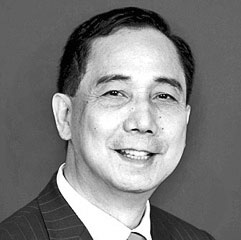
Dr William D Dar, Director General, Hyderabad-based International Crops Research Institute for the Semi-Arid Tropics (ICRISAT) is relinquishing his post on 31 December 2014 after an unprecedented three, five-year terms. Dr Dar is leaving behind a legacy of benefiting millions of marginal farmers in Asia, sub-Saharan Africa and other dryland regions of the world.

“After 15 years, we have completely transformed ICRISAT into one of the best international agricultural research for development (AR4D) centres in terms of innovative and inclusive research programmes, scientific excellence, impact on smallholder farmers, and financial health and stability,” said Dr Dar who assumed the institute’s top position in 2000.

Through his strong and transformative leadership and astute governance, Dr Dar has quadrupled the income and investments poured into ICRISAT by development partners, from US$ 22 million in 2000 to US$ 85 million as of 2014.

This financial stability has brought improved capacity and high morale among scientists and staff over the years, translated into unprecedented achievements in the institute’s AR4D programmes, and the corresponding impacts on food security and poverty reduction goals.

Over the decades, ICRISAT has grown into a pipeline of innovations and impacts that are changing the lives of the dryland poor on a large scale, showing high returns on social investment. In a 2014 ex-post impact assessment study of ICRISAT’s highly successful breakthrough innovations called ‘Jewels of ICRISAT’ – a return on investment of US$70 on average for each dollar invested in AR4D, and an internal rate of return of 35 per cent was generated. These outstanding economic rates of return to investment illustrate ICRISAT’s core science and impacts.

Restoring strong relations with countries that host ICRISAT in Asia and sub-Saharan Africa, and forging strategic public-private-people partnerships worldwide, the institute was able to broaden its donor base and to mobilise new resources that are fully compatible with the public-goods orientation of ICRISAT and the CGIAR. ICRISAT is a member of the CGIAR Consortium.

Today, ICRISAT’s three top donors, outside the CGIAR system, are the Bill & Melinda Gates Foundation, India (the largest of any CGIAR host country), and the United States Agency for International Development (USAID). The Gates Foundation is funding three of the institute’s major AR4D initiatives: the HOPE project (Harnessing Opportunities for Productivity Enhancement of Sorghum and Millets); the Tropical Legumes II (TL-II) project; and the Village Dynamics in Southeast Asia (VDSA).

With the innovative AR4D programmes and the culture of scientific excellence that Dr Dar introduced, ICRISAT continues to attract much-needed investments into the development of climate-smart and sustainable crop cultivation and technologies of the institute’s mandate crops – chickpea, pigeonpea, groundnut, sorghum and pearl millet – crops that are farmed by millions of smallholder farm families in the drylands of the world.
ICRISAT-DirectorTELANGANA16dec2014

The ICRISAT Governing Board has appointed Dr David Bergvinson as the next Director General of ICRISAT for a five-year term, effective January 01, 2015 to move the institute further in generating and sharing cutting-edge global scientific innovations, and bring about genuine pro-poor growth and inclusive market-oriented development in the drylands.

A Philippine national, he is set to return to his country to share his management and technical experience and knowledge with Filipino farmers particularly in transforming rain-fed and unproductive farmlands into productive, sustainable and climate-smart farms through an agri-based social movement called Inang Lupa (Motherland).

Notable achievements of ICRISAT  1.The formulation of a new, more dynamic institutional strategy known as Inclusive Market-Oriented Development (IMOD) which shifted ICRISAT’s focus towards enabling poor farmers to harness markets for poverty escape

2.Establishment of Centres of Excellence for genomics, transgenic research, climate change research for plant protection, and information and communications technology (ICT) innovations for agriculture

3.An inclusive and technology-based entrepreneurship and agribusiness strategy – the Agribusiness and Innovation Platform – through public-private partnerships to bring science-based technologies and products to the market for the benefit of marginal farmers

4.Scaling out a sustainable natural resource management model called Bhoochetana (land rejuvenation), which uses soil analysis as an entry point, that has brought prosperity to resource-poor farmers in India

5.Establishment of the ICRISAT Development Centre (IDC) to undertake large-scale uptake of science-based technologies for the benefit of marginal farmers

source: http://www.newindianexpress.com / The New Indian Express / Home> States> Telangana / by Express News Service / December 15th, 2014
Farmers find a good alternative in Kasturi Benda

The cultivation of Kasturi Benda (Abelmoschus moschatus) medicinal plant is steadily gaining popularity among farmers, particularly those who are vexed with the monkey menace and ‘unviable conventional farming’.

Several enterprising farmers have been cultivating the medicinal herb in Kallur, Enkur and a few other mandals in the district over the last few years. Their commercially successful farming venture prompted other farmers to take up the cultivation of Kasturi Benda, the seed of which is used in the preparation of some traditional medicine and in the perfume industry.

N. Rama Krishna, a farmer of Botlakunta village in Konijerla mandal, switched over to Kasturi Benda cultivation in June this year, after suffering a series of losses in cotton cultivation due to drought-like conditions and the monkey menace.

“After my bitter experience with cotton and maize cultivation in the past, I cultivated Kasturi Benda in two acres under the guidance of a veteran farmer of Kallur mandal,” said Rama Krishna.

“Now, monkeys don’t venture into my field as they dislike eating this particular variety of medicinal herb,” he remarked, adding that he is expecting an average yield of 300 to 400 kg per acre.

I am also hopeful of an assured income of at least Rs. 80,000 to Rs. 1 lakh in view of a buy back arrangement with a Karnataka-based firm, he said.

“The Kasturi Benda seed is used in the preparation of traditional medicine for treating nervous disorders, including hysteria,” said J. Marianna, Horticultural Officer, Khammam.

The flowers, roots, leaves, stem and bark of the medicinal herb are also in high demand, he said.

source: http://www.thehindu.com / The Hindu / Home> News> National> Telangana / by P. Sridhar / Khammam – November 19th, 2014

Treat for Rosarians

Hyderabad :

Rose lovers have another reason to celebrate as the The Indian Rose Federation and Hyderabad Rose Society together are organising 3rd World Federation of Rose Societies Regional Convention in the city. During the event, around 800 varieties of roses will be displayed. The purpose of the convention is to inform people about the wide varieties of roses available in the country, informs Ahmed Alam Khan, President of Indian Rose Federation. “This is the first time such convention will be held in India,” he adds.

Rosarians from around the country will be presenting the flowers they grow in their convention. “A competition will be held where they will be judged on the quality of their flowers. Apart from the competition, technical sessions will be held at the convention where they will be informed about how to good quality roses, increase their shelf life, etc,” he says. Ikebana, Japanese pattern of arranging flowers will also be taught during the convention.

The theme of the convention is ‘New Light on the Old World of Roses’. “Around 98 per cent of roses exported in the world is by Israel. But India also has the potential to have good market in exporting roses. Through this convention, we aim to encourage the rosarians to develop good quality of roses. People from the city are encouraged to visit the show to gain more knowledge about roses at the event.

The event will be held from November 29 to December 2 at HICC between 11 am to 5 pm.

source: http://www.newindianexpress.com / The New Indian Express / Home> Cities> Hyderabad / by Express Features / November 14th, 2014

Farming has a different meaning for him

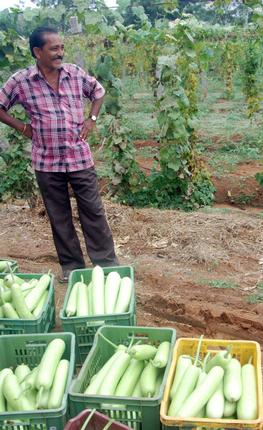
K Srinivas with vegetables at his leased farm at Kavalmpet in Medak. Photo: Mohd. Arif / The Hindu

Tenant farmer Katakam Srinivas, who is making profits in farming, treats crops like new born babies that have to be nurtured with love and care

For this tenant farmer, agriculture has a different meaning. “Plants are like new born babies and farmers have to nurture them with love and care,” says Katakam Srinivas, a farmer who had migrated from Kadiyam in East Godavari district to Medak in search of greener pastures about a decade ago.

Well, he seems to have found the greener pastures, as he has been successful in making profits out of farming, quite a rarity these days. But it didn’t happen in a day or a year. It took him over a decade of hard labour which finally has made him a happy farmer.

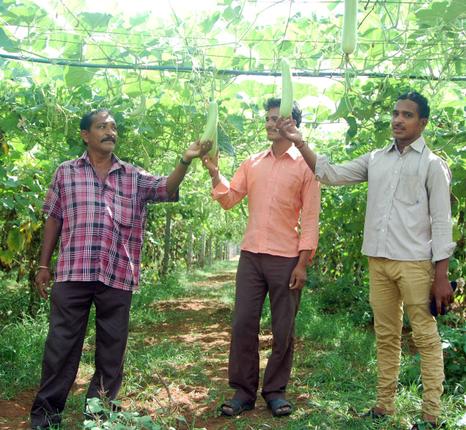
His day begins at 4.30 in the morning and ends late in the evening. And if it’s the harvesting season, the working hours stretches even further. At 10 in the morning, he is usually seen supervising the sale of vegetables like snake gourd and bottle gourd. And his two sons – Jeevan Phani Kumar and Ganapati – assist him and see to the finer aspects of growing vegetables.

Srinivas along with his sons Jeevan Phani Kumar and Ganapathi at his leased farm at Kavalmpet in Medak. Photo: Mohd. Arif / The Hindu

Mr. Srinivas came to Medak in search of a job in a private factory, but failed to get one. After working as a daily labourer for some time, he approached some locals for help. As he had prior experience in cultivation, he was asked to take up farming and that changed his life for better. Now, he cultivates about 30 acres of land as a tenant farmer and has a dozen labourers to assist him. “I also have cattle to take care of. After supplying milk to the canteen of a local factory, I go to the farm,” says Mr. Srinivas. He is also into banana cultivation this year. “If the weather conditions are good, banana is one of the best crops that generate good revenue. We got saplings from East Godavari where banana crop is largely cultivated,” he says.

His belief that Mother Earth never deceives farmers only if they care for the crop they grow has yielded him good result. He suggests the other farmers to take up multi-cropping instead of a single one as it is profitable.

source: http://www.thehindu.com / The Hindu / Home> News> National> Telangana / by R. Avadhani / Kavalampet (Medak Dist). / November 13th, 2014

Medicinal Plants Expo Goes Viral

Karimnagar :

The students of Government Upper Primary School, Ramakrishna Colony, Timmapur have attracted national and international attention with a social media post about their exhibition on medicinal plants, ‘Mana Mokkalu – Mana Avushadalu’ (Our plants – our medicines).

Their post evoked good response with a number of likes and comments, said Kola Ramachandra Reddy, school headmaster.Non-resident Indians also responded, appreciating their team work as a inspiration for many. They complimented the students for their efforts.

source: http://www.newindianexpress.com / The New Indian Express / Home> States> Telangana / by Express News Service / October 13th, 2014