Jeb, a mobile app developed by Hyderabad’s VSoft Technologies to facilitate easy, instant transfer of money as an alternative to cash payment, emerged the winner at a hackathon organised by National Payments Corporation of India (MPCI).
The programme, in which 3,819 teams participated, was held to commemorate the launch of NPCI’s payments infrastructure platform – Unified Payments Interface (UPI).
For a host of daily as well as regular payments, be it to purchase groceries, vegetables, paying auto-rickshaw fare, school fees and utility bills or depositing money in another account, the app can perform multiple tasks for which cash is used, says VSoft Technologies COO Dronamraju Srinivas.
Jeb, he says, is not a mobile wallet but a payment channel. It enables users to send and receive money as well as banks to compete with the wallets. The money remains in the customers’ account, earning daily interest until used, unlike the wallets where it is transferred to a third party. Users can add any bank account while interactions can be driven by voice or in their preferred regional language.
VSoft is in talks with a few banks – public, private and in the cooperative fold. The NPCI is yet to finalise the user charges. They are expected to be less than that for NEFT and RTGS, he adds.
City’s VSoft Technologies, the app developer, in talks with a few banks
source: http://www.thehindu.com / The Hindu / Home> Cities> Hyderabad / by N. Ravi Kumar / Hyderabad – April 29th, 2016
The Agrihub, the first agriculture-specific online discovery platform, was launched here on Monday. The platform, launched at the Agri Horti Tech International Exhibition, provides authentic product information on the best brands in conventional and hi-tech agriculture and connects companies or brands, distributors and retailers to cater to the needs of farmers in India.
Sidharth Kumar, co-founder of TheAgrihub, said: “One of the leading causes of inefficiency in farming is the lack of proper knowledge and access to correct resources. We, as urban customer, have option to select things we need from five various platforms but farmers, who feed the world, do not have a single website from where they can get authentic information. With this platform, TheAgrihub has a vision to expose its users to the best of global technologies enabling the growth of farmer as well as agriculture as a whole.”
“The objective of TheAgrihub is to bring agricultural products sourcing for B2B and B2C on fingertips, help them track innovations or products and also find suppliers next door to facilitate educated decisions on purchase. ‘If you are in the field of agriculture, you have to be on TheAgrihub platform’ is what our team wishes to promote.”
The platform has already signed up with over 3,600 hi-tech agricultural farmers and many prominent brands. Seeds and plants of fruits, flowers and vegetables, irrigation products, fertilisers and plant protection products, farm tools and equipment, polyhouse are some of the products listed on the platform.
source: http://www.newindianexpress.com / The New Indian Express / Home> States> Telangana / by Express News Service / April 26th, 2016
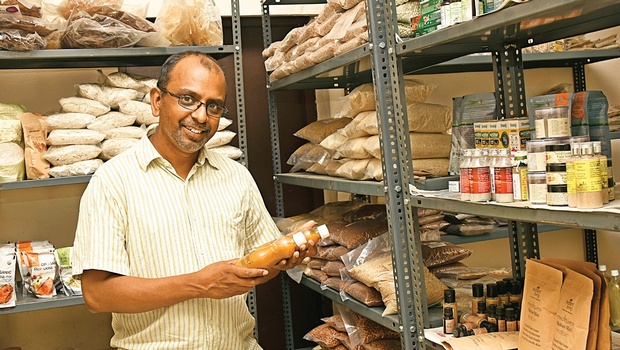
When Narayan Murthy came to India from the United States, he didn’t know that he would end up retracing his roots, in a journey that would last forever.
A management consultant by profession, he is the founder of GoodSeeds, an organisation that sells organic food and home products. And it doesn’t end there.
Narayan works closely with farmers across the region to help them find a platform where they can find buyers and connect with other farmers for better reach and productivity.
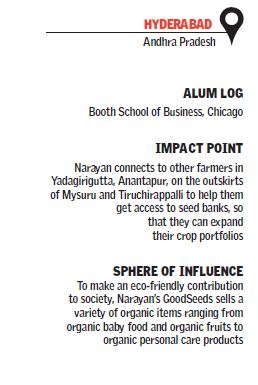
Says Narayan, “I left India in 1992 and went to the US for higher studies and a job. I completed an MBA from Booth School of Business, Chicago, after which I started working as a management consultant. I was earning quite a decent package and monetarily I was very sound. But there was a voice in my head which kept on telling me that this is not what I wanted to do. But I didn’t know what it was that I was looking for.” That’s when he decided to come back to India and spend a few years here, “I came back and after a year or so, I realised that it was my roots that I had been missing.”
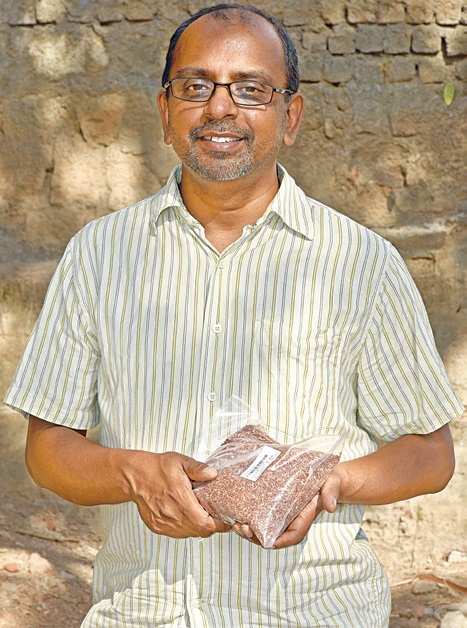
Narayan Murthy, founder of GoodSeeds, which sells organic food and home products
Originally from Chennai, Hyderabad is now his home. But how did he land up here? He answers with a chuckle, “I got a job here in Microsoft as a strategic planner in 2008. Now this city is my home.”
It so happened that one day his friend complained about how good organic food is not available in Hyderabad. Since Narayan was already wondering what to do with himself, the idea appealed to him. Thus was born GoodSeeds in the year 2012. “The name came about because it was about sowing good ideas about what we eat, drink, who we live with and where we live,” adds Narayan. Sort of an eco-friendly contribution to society.
While the company sells a variety of organic items ranging from organic baby food and organic fruits to organic personal care products, farmers often come to them to gain market connections, “Many farmers get in touch with me. I connect them to the market and customers who choose to buy organic products. This way they are able to connect to other farmers as well. We also help them get access to seed banks, so that they can expand their crop portfolios,” informs Narayan.
He goes with farmers to different areas like Yadagirigutta, Anantapur, outskirts of Mysuru and Tiruchirappalli (Tamil Nadu) for advise and to network. As a result of his efforts, farmers are coming closer and becoming part of co-operatives. Narayan adds further, “It’s beneficial that small farmers become part of small co-operatives. For example at Timbaktu, Anantapur there’s a small co-operative of 40 farmers. A farmer can’t do everything alone. If he tries everything and it goes wrong then unfortunately it will be him who will starve. These days people give their lands to farmers on lease to grow crops. In return, the farmers are paid on a monthly basis. So, even if there’s a drought, farmers will get their money and manage to keep their respect intact, as well.”
They also encourage things like the Sunday organic bazaar held at Saptaparni, Lamakaan, Our Sacred Space and Goethe Zentrum, where farmers sell everything from organic fruit to staples like rice. It’s probably not as fancy as the farmers’ markets in the US, but hey, with people like him around — it may become a reality sooner than you think!
source: http://www.newindianexpress.com / The New Indian Express / Home> Education> Edex / by Saima Afreen / April 25th, 2016
File photo of the 45.52-carat Hope Diamond at the Smithsonian’s National Museum of Natural History in Washington. / Reuters
Legendary diamonds mined by the Qutub Shahis are on display in Washington, Paris and Moscow.
It is not just Kohinoor; nine other famous diamonds left the shores of India and these are now displayed in museums in Washington, Moscow, Paris and Istanbul, besides forming a part of the Iranian crown jewels.
The precious nine, all categorised as legendary diamonds and mined by the Qutub Shahis of the Deccan, are the Hope Diamond, Hortensia, Darya-i-Noor, Noor-ul-Ain, Orlov (also called Orlof), Regent, Sancy, Shah Diamond and Spoonmaker’s, says V. Madhavan, who worked as a Professor of Geology in the Kakatiya University.
While the 45.5 carat Hope diamond is currently on display at the Smithsonian in Washington DC, the 190 carat Orlov diamond, a bluish-green gem, is now part of Moscow’s Diamond Treasury.
On the other hand, the 140.6 carat Regent, 55.2 carat Sancy and 20 carat Hortensia are now at the Louvre museum in Paris.
Two pink diamonds, the 182 carat Darya-i-Noor and 60 carat Noor-ul-Ain are part of the Iranian crown jewels while the 88.7 carat Shah Diamond and 86 carat Spoonmaker’s are housed in the Diamond Fund of the Kremlin and Topkapi Palace in Istanbul respectively.
Origins a mystery
Prof. Madhavan, who has studied diamond mining for nearly six decades, says that by all historical accounts, the Kohinoor was mined by the Kakatiyas when Rani Rudrama Devi headed the kingdom, its headquarters in present day Warangal.
Kohinoor’s exact vintage, right from its discovery, continues to be a mystery. However, “There is a general consensus among historians that it was found at Kolluru in the late 13th century in present day Guntur district of Andhra Pradesh,” he said adding that Kolluru was part of the Kakatiya kingdom.
Former Professor of History at the University of Hyderabad, V. Ramakrishna, said the Manual of “Kistna District in the Presidency of Madras”, written by Gordon Mackenzie and published in 1883, also indicated that the Kohinoor was found in Kolluru, then part of Krishna district.
Pages 244-247 refer to diamond mining in the district in general and the Kohinoor in particular. The manual however, says that the gem was mined by Qutub Shahis and not the Kakatiyas.
Another book, A Study of the History and Culture of Andhras, by noted historian K. Satyanarayana and published in 1982, also speaks of the Kohinoor being found in Kolluru.
According to Prof. Madhavan, India was the only producer of diamonds in the world till 1725 AD when they were mined in Brazil. Later in 1870, diamonds were explored in South Africa. Marco Polo, who visited India in the 13th century, talks in his travelogue of an inland kingdom ruled by a queen (Rudrama Devi)… “which produced all the diamonds in the world”.
At the time of its discovery, the Kohinoor was the largest diamond in the world. But no longer. In 1905, workmen at the Premier Mines in South Africa unearthed the 3106 carats (621 grams) Cullinan diamond, which remains the largest so far. It was named after Sir Thomas Cullinan, the founder of Premier Mines.
The original weight of Kohinoor was stated to be 793 carats (158.6 gm). In the 17th Century, emperor Aurangazeb wanted to reduce its size to add to its lustre.
He tasked Horenso Borgia, a Venetian lapidary with the job, but he cut the diamond down to just 186 carats and invited a heavy fine.
At present, the weight of Kohinoor, meaning mountain of light, is 105.6 carats.
source: http://www.thehindu.com / The Hindu / Home> News> Cities> Hyderabad / Prashanth Chintala / Hyderabad – April 23rd, 2016
Online brokerage firm, Zerodha, today launched its web based trading portal ‘Kite’ in Telugu.
It also announced Zero brokerage on all equity investments and the start of its mutual fund business.
Nithin Kamath, Founder & CEO Zerodha said, “The investment culture has to be nurtured, and we intend to do this not just by offering zero brokerage, but an extremely easy user experience with Kite in Telugu and providing more options for investment with our Mutual Fund platform.”
“Our plan is to reach out to the next 5 million participants who are currently not investing and show them how stock market can create wealth if invested for long termk,” he said.
Vice President Equity & Research Zerodha Karthik Rangappa said, “We are certain that Kite’s technology wrapped up and presented in a local language will not only ensure seamless access to markets, but also make the whole trading experience enjoyable”.
Kite is a minimalistic web based trading platform that adapts to mobiles and tablet. It is integrated with an advanced behavioural analytics and visualisation platform, called Quant, which helps traders understand their trading behaviour to make informed investment decisions, they said.
Apart from Telugu, Kite is now available in Tamil, Marathi, Kannada, Malayalam, Punjabi, Gujarati, Bengali, Odia and plan is to make it available in other major Indian languages in months to come.
Andhra Pradesh and Telangana forms one of the most important markets for Zerodha and currently, it has two branches and 11 partner support offices to meet the growing client requirements. VVK ARS
source: http://www.timesofindia.indiatimes.com / The Times of India / News Home> City> Hyderabad / PTI / April 20th, 2016
Hyderabad Metro Rail MD N.V.S. Reddy and investment banker Kali Kondury are working on a book ‘Hyderabad: Growing Global’, primarily addressed to Indian and global investors, CEOs of MNCs, captains of Indian industry and other decision makers towards furthering Hyderabad’s brand equity globally.
It will have three parts – Historic Hyderabad, Happening Hyderabad and Global Hyderabad – with high quality content, rich photography detailing the history, cosmopolitan culture, geographical and linguistic advantage, vibrancy and economic dynamism, fast growing infrastructure, world class educational facilities etc., of the city. The authors have appealed to those having high resolution photographs depicting the splendour and vibrancy of Hyderabad.
Those interested may contact Vijay Mandapaka at 7032703736/dgmcc.hmr@gmail.com. Selected photographs will be suitably acknowledged.
source: http://www.thehindu.com / The Hindu / Home> News> Cities> Hyderabad / by Special Correspondent / Hyderabad – April 19th, 2016
In an effort to popularise farm pond concept, Komatireddy Pratheek Foundation dug up a farm pond at farmer Kola Bikshamaiah’s field at Kakulakondaram village of Nalgonda mandal here on Sunday.
Pratheek Foundation had started closely working with Deshpande Foundation, which has been actively working on rain water harvesting in Nizamabad and Maharastra.
CEO of Pratheek Foundation M.V. Gona Reddy said that they simply want to replicate the work of Deshpande Foundation in the district for the benefit of the farming community.
The chairman of the foundation and Nalgonda MLA Komatireddy Venkat Reddy said they were planning to initiate several skill enhancement programmes for the youth in the district to improve their employability. “They would also concentrate on maternal health, student leadership, micro-entrepreneurship and livelihood opportunities,” he said.
Several skill enhancement programmes planned to improve employability.
source: http://www.thehindu.com / The Hindu / Home> National> Telangana / by Staff Reporter / Nalgonda – April 18th, 2016
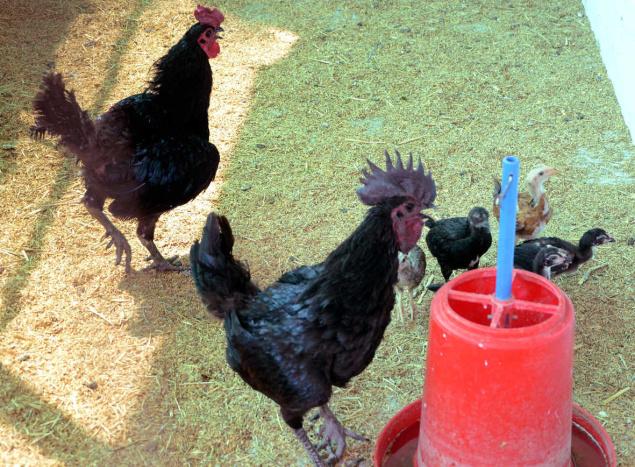
Seeking popularity:The Kadaknath breed of roosters at the demonstration unit of the Krishi Vigyan Kendra in Wyra of Khammam district.– PHOTO: G.N. RAO
Known for its unique black colour and black meat, the rooster suits the taste and preference of health-conscious people
The unique jet black coloured rooster christened ‘Kadaknath’ – the indigenous fowl breed of tribal heartland in Madhya Pradesh – is all set to foray into the predominantly tribal-populated Khammam district if the ambitious plans of the Wyra-based Krishi Vigyan Kendra (KVK) to popularise the low-fat and protein-rich native breed of chicken among local farmers are any indication.
The KVK has a small number of Kadaknath roosters known for their unique black colour and black meat that suits the taste and preference of health conscious people. Kadaknath breed of fowls stands out from other popular native variety of roosters at the demonstration farm of KVK by virtue of their unique jet black colour
The Kadaknath breed rooster acclaimed wide popularity in various parts of the country as a viable means of boosting income levels of rural households through backyard poultry farming.
Several farmers from various mandals in Khammam division evinced keen interest in the breed during a demonstration organised by the KVK scientists in Wyra recently.
Gauging farmers’ interest in the indigenous breed of rooster, KVK officials have drawn up plans to hold more demonstrations to highlight the benefits of rearing Kadaknath breed of fowls in terms of income and nutritional value among low-income families, particularly in tribal pockets of the district.
The breed is most suitable for backyard poultry rearing considering the low investment involved and good returns assured by it, says Hemanth Kumar, programme coordinator, KVK, Wyra.
Some farmers are rearing Kadaknath breed fowls in Sattupalli in Khammam district and a few other places elsewhere in the State, besides Tadepalligudem in West Godavari district of Andhra Pradesh.
Efforts are under way to popularise and promote backyard rearing of indigenous breed of roosters such as Kadaknath, Giriraja and Vanaraja to supplement the income of rural households and cater to the demand for eggs and meat
The protein-rich Kadaknath black meat contains low fat compared to other breeds of chicken, particularly the broiler variety.
This makes the Kadaknath breed most suitable for backward rearing to supplement income and serve nutritional needs of tribal people, he remarks, adding that farmers were being given tips on taking up backyard country chicken farming.
Inadequate availability
Inadequate availability of Kadaknath chicks and lack of proper financial support are posing major hurdles in undertaking backyard poultry farming using the most sought-after Kadaknath roosters, deplores Suresh, a tribal farmer of Venkatapuram.
The government agencies concerned should provide Kadaknath chicks free of cost and extend subsidies to exclusively promote the farm enterprise in remote tribal pockets of the district, he suggests, asserting that such a move would help check drought-induced migration in Agency areas.
source: http://www.thehindu.com / The Hindu / Home> National> Telangana / by P. Sridhar / Khammam – April 14th, 2016
South Central Railway (SCR) has set a record of sorts by bagging All India Performance Efficiency Shields in six disciplines for the year 2015-16. General Manager-SCR Ravindra Gupta attributed the achievements to the commitment and duty-mindedness of the work force.
The six disciplines include those for comprehensive healthcare, stores, civil engineering, commercial, safety and environment management. With this, SCR made its mark at the national-level, on Indian Railways. The awards are to be presented by Minister of Railways Suresh Prabhu at the Central function of the Railway Week celebrations by Indian Railways on April 16 at Bhubaneswar.
General Manager-SCR, Ravindra Gupta attributed the success to the commitment of the work force. It was their zeal that led to the SCR attaining such results, by overcoming challenges, he said, addressing a large gathering of railway officers, staff and their family members at the 61st Railway Week Zonal-level celebrations held here on Monday.
Later, Mr. Gupta gave away 164 individual awards to officers and staff, 31 Efficiency Shields to departments and divisions, seven group awards and two special awards.
The function came to an end with the General Manager’s Efficiency Shield for over all best performance going to Secunderabad Division.
source: http://www.thehindu.com / The Hindu / Home> News> Cities> Hyderabad / by Special Correspondent / Hyderabad – April 12th, 2016
Short news service mobile application, Way2 has reached 500 million views per month in a short span of three months of its launch.
The achievement is a validation of the unique model and indicates the potential regional language-based news platform has in this country, Way2Online, a leading new media organisation, said in a statement on Tuesday.
Launched in December last year, Way2 offers news snippets in eight local languages, besides in English. It has seen a 300 percent growth in its daily active users in the last three months.
“News on the move is fast catching up with the young generation, who intend to stand connected with the latest happenings from around the world. Considering the lifestyle and time constraint among the users, we developed a format that is unique in nature and offers optimal information to its consumers,” said Raju Vanapala, founder and CEO of Way2.
“Available statistics indicate that every user on an average flips through 50 stories per day; and every day there are 18,000 new Application downloads,” he added.
According to available statistics, over 70 percent of the total traffic on the app comes from the local language consumers.
So far, the Way2 App has reached 6.5 million downloads while at least 650,000 visit the app every day.
Hindi, Telugu, Tamil, Malayalam, Kannada, Gujarati, Marathi and Bangla are the eight regional languages which bring in visitors to the App.
source: http://www.timesofindia.indiatimes.com / The Times of India / News Home> City> Hyderabad / IANS / April 12th, 2016