Category Archives: Business & Economy

Living life, queen size

At 54, Nina Reddy is busier than ever. Photo: R. Ravindran / The Hindu

Savera Hotels managing director Nina Reddy, who is planning the 13th anniversary celebrations of her fitness studio O2, says there is never a dull moment in her day.

It’s a Saturday afternoon in Hyderabad and the sun isn’t being particularly kind. There are lessons to do and chores to finish, but for the 25 children who live in the majestic white house in Barkatpura, this is hardly of any concern.

Even as their parents and staff at the house, tell them to get back to work, they look towards the gate expectantly. When they hear the sound of an approaching car, they spring up, shrieking with excitement.

“Ninamma ochundhi!” exclaims the driver’s daughter even as the children race through the cherry and guava trees. They startle some cows as they dash past the servant quarters. They jump over the pond, run past gargoyles spouting water and stop just short of the entrance, panting.

The guard manning the gates is on his feet, to welcome six-year-old Nina Reddy with a salute, as she drives through the gates of her grandparents’ house. “From Saturday afternoon to Sunday evening, till I’d go back to my parents’ house, it used to be a riot,” recalls Nina Reddy.

The weekends spent playing hopscotch and making music with the staff’s children is not something Nina often thinks about 48 years later. Yet, she somehow seems to know that the maid’s visually-challenged son, Venkatram, is now a professor in Hyderabad.

Even today, as she bustles about managing the affairs of Savera Hotel, Nina stops to enquire after her employees — she asks her public relations manager if her son’s cold is any better and listens, nodding sympathetically, when she says that it’s only become worse. “I’m a people’s person,” Nina needlessly explains. Nina often sends young female employees scurrying into the powder room, insisting they put on some lipstick or touch up their make-up. Grooming is important, she says.

Known for her impeccable sense of style, Nina has always been chic. Even in college, when the nuns who ran St. Francis College for Women gave her disapproving looks, she wore the jeans, shorts and shirts that pleased her. “When you say Reddy, you typically expect conservativeness. Mum was not like that, she brought us up differently,” Nina explains. None of that, however, took her away from her traditional roots.

When Nina was still in college, her parents announced that a young man from Madras was coming to see her. Her first reaction, understandably, was to burst into tears — she was still in her teens and hadn’t even completed her college education.

When she met young Vijay Kumar Reddy, however, everything changed. “He was extremely shy, he still is,” she smiles. Soon, he was calling her every night post-10 p.m., because that’s when the STD call rates were cheaper. Yet, staying on the call till the wee hours of the morning ensured that he drew up a huge bill. They wrote each other love letters, long ones, which filled up every inch of the inland letter. For her wedding shopping, when Nina came down to Madras on her way to Kancheepuram, he took her to Marina beach, after a quick stopover at Savera Hotel to pick up a packed picnic lunch.

When 19-year-old Nina married into the Savera family and moved to Madras in 1979, she found the city welcoming. Still, she was a stranger here and the language posed a major challenge. For a while, she walked around referring to Vijay Kumar as ‘Namma husband’, till she watched enough Tamil movies and picked up enough of the language to stop doing it.

She dabbled in every course available in the city, making many friends along the way. She organised exhibitions and car rallies, took part in kitty parties and Round Table meetings, started The Duchess Club and fitness studio O2, took over operations at Savera and started revamping the look of the hotel. When her two daughters came into her busy life, she’d plop them on her hips, with a baby bag swinging from her shoulders and take them along wherever she went.

There was never a dull moment, nothing slowed her down and that’s just the way Nina liked it. Because, “Life is not stagnant, it’s dynamic.” And Nina’s dynamism is what makes her who she is.

Today, at 54, Nina feels that age has slowed her down physically. But, that’s hard to believe. As the clock strikes 4 p.m., most people would be itching to head home. Nina, however, fulfilling her role as the president of the National Association of the Blind, has to be present at a function. After a few hours there, she has a dance practice scheduled — she’s dancing to ‘Dhol Baje’ as part of O2’s 13th anniversary celebrations. Post that, she needs to come back to Savera, wrap up work for the day and squeeze in an hour of exercise. Once all that is done, she gets to go home, have dinner with her husband and play with her dogs.

Even with a schedule that hardly gives her time to breathe, she says she doesn’t need a vacation. “There’s no deprivation at any level, even in terms of time,” says Nina, who enjoys every activity she does. Her philosophy in life is not just to exist, but to live. And Nina lives her life quite large.

source: http://www.thehindu.com / The Hindu / Home> Features> MetroPlus> Fitness / September 02nd, 2014
‘HHC will showcase Hyderabad’s culture to the world’

Supported by the State government, the Rs.100-crore Hyderabad Habitat Centre will come up at Khanamet and provide space for artistes to perform and promote their culture

The proposed Rs.100-crore Hyderabad Habitat Centre (HHC) that is being planned at Khanamet will promote and showcase to world tourists the heritage, art, culture and theatre of the 400-year-old city.

IT Minister K.T. Rama Rao said the centre would be supported and funded by the Telangana government, and would have space for artistes to perform and promote their culture. Inaugurating the Telangana Chamber of Events Industry (TCEI) here on Wednesday, Mr. Rama Rao said tourism and hospitality were poised for a big leap in the new State given the huge potential and proactive government policies.

The Minister said that even investors were not looking at just land, tax concessions and infrastructure, but also a lifestyle for their employees.

“We want to fit Hyderabad into such a scheme of things and make it a world brand,” he said.

Stating that his concept of ‘Happening Hyderabad’ had taken off, Mr. Rao said even the Indian Badminton League (IBL) had evinced interest, while a big player in the entertainment industry had expressed its desire to hold south Indian film events in Hyderabad for the next three years. The details would be revealed soon.

‘Happening Hyderabad’ was launched with plans to organise 52 events in 52 weeks in the year, but the Government had already received requests for 152 events.

Responding to TCEI Secretary Neeraj K.S. Thakur’s request to make Hyderabad police ‘event-friendly’, Mr. Rama Rao said a meeting would soon be arranged with the police to look into their issues. He also promised single-window clearances for events involving the GHMC and HMDA.

Mr. Thakur earlier requested the government to support the TCEI to make Hyderabad an ‘Events City’. The events industry in Telangana was worth about Rs.300 crore, which had only 40 per cent in the organised sector.

source: http://www.thehindu.com / The Hindu / Home> News> Cities> Hyderabad / Special Correspondent / Hyderabad – August 28th, 2014

Job market on wheels, an initiative by Hyderabad Municipal Corporation, TMI

Hyderabad :

You do not have to now visit offices of placement firms to look for jobs in Hyderabad. Look out for Hyderabad Municipal Corporation’s mobile employment vans in your area.

In a novel initiative, the Greater Hyderabad Municipal Corporation and city-based training and placement firm TMI Group has pressed into service a fleet of eVans (employment vans) which would move around select employment zones in the city.

Job seekers can approach these mobile vans, which will help them look for the right job on the basis of their qualification and experience.

Earlier, the corporation and TMI had together set up Youth Employability Centres across seven locations. However, it was seen that for many job seekers, it was difficult to approach these centres. This led to the concept of mobile employment vans.

“These mobile vans are equipped to provide placements in the micro small and medium enterprises, apart from the private sector,” T Muralidharan, managing director of TMI said.

City Mayor Mohammed Majid Hussain launched the eVans today.

source: http://www.thehindubusinessline.com / Business Line / Home> National / The Hindu Bureau / Hyderabad – August 16th, 2014

SUCCESS STORY – A trip down memory lane

Capt. S.N. Reddy / The Hindu

Capt. S.N. Reddy, former Director of Air India, was the first to operate an Avro flight to Vizag. Capt. Reddy took a trip down memory lane as he recalled his eventful career in Air India. “As Regional Director (Southern Region) of Air India I had introduced 14 international flights from various airports in south India like Chennai and Coimbatore to international destinations.

The Vizag Airport has come a long way since the introduction of Avros during the 1970s to expansion of the runway to 10,500 feet and introduction of Boeings and launching of international flights a couple of years ago.

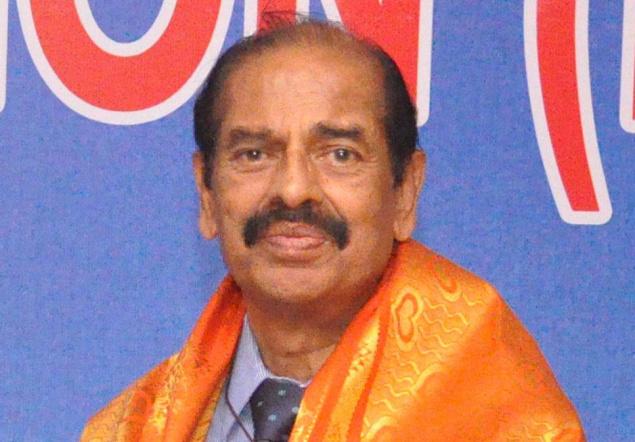
“I was the first to operate an Avro flight to Vizag and the first to operate a Boeing during the early stages of expansion of the runway (from 6,500 feet to 7,500 feet in the mid-1980s),” recalled Capt S.N. Reddy, former Director of Air India, who is presently CEO Telangana Aviation Academy (formerly AP Aviation Academy) in Hyderabad. He was in the city to participate in a seminar on ‘Regional air connectivity and export of cargo by air’, organised by the Air Travellers’ Association (India), on Sunday.

Capt. Reddy took a trip down memory lane as he recalled his eventful career in Air India. “As Regional Director (Southern Region) of Air India I had introduced 14 international flights from various airports in south India like Chennai and Coimbatore to international destinations. I sought permission from our headquarters to make optimum use of the aircraft at our disposal to operate to international destinations.”

“It was a record in the history of Air India that so many international flights were introduced in a span of six months. Indian Airlines, which was incurring losses for seven years, achieved profits in the southern region due to these operations. I received a cash award for my contribution,” he recalled.

source: http://www.thehindu.com / The Hindu / Home> News> Cities> Visakhapatnam / by B. Madhu Gopal / Visakhapatnam – August 24th, 2014

‘Entrepreneurs should be dreamers, and they should dream big’

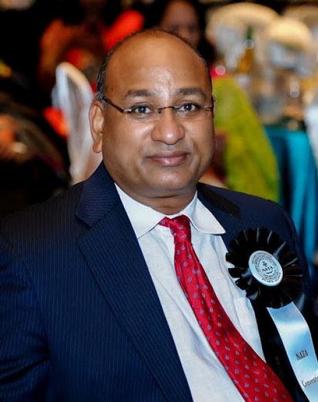
FOR MEET-- Gurram Srinivas Reddy, TEA founder. .PHOTO: BY ARRANGMENT
FOR MEET– Gurram Srinivas Reddy, TEA founder. .PHOTO: BY ARRANGMENT

Entrepreneurship is the buzzword now and Indians, unfortunately, have not made much impact on this front despite possessing sufficient knowledge and making huge strides in the IT sector across the world.

Gurram Srinivas Reddy, a first generation entrepreneur who formed Telugu Entrepreneurs’ Association (TEA) in the U.S. to promote entrepreneurs among Telugus, recently received Excellence Award at the North America Telugu Association (NATA), 2014 meet. A Hyderabadi by heart, he tells R. Ravikanth Reddy that its time engineering colleges provide platform to encourage entrepreneurs among students than just churning out degree holders.

How should engineering or management students go about developing entrepreneurship skills while in college?

First they should offer more courses in entrepreneurship and then conduct workshops by inviting industry experts in chosen fields. Invite first generation entrepreneurs as a motivational speakers and role models.

No, there has to be a paradigm shift in the approach of the educational institutions. An institution can create such environment just like Telugu Entrepreneurs’ Association (TEA) does by inviting open competition for students to prepare business plans, preparing best business practices, inviting bankers and venture capitalists to institutions as judges of those business plans. This will give an opportunity for students to interact with experts. TEA does all these activities as part of fostering entrepreneurship among Telugus around the world on a regular basis.

Entrepreneurs have to be a dreamers and when they dream, they have to dream big. There a big difference between businessmen and entrepreneurs. A businessman always thinks of profit. Most of them are not dreamers and there won’t be much of innovation in what they do. On the other hand, entrepreneurs always come up with new ideas and their approach always deals with improving peoples’ or end users’ lives.

If you take last 20 years, new innovations in Information Technology have helped in improving productivity and changing the loves of end users or customers. There is so much productivity growth in many industry sectors and all this was possible because of the entrepreneurs.

For example, Bill Gates of Microsoft, Steve Jobs of Apple, Micheal Dell of Dell computers, Google founders Larry Page and Sergey Brin and Mark Zuckerberg of Facebook have several things in common, they all are young and they wanted to change the world using technology to help all the human beings. They also started their entrepreneurial activity at a very young age. They had some idea about their products and they worked on it day and night without giving up. Also, they never lost focus or hope and started developing their products from their garages and they did whatever it took. None of these people have rich background.

All the students must do internship in their chosen industry as part of their course. By doing this, students will have firsthand experience out there in the real world and they will know dos and don’ts of the entrepreneurship.

There is no instant success to anything that we do. One should have a complete belief and trust in himself no matter what they go through. They should just move on. One should have the tenacity, perseverance and stubbornness to make it happen.

The mistake is to not dream, to not have self confidence, discipline, self control, developing skills, and to not have proper role models as they do not read bios of some of these successful entrepreneurs.

source: http://www.thehindu.com / The Hindu / Home> News> Cities> Hyderabad / by R. Ravikanth Reddy / August 17th, 2014

Indian doctors to open hospital in Guinea

Uday Rachakonda and A.M.V. Sai Kumar feel that a fool-proof screening programme for Ebola virus is vital at entry points. Photo: G. Ramakrishna / The Hindu

Owners of Livewell Healthcare struck PPP deal with Conakry to revive govt. medical centre

Even amid the Ebola outbreak in West Africa, two Hyderabad-based doctors plan to open a hospital in the Guinean capital of Conakry, where the first case of the virus was reported in February. In a public-private partnership, A.M.V. Sai Kumar and Uday Rachakonda have entered into an agreement with the Government of Guinea to revive, operate and manage the local government hospital Jean Paul II.

The doctors, who have floated Livewell Healthcare, have obtained Private Equity funding from Exhilway Global Opportunities Private Equity Fund and would be spending close to Rs. 30 crore to set up a 250-bed hospital.

“We are doctors with a dream to have our own hospital. There is a need for quality healthcare in Guinea and we want to provide it. It’s our duty to serve and we are not worried about any outbreak or health emergency. We are in the process of recruiting nurses, paramedics and experienced doctors from India. Healthcare workers in India do not have any reservations to work in West Africa,” says Dr. Sai Kumar. Outpatient services at Livewell Jean Paul Hospitals are slated to be launched by the month-end. “The Government of Guinea has trust in us and gave us this opportunity. We have already shipped close to Rs. 3 crore worth of medical equipment from India. Till July, we were in Conakry and nothing happened to us. In another four to five months, we will offer all multi-specialities in Conakry,” said Dr. Uday Rachakonda.

Conakry receives a lot of visitors from neighbouring countries such as Liberia, Sierra Leone and Nigeria, the countries identified by WHO as the worst hit by the Ebola outbreak. Doctors pointed out that the reason for so many fatalities is lack of healthcare infrastructure and Ebola awareness among the locals.

“There is only one CT scan machine in Guinea and it costs around $250 for a single scan. There are only two private hospitals with combined bed strength of 35 and only three government hospitals. They are definitely 15 to 20 years behind us in medical infrastructure. We have also taken up the responsibility to train the local population in our hospital,” said the doctors, both of whom will fly to West Africain a week’s time.

source: http://www.thehindu.com / The Hindu / Home> News> Cities> Hyderabad / by M. Sai Gopal / Hyderabad – August 15th, 2014

2 Indians quit high-paying jobs in the US to tackle India’s mounting garbage crisis

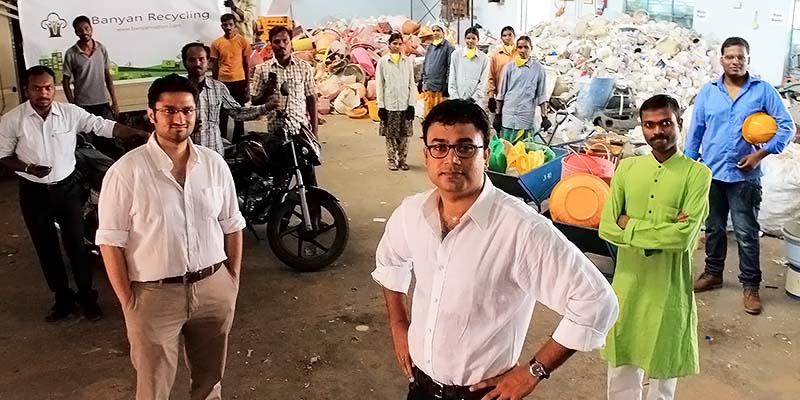
Banyan is an informal sector inclusive high technology social venture which aims to solve the problems in the Indian recycling value chain through technology innovations that encourage source segregation and maximize landfill diversion.

The startup aspires to root out inefficiencies in the recycling value chain by innovating across all aspects of the recycling process from pre-sorting and collection to post-sorting and processing of recyclates.

BanyanTELAN13aug2014

“Our mission is to identify and nurture progressive recyclers within the informal sector, improving their quality of life through technology solutions that give them ample opportunities to maximize their growth and earning potential,” says Mani Vajipey, Co-founder & CEO, Banyan.

The Beginning

Banyan was born during one of Mani’s travels in India where the general filth and squalor across the nation deeply disturbed him and inspired him to build an organization that will transform the solid waste management landscape in India through technological innovations, better practices and grassroots activism.

Mani developed Banyan’s business model at Steve Blank’s Lean Launch Pad Program and Columbia Business School’s Greenhouse Incubator. Raj Madangopal, a technologist, with a passion for applying technology to solve socially relevant problems plaguing India, came aboard 6 months later.

“Our association dates back to the year 2002 in the university town of Newark, Delaware, where we bunked classes together, and becoming thick friends,” says Mani. Mani was then pursuing a PhD in electrical engineering (wireless communications) and Raj a masters in mechanical engineering (robotics) at the University of Delaware.

Post college, their paths diverged — Mani ended up at Qualcomm in San Diego while Raj joined a mobile startup in Seattle. Ten years later over a casual phone conversation, Mani shared his vision for solving India’s waste management issues and the business model that he was developing at Berkeley and Columbia Business Schools.

As part of Columbia’s Greenhouse Incubator, Mani and Raj travelled to Hyderabad and Bangalore on customer discovery and activation. “We spoke to dozens of facilities managers at large MNCs, visited several townships in Hyderabad, and met with city municipal commissioners, private waste management contractors, rag pickers, raddiwalas and kabadiwalas in the city,” adds Mani.

Over the course of three months of thorough market research and talking to people, the duo realized that the country desperately needed an integrated solid waste management company that could innovate across the entire value chain — right from collection and transportation to landfill management, recycling and generating energy from waste.

After returning to the US, the duo spent three months to understand waste management processes in there, visiting landfills, waste to energy plants and recycling centers across the Bay Area and New York City.

The founders quit their jobs, returned to India and launched Banyan in July 2013 – primarily focusing on handling municipal solid waste. “We reviewed tenders across the country and participated in a waste to energy contract with Rourkela Steel Plant forging a partnership with a leading Biogas to Energy Company in San Francisco,” points out Raj.

Red tape and lack of autonomy make things difficult for Indian startups

India’s red tape combined with the lack of autonomy on part of the officials involved caused the tender process and negotiations to drag on for over five months. The tender that was floated around June 2013 by Rourkela Steel Plant remains open to date. “This episode taught us a valuable lesson – although there was a grave need for an integrated solid waste management company, urban local bodies had a limited appetite for innovation and risk,” says Mani.

Why Indian startups stay away from government?

This led to the next pivot — entering the solid waste management space via a model that did not depend on the government or urban local bodies for its top line revenues. “Recycling was a natural fit for us. Each year, the nation dumps 6.7 million tons of recyclable material (worth $3.1billion i.e. Rs. 19000 crores) in its unsanitary landfills causing serious environmental degradation,” adds Mani.

The informal sector forms the backbone of the recycling value chain and is responsible for achieving recycling rates of 70%, one of the highest in the world. Ironically, rag pickers are treated as social outcasts, and itinerant waste collectors and neighborhood kabariwalas (small scale stationary aggregators) — who are at the bottom of the chain — depend on middlemen (large traders) for their livelihood and working capital requirements.

These middlemen trap the rag pickers, itinerant waste collectors and kabariwalas by extending informal loans and pressurizing them to sell exclusively to them well below fair market rates.

These factors led Mani and Raj to develop a business model to disrupt the recycling value chain in India. Once Mani and Raj were clear on the recycling business model for India – friends and family pledged $100K within one week of their fundraising efforts.

Technology is genesis of Banyan

Banyan’s proprietary software platform consists of several pieces such as the Android based informal sector lead generator app and an SMS based trading platform to identify and nurture progressive recyclers from the informal sector, data analytics engine that gives the company complete control over operations to optimize, iterate and improve performance on a daily basis. It also has a GPS based routing and tracking engine for reduced collection and transportation costs.

Banyan uses the data it collects at every touch point in the value chain to periodically generate waste analytics reports to build awareness among citizens and businesses and to also provide urban local bodies with valuable insights that can power policy changes and spur sustainability initiatives in the region.

Revenue model

It generates revenue primarily through the sale of processed recyclates in the form of bales, pellets and chips to reprocessors and producers in the local, national and international commodities markets.

Differentiators and USPs

The company differentiates itself from competition by providing an end-to-end professional service right from collection and transportation to processing and sales giving it tight control over the entire supply chain and empowering the informal sector by including it in its network of suppliers.

The startup plans to integrate 1500 plus kabariwalas in the area into the company’s supplier network by the end of this month. By October, Banyan will expand simultaneously into other major cities of Telangana and Andhra Pradesh.

source: http://www.social.yourstory.com / YourStory.com / Home> Social Story / by Jai Vardhan / June 29th, 2014

Collaborative work

Director Challa Srikanth

Debut director Challa Srikanth seeks crowd funding for his indie film on friendship and black magic.

Crowd funding may be a buzzword among indie filmmakers in the Hindi film industry, but a rarity in Telugu. Debutant director Challa Srikanth is taking the crowd funding route to make his film, The Book. Srikanth has earlier co-written Chandamama Kathalu, worked as production designer for Case no. 666 and helped in the pre-production stage of Minugurulu. “I also made a short film called Song of Life, focusing on romance and friendship in college days,” says Srikanth.

The Book is a story of friends caught in the grip of black magic, a tale of love, lust and power. Srikanth has uploaded half of the script online for people to read and then pool in money for the film. “My friend Rohit Mishra, an NIT alumnus from Jaipur, wrote the first draft and I worked on the second,” says Srikanth, who graduated from the Indian School of Mines, Dhanbad. “Even when I joined college, I knew I’d someday turn to filmmaking,” he says.

A story of friends and black magic maybe a path less explored in Telugu cinema but Srikanth is hopeful it will find takers. “Look at the Kannada film industry. Their films aren’t great to speak of. But suddenly, there was the much-acclaimed Lucia which was a game changer. Our industry is way better and I am sure people will like the script and donate,” he says.

Srikanth is looking at a budget of Rs. 60 lakh, of which Rs. 40 lakh will be used for making the film and the remaining for promotions. “The English script is in place, I will be working on writing it in Telugu and we plan to shoot by February 2015,” he says.

He doesn’t feel insecure for making half his script available in the public domain. “The next half holds the crux of the story, so I am sure no one can steal my idea. I haven’t revealed much,” he says.

Poster of the movie 'The Book'
Poster of the movie ‘The Book’

The Book is a story inspired by Nahush ka Patan by Maithili Sharan Gupt. The film will be shot by cinematographer G. Kamalakar, who has worked on documentaries and assisted in Anukokunda Oka Roju, Shock and Vikramarkudu. Lavanya Krishna, who worked on the recent film Ulavacharu Biryani, will edit the film.

For more details of the crowd funded film, visit www.thebookmoviezone.com

source: http://www.thehindu.com / The Hindu / Home> Features> MetroPlus / by Sangeetha Devi Dundoo / Hyderabad – August 11th, 2014

Group of Women Entrepreneurs from Telangana Form ALETS

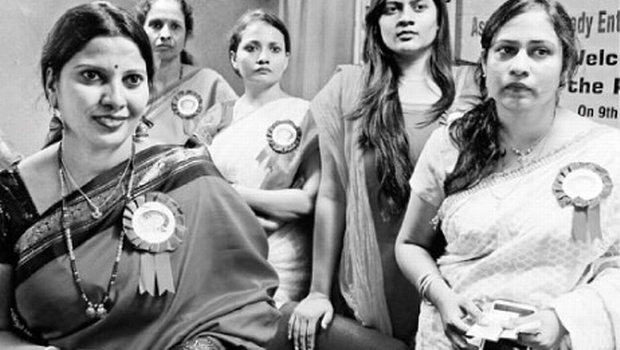
Association of Lady Entrepreneurs of Telangana State president M Sarita Reddy (left) and other members at a press conference in Hyderabad on Saturday. | NEERAJ MURALI

Hyderabad :

It is only 67 days since the new state of Telangana has been formed. With every other field in the state rapidly working towards development, an all-women organisation called ‘Association of Lady Entrepreneurs of Telangana State (ALETS)’, was launched on Saturday by a group of successful entrepreneurs in the state to empower women.

Some of the main objectives of the organisation are to educate women to come forward and become entrepreneurs in various fields, improve socio-economic aspects of women in urban and rural areas.

“Women, especially those in rural areas, are very industrious and have a lot of ideas. We will go and give them guidance in business planning, capacity building, marketing awareness through linkages,” said M Sarita Reddy, founder-president of ALETS.

“When we use the word start-up, the first thing that comes to mind is money. However, we feel counselling is more important,” she said. Apart from helping women establish their own start-ups, the association also assists them in conducting various exhibitions to showcase their talents.

Sarita remarked, “We will also establish different incubation centres for women entrepreneurs in the future. Formation of Telangana is a sixty year old dream. Women are the foundation of developing State. Hence, there is a need for a common platform to empower women in the state.”

“While many students are graduating from engineering and other degree colleges these days, it is impossible for all of them to get jobs. Therefore, entrepreneurship is one of the most affordable options for the pass-outs who have great ideas in mind,” she opined.

“It is indeed a matter of pride that Telangana women have taken the initiative in entrepreneurship,” said K Sudhir Reddy, president of Telangana Industrialists Welfare Association.

“There are hardly any women entrepreneurs in the state today. If one has to go with the numbers, the total percentage of women entrepreneurs in the state today is a mere three,” Sudhir Reddy said.

“For a country to develop, women are more important. I believe they have better understanding skills and work towards development of the state,” he added.

source: http://www.newindianexpress.com / The New Indian Express / Home> States> Telangana / by Express News Service / August 10th, 2014

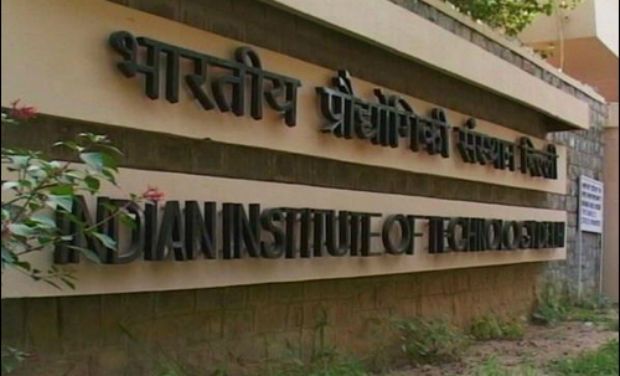
IIT to help students set up firms for freshers

Picture used for representational purpose. (Photo: PTI/File)

Hyderabad:

IIT-Hyderabad will be encouraging its graduates to take up entrepreneurship and will also be helping them establish companies.

IIT-Hyderabad has jointly set up five incubators in IT, manufacturing and various other sectors and these incubators will focus on startups.

On Friday, IIT-Hyderabad celebrated its third annual convocation. A total of 266 students passed out. R. Seshasayee, executive vice-chairman of Ashok Leyland, was the chief guest.

source: http://www.deccanchronicle.com / Deccan Chronicle / Home> Nation> Education / Manoj. C / August 09th, 2014