Bullet train logo has Hyderabad youth’s stamp

Hyderabad :

The logo designed by a 27-year-old city youth will adorn India’s first high speed rail network project, namely the bullet train connecting Mumbai and Ahmedabad. Chakradhar Aalla, a resident of Lakdi-ka pul, bagged the first prize in the logo designing contest held by the National High Speed Rail Corporation Limited (NHSRCL).
At a function organised in New Delhi on Wednesday Chakradhar was presented Rs 1 lakh by renowned architect and painter Satish Gujral, who also headed the judges’ panel in the contest. It took Chakradhar three weeks to design the logo.

Chakradhar, a second year PG graphic designing student at the National Institute of Design (NID) in Ahmedabad, said, “It was a very encouraging experience and a great learning opportunity for me. I found a whole new platform for creative exploration.” He had earlier graduated in architecture from the National Institute of Technology (NIT) in Trichy.

The Cheetah-inspired design indicates the high speed of the bullet train. The symbolic portrayal represents the movement of the bullet train as it charges through all the stations aerodynamically. The dots connected with the train at the top of the logo symbolises the services of the NHSRCL, which unlike other high speed rail services, also caters to short distance travellers with several halts. Blue, red and grey colours have been used in the design process to signify safety, speed and comfort respectively.

Chakradhar’s father Aalla Sivakoti Prasad said, “I feel proud that my son was awarded by a legendary person like Gujral. It is a great opportunity to be associated with an organisation like NHSRCL. May he achieve success in fulfilling his dream of making learning enjoyable for schoolkids to help improve education standards.”

source: http://www.timesofindia.indiatimes.com/ The Times of India / News> City News> Hyderabad News / TNN / October 26th, 2017
Five Hyderabad players in Board President’s XI team

Hyderabad :

Happy days are here again for Hyderabad cricket. After a lull of many years, things are really looking up for the cricketers of the state. On Monday, promising paceman Mohd Siraj found a berth in the Indian T20I team for the series against Sri Lanka next month and five other players too were rewarded by the National Senior Selection Committee as they found a place in the Board President’s XI which will take on the visitors in a two-day warm-up game in Kolkata on November 11 & 12.

Southpaws B Sandeep and Tanmay Agarwal, leggie Akash Bhandari and medium pacers CV Milind and Ravi Kiran have been included in the Naman Ojha led 13-member squad.

After their stupendous show last year when they reached the quarterfinals of the Ranji Trophy, the Hyderabad senior team started the season with a bang by notching up back-to-back titles in the form of the Moin-ud Dowlah Gold Cup at home and then claiming the Buchi Babu Trophy in Chennai.

Though rain played spoilsport as their games against Maharashtra and Uttar Pradesh were washed out without a ball being bowled, Monday’s development will bring a lot of cheer in the camp as the team takes on Karnataka in their four-day Group A match in Shimoga from Tuesday.

“It is a great news for Hyderabad cricket. The hard work put in by the players has borne fruit. After a very long time six players have been selected by the Indian selectors. This is a red-letter day for Hyderabad cricket. I am glad about it and wish the players all the very best. We look forward to produce many more players who will don Indian colours,” Hyderabad Cricket Association (HCA) secretary T Shesh Narayan, who has been camping in Mumbai for the last few days and played a key role in bringing to the notice of the selectors the players’ performances, told TOI over the telephone.

“I am delighted with the call-up. It is a great feeling to be considered for playing against a visiting international team. I just look forward to the game and will take it as it comes. I have no particular goals as such. I just want to do well for the team and gain from the experience,” said Sandeep, who had got 612 runs with a highest of 203 not out last year in the Ranji Trophy. The southpaw had scored on century on debut against Jharkhand in 2010.

“It’s just a learning step for me. The dream is always to play for the country but there is no time frame for it. I just want to keep scoring runs and wait for my opportunity,” said another southpaw Tanmay.

Both the players were happy that five of them have been selected for the Board President XI’s and also for the inclusion of teammate Siraj in the Indian squad. “It has been a long time since so many players from Hyderabad have made it to the big league. I am delighted about Siraj and also about us playing in the Board President XI’s game. I am sure that this will inspire our team to continue to do well this season too,” said Tanmay.

“I am thrilled that almost half of the team will be from Hyderabad. It is nice to have familiar faces in the dressing room. We hope to make an impact in the game,” said Sandeep.

The team: Naman Ojha (Capt/WK), Sanju Samson, Jiwanjot Singh, B Sandeep, Tanmay Agarwal, Abhishek Gupta, Rohan Prem, Akash Bhandari, Jalaj Saxena, CV Milind, Avesh Khan, Sandeep Warrier, Ravi Kiran.

source: http://www.timesofindia.indiatimes.com / The Times of India / News> Sports News> Cricket News / Soloman s Kumar / TNN / October 23rd, 2017

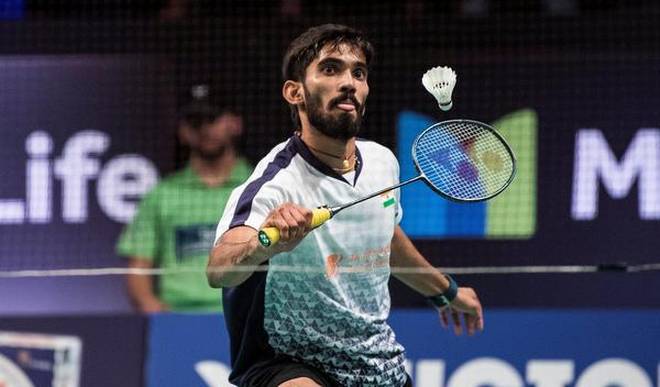
Denmark Open: Kidambi Srikanth wins third Super Series title

Srikanth beat a man 12 years his senior | Photo Credit: Reuters

Beats Korean veteran Lee Hyun II 21-10 21-5 in a match that lasted just 25 minutes

Kidambi Srikanth clinched his third Super Series Premier title with a dominating straight-game victory over Korean veteran Lee Hyun II in a lopsided final of the USD 750,000 Denmark Open here on Sunday.

Playing an opponent 12 years his senior, Srikanth asserted his dominance with a 21-10 21-5 win over 37-year-old Lee in a match that lasted just 25 minutes here.

World No. 8 Srikanth didn’t give any chances to the more experienced Lee, who looked a pale shadow of the man, who had beaten World No. 2 Son Wan Ho in the semi-finals yesterday.

The duo were tied 4-4, before Srikanth changed gears and used his deception and powerful smashes to lead 9-5.

A return going to the net gave a point to Lee but Srikanth produced a brilliant cross court net dribble to bamboozle his opponent and moved into the break with a healthy 11-6 lead when the Korean went wide.

Lee had no answers to Srikanth’s razor-sharp smashes and cross court returns as the Indian led 14-8. Lee also made judgement errors at the baseline and also miscued his strokes as Srikanth extended his advantage to 17-8 with another smash.

The Korean hit two long shots and then sent one at the net to hand over a 20-8 lead to Srikanth.

The Indian made two unforced errors to allow Lee get into doubles figures. But Lee again erred with the length of his return as Srikanth pocketed the first game.

In the second game, Srikanth stepped on the gas and zoomed to a 11-1 lead even as Lee struggled with his strokes, hitting wide and long and often finding the net.

Post mid-game break, Lee produced a steep cross court return, much to the cheer of the sizable crowd who had turned out to watch the finals. The Korean lacked anticipation as Srikanth smashed his way to the title.

Ratchanok Inthanon takes title

Earlier, 2013 World Champion Ratchanok Inthanon produced another gritty display to stave off the challenge from World No. 5 and defending champion Akane Yamaguchi of Japan 14-21 21-15 21-19 to win her first title of the season.

“I didn’t think about winning or losing. I just wanted to give my best for our beloved King, who passed away last year. It has been difficult for us and I am happy I could find the mental strength and power to win today,” a teary-eyed Inthanon said.

Thailand’s King Bhumibol Adulyadej, the world’s longest- reigning monarch, had passed away last year after 70 years as head of state.

Among other matches, Hong Kong’s eighth seeded mixed doubles pair of Tang Chun Man and Tse Ying Suet, who had clinched the 2012 Japan Open Super Series, notched up their maiden major title.

They defeated top-seeded Chinese combo of Zheng Siwei and Chen Qingchen 24-22 19-21 23-21 in a thrilling contest that lasted a little less than an hour.

Korea’s women’s doubles pair of Lee So Hee and Shin Seung Chan, who had won the 2014 World championship bronze medal at Denmark, dished out another sensational performance to outwit Japanese sixth seeds Shiho Tanaka and Koharu Yonemoto 21-13 21-16 to clinch the title.

Chinese pair of Liu Cheng and Zhang Nan, seeded fifth, defeated second seeded Indonesian combo of Marcus Fernaldi Gideon and Kevin Sanjaya Sukamuljo 21-16 22-24 21-19 in the men’s doubles final clash.

source: http://www.thehindu.com / The Hindu / Home> Sport> Other Sport / by PTI / Odense – October 22nd, 2017

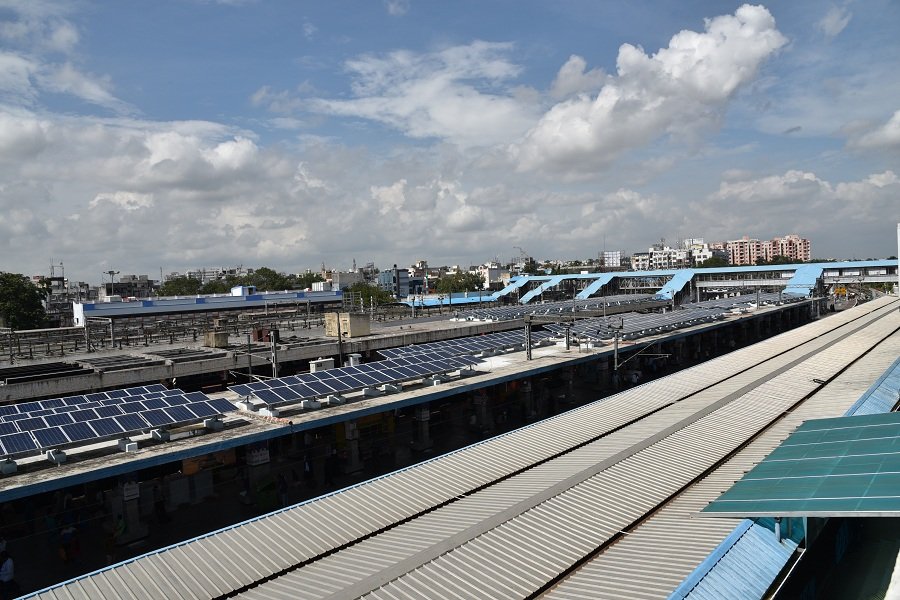
Secunderabad Railway Station is India’s first Green Railway Station

The six modules involved in the evaluation of the Secunderabad station were sustainable station facility; health; hygiene and sanitation; energy efficiency; water efficiency; smart and green initiatives and innovation and development.

Hyderabad:

The Secunderabad Railway Station has earned the distinction of being the first railway station in the country to be certified as a ‘Green Railway Station’ by the Indian Green Building Council – Confederation of Industry (IGBC-CII), in association with Indian Railways.

The Station has bagged the coveted Silver Rating in the category, according to an SCR release. The IGBC-CII, with the support of Environment Directorate of the Indian Railways had developed the Green Railway Stations Rating system to facilitate adoption of Green Concepts to reduce adverse environmental impacts due to station operation and maintenance and enhance overall commuter experience.

The six modules involved in the evaluation of the Secunderabad station were sustainable station facility; health; hygiene and sanitation; energy efficiency; water efficiency; smart and green initiatives and innovation and development.

Tai Lee Siang, chairman, and Terri Wills, chief executive officer, World Green Building Council presented a shield, plaque and certification to SCR officials during the Green Building Congress-2017 at Jaipur last week. The certification is valid for three years.

Vinod Kumar Yadav, General Manager, SCR who was instrumental in drawing up the plan to meet norms for the Green Railway Station Certification, congratulated officials involved in the exercise.

Secunderabad Railway Station holds a total area of 13.34 acres and has 408 different species of trees available in the station area. Organic fertilizers and pesticides are being used while solar photo voltaic installations cover 41.2% of the exposed station roof area.

A 500 Kwp solar plant was installed in 2016, generating 2,500 units of power per day, accounting for 37% of energy requirements of the station, and leading to savings of Rs.72.92 lakh annually.

With 4,864 fixtures, Secunderabad station is 100% LED lit as well. Other green initiatives here include a 5lakh-litre Sewerage Treatment Plant, central waste collection, bottle crushing machine, CO2 sensors at AC waiting halls and rainwater harvesting pits.

source: http://www.telanganatoday.com / Telangana Today / Home> Hyderabad / By Telangana Today / October 11th, 2017

Lo and behold the magnificient murrahs of Telangana

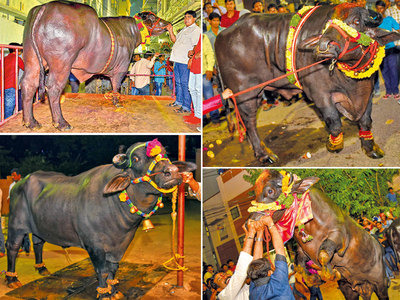
Eemaata, eemaata, yuvarajula sye aata… (What a delight it is, this dance of the princes…) Thus goes the popular song that best encapsulates the essence of Sadar festival aka Telangana’s very own ‘Dunnapothula Panduga’. Its English translation, ‘Buffalo Carnival of Telangana’ doesn’t quite have the same ring somehow. That’s besides the point though. For this festival is a celebration of the buffaloes — the ‘dancing princes’ that the aforementioned lines of the Sadar song extol. And the star attraction of this year’s festivities were the magnificent Murrah quartet — Raja, Dara, Maharaja and Shahenshah — each weighing well over 1,200 kilos!

As their proud handlers rave about the USP of these hulking bulls, your jaw drops in amazement. “The 4-year-old Raja weighs close to 1300 kg and is a 12-time National Livestock Champion. Maharaja, 6, from Chevella is a 6ft 2 inch-tall 1400-kg alpha male who makes for a breathtaking sight. Then there is Dara, son of the 24-time National Livestock Champion, Yuvraj, who’s fathered over 2,00,000 calves. Like his massive father, Dara tips the scales over 1,300 kgs. And the most expensive of them all is four-and-a-half year old Shahenshah who towers at a staggering 7 ft and weighs a whopping 1500 kilos,” say brothers Mahesh Yadav and Madhukar Yadav, organisers of the Sadar festivities which were held in Srinagar Colony on Friday night.

Bred and raised in Hyderabad, Shahenshah is hailed as the pride of Telangana by E Haribabu Yadav, state general secretary, All India Yadav Mahasabha. “Recently a buyer offered `25 crore to buy Shahenshah but his owner Ahmed Alam Khan refused to sell,” says Haribabu, adding, “Shahenshah was bred and groomed with the intention of beating the celebrated super bull Yuvraj of Hissar (Haryana),” says Haribabu who organised the Sadar festivities in Musheerabad on Saturday night.

And it seems like he’s already living up to expectations. Shahenshah recently entered the record books as the ‘World’s Most Expensive Bull’. “Shahenshah is one of the finest specimens of the murrah breed of buffalos that is ethnic to India. Standing 7 ft tall and 15 ft long, this bull is the pride of India,” says Suman Palle, CEO, High Range Book of World Records.

“The price of a bull is determined by the value of it’s semen which is much in demand. Each ejaculation fetches anywhere between `1,00,000 to `1,50,000. Hundreds of doses are prepared from the semen discharged during every ejaculation which is frozen in liquid nitrogen and sold to dairy farmers,” explains Ahmed Aalam Khah.

These bulls lead a charmed life indeed. “We spend about `4,000- `5,000 every day. They are given oil baths three times a day and it has a couple of attendants looking after it all day. Shahenshah drinks 30-40 litres of milk mixed with raw eggs every day. It’s diet consists of 100-150 apples, laddus made of kaju, pista, badam and dates, concentrates, green grass and hay.”

source: http://www.timesofindia.indiatimes.com / The Times of India / News> City News> Hyderabad News / by Karthik Pasupalate / TNN / October 23rd, 2017

This retired railway engineer filled potholes on Diwali night

_____________________________________________________________________

Highlights
Gangadhara Tilak Katnam, an engineer who retired nearly a decade ago, has made filling potholes his mission since 2010.

He has filled 1,302 potholes across Hyderabad so far. He selects roads where one least expects a pothole
_______________________________________________________________________

Hyderabad :

As people celebrated the festival of lights, Gangadhara Tilak Katnam stopped his ‘Pothole Ambulance’ at Tippu Bridge between Langar Houz and Police Academy junction and filled a pothole.

Tilak, an engineer who retired from South Central Railway (SCR) nearly a decade ago, has made filling potholes his mission since 2010, filled 1,302 potholes across the city so far.

“I celebrated Diwali by filling a pothole,” said Gangadhara Tilak, who not only devotes his time but also spends a chunk of his pension to ensure safer roads. His family, volunteers of ‘Shramadaan’, a voluntary organization he set up, and passersby often help him.

“Initially I used to pick up gravel from the roadside when anew road was being laid. Subsequently, I was not able to find any. I then requested contractors to at least sell me some gravel,” he told TOI on Friday.

He selects roads where one least expects a pothole. “Such potholes are dangerous. When the ride is smooth and suddenly one comes across a pothole, it becomes difficult and can result in deaths,” he said.

When he noticed such accidents, he tried to get the police to mention the road condition as the cause of the mishap in FIRs but was dismissed. He feels that when the reason is on the record, cops can immediately ask civic officials to repair the road or fill the pothole.

It can also make officials or contractors accountable “What I fail to understand is why don’t engineers make note of the damages to roads in their jurisdiction and carry out the necessary works needed immediately?” Gangadhara Tilak asked.

source: http://www.timesofindia.indiatimes.com / The Times of India / News> City News> Hyderabad News / by Ch. Sushil Rao, TNN / October 21st, 2017

IIT Hyderabad uses activated jamun to remove fluoride from water

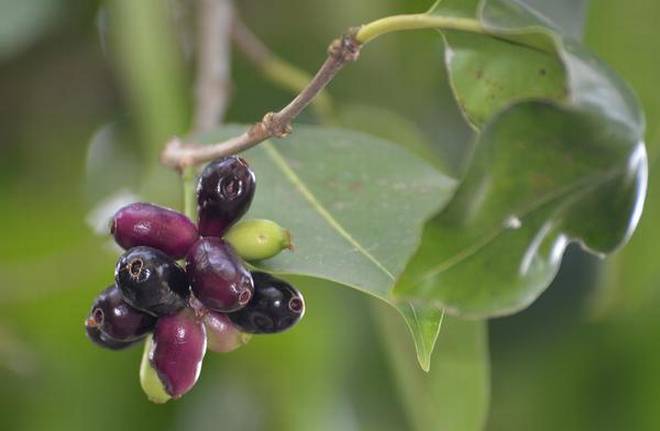
n business: Activated jamun powder was able to reduce the fluoride content of Nalgonda groundwater from 3.2 ml per litre to 1.5 ml per litre. | Photo Credit: K_Ananthan

The activated jamun powder can be reused up to five times by heating it to 50 degree C

Now, while removing excess fluoride from drinking water, the usual problems such as high operational costs and getting rid of toxic sludge will be a thing of the past. Researchers at the Indian Institute of Technology (IIT) Hyderabad have used activated jamun seed powder to bring the fluoride content in drinking water to less than the WHO limit of 1.5 mg per litre. The results were published in the Journal of Environmental Chemical Engineering.

The team led by Dr. Chandra S. Sharma from the Department of Chemical Engineering at IIT Hyderabad mixed the jamun seed powder thoroughly with potassium hydroxide and heated it to 900 degree C for an hour to produce activated jamun powder. The activation increases the pore volume several times and the surface area by more than 50 times. As a result, the fluoride adsorption efficiency increased several times compared to samples that were not treated with KOH but heated to 900 degree C.

The fluoride ion removal increases with a decrease in pH, with maximum adsorption found at pH 3. The activated jamun seed acquires a positive charge at low pH and the positive charge attracts the fluoride ions while the negative charge in an alkaline medium repulses the fluoride ions.

With fluoride adsorption capacity of 3.65 milligram per gram, activated jamun seed was close to tea ash (3.75 milligram per gram) but much higher than other substances such as banana peel, coffee husk, and coconut shell.

“Besides testing the activated jamun seed powder in the lab we also tested it using groundwater taken from Nalgonda village, which is one of the worst fluoride-affected villages in India. After two hours of contact time, we were able to reduce the fluoride content from 3.2 milligram per litre to less than 1.5 milligram per litre, which is the WHO limit,” says Dr. Sharma.

On heating the activated jamun powder to 50 degree C, the fluoride gets desorbed and the jamun powder can be reused up to five times. “About 96% of the fluoride can be desorbed. So there is a loss of only 4% efficiency after each desorption,” he says.

Disposal of sludge

Disposal of the fluoride sludge is another area that the team is working on. “The fluoride ions desorbed from the activated carbon will be present in very small quantity of water. We can add sodium hydroxide to this water to produce sodium fluoride,” he says. The major objective of the current study was to evaluate the fluoride removal efficiency using a novel, low-cost activated carbon.

“We will next be testing the efficiency of the activated jamun powder in water containing multiple ions such as fluoride, arsenic and heavy metals,” says Ramya Araga the Department of Chemical Engineering at IIT Hyderabad and the first author of the paper.

“We have so far carried out all tests in batches. We need to now undertake column studies,” says Araga. The continuous flow parameters have to be optimised to achieve best results; during the batch studies, two hours of contact time was needed for the fluoride to be removed.

source: http://www.thehindu.com / The Hindu / Home> Sci-Tech> Science / by R Prasad / October 21st, 2017