Adivasi creativity untapped in Adilabad

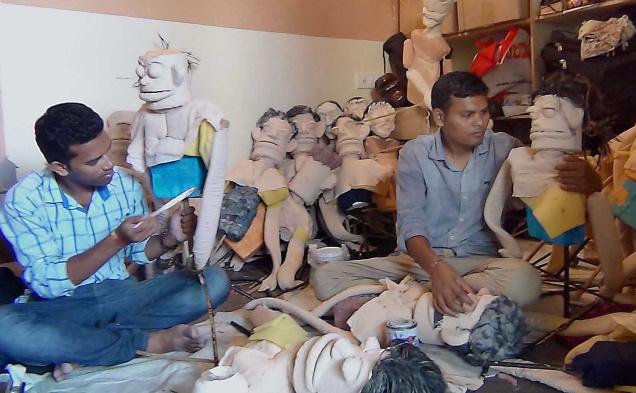
Creative minds:Adivasi youth making puppets in Hyderabad.— Photo: By Arrangement

There is, however, tremendous potential

Unlike their counterparts elsewhere in the country, the Adivasi Raj Gonds or Kolams of Adilabad have nothing that can be considered an art form of their own. This, however, does not mean that these aboriginal people are not creative.

The Raj Gonds, belonging to the lineage of central Indian ruling class of Gonds, have only supported the Ojjis or Ojhas, a small artisan community which makes art pieces used by the former in religious and agriculture activities.

Limited market

The range of these artisans, nevertheless, is limited given the scope of their traditional market which is mostly confined to the Adivasis living in the forests of Adilabad.

The creativity of Raj Gonds and Kolams is not known to the outside world, apparently because the tribes have not been exposed to the scope of fine arts. There have been experiments, and highly successful at that, in teaching fine arts to the aboriginal people, but it needs to be elevated to the level of a livelihood activity.

“They are highly talented and creative,” vouched Padmini Rangarajan, a well known educational puppeteer from Hyderabad, who runs the Sphoorthi Theatre for Educational Puppetry, Art and Craft — STEPARC.

“I have four Adivasi youth from Adilabad district who have learnt puppet making, stage design, story concept and manipulation with relative ease.” “Boyini Prakash, a Koya tribal from Kagaznagar who is an MSc in chemistry, and Kodapa Gajanand, a Kolam from Kosai In Talamadugu mandal who studied B.Tech and also has a diploma in journalism, are involved in a few projects related to saving sparrows and figuring out the relationship between dance and puppetry. Soyam Bheem Rao of Jainoor, who is an MBA graduate and PG diploma holder in tribal development and management, and H.K. Punish, a government teacher who holds MA in English and B.Ed degrees, are using puppets to teach English schools. We at STEPARC have, in fact, sold puppets thanks to the efforts of these youngsters,” Ms. Rangarajan said.

Not that the talent and creativity of the Adivasis has totally gone unnoticed by the Integrated Tribal Development Agency, Utnoor, which looks after all developmental activity related to the tribal community in the district.

In 1985, a Kolam Art School proposed in Adilabad town could not be opened due to extraneous reasons, and the matter was not taken up again.

It was Guruji Ravinder Sharma, the founder of Adilabad’s Kala Ashram, who taught Kolam students of the Kolam Ashram School in Adilabad how to paint in his capacity as honorary arts and craft teacher. An exhibition of the paintings made by the Kolam students was held at Hyderabad in 1985 and had come in for appreciation from all.

source: http://www.thehindu.com / The Hindu / Home> National> Telangana / by S. Harpal Singh / Adilabad – August 09th, 2016
Aiming for a Guinness record

Shivali and her mom, Kavita, have made 1,200 paper quilling dolls

If it were anyone else, it would just have been a hobby. But this mom and daughter duo was at it steadfast, endeavouring to make it to the Guinness Book of World Records for the largest display of handmade paper dolls.

Previous record
Research showed that the earlier record held was 1,154 paper quilling dolls. Shivali and her mom, Kavita, on the other hand, made 1,200 of them in their bid to get into the record books.

A former teacher at Gitanjali School here, Kavita is now a homemaker and an independent education consultant.

Having made 1,200 dolls with quilling sets comprising thin strips of multi-coloured paper, the duo made the pitch to the Guinness Book, and has received a communication saying that their claim would be evaluated with due research.

Support
Shivali’s father, Anil Srivastava, works with Dr. Reddy’s Laboratories as an assistant director and does everything possible to help his wife and daughter realise their dreams.

Asked about the endeavour, Shivali, who is in her first year of engineering at GITAM University, said it took them about two months and about 1,300 quilling sets to touch the 1,200 mark.

“My mom, having been an art teacher, helped and we have won several certificates and medals together. We saw a post on social media and wanted to break the record. We wanted to showcase India and Hyderabad and prove to the world that we have talent too,” she said.

Once they made 1,200 dolls and sent their application, complete with pictures, to the Guinness Book of World Records, they got an acknowledgement.

They were told that it would be processed, evaluated with specific research using the help of external consultants, and they would respond within 12 weeks.

source: http://www.thehindu.com / The Hindu / Home> News> Cities> Hyderabad / Suresh Krishnamoorthy / Hyderabad – August 11th, 2016

CCMB-NIMS tie-up on stem cell therapy

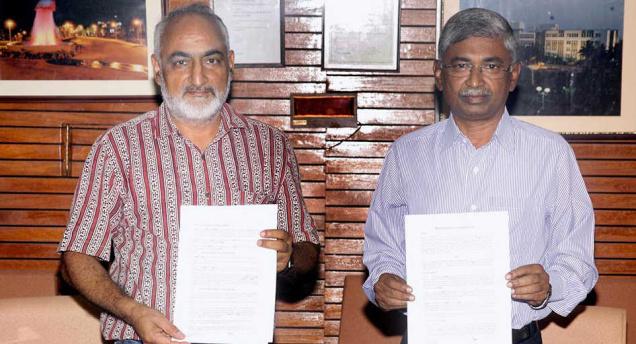
Partnership:Rakesh Mishra, director, CSIR-CCMB, and Dr. K. Manohar, director, NIMS, after signing an MoU in Hyderabad.

This will help NIMS clinicians gather expertise in basic sciences that CCMB has established itself in

Nizam’s Institute of Medical Sciences (NIMS) and Centre for Cellular and Molecular Biology (CCMB) signed a memorandum of understanding to improve the hospital’s capabilities in stem cell and regenerative therapies.

The MoU will help NIMS clinicians to gather expertise in basic sciences that CCMB has established itself in. The MoU was signed as part of a larger project funded by the Department of Science and Technology of Govt of India.

NIMS is also developing a bone marrow facility to conduct stem-cell transplants. The MoU gives CCMB access to clinical aspects of research and would facilitate better stem cell research.

source: http://www.thehindu.com / The Hindu / Home> News> Cities> Hyderabad / Staff Reporter / August 10th, 2016

NRI Foundation adopts 100 govt schools in TS dists

Khammam :

One of the founders of the NRI foundation, Talluri Jayashankar said that it had adopted 100 government schools in seven districts to provide digitalised education. The initiative has been funded by 15,000 NRIs who belong to Khamman district and are now residing in the US.

Jayashankar was speaking at the teachers motivation programme here on Monday.Deputy CM Kadiyam Srihari said NRIs should adopt government schools and provide digitilised education to the poor.

In the meeting conducted by NRIs Foundation, he asked the teachers to take more responsibility in shaping the future of students and said that the goodwill of government schools was in their hands. He pointed out that though the government was providing funds to the schools for all facilities, government schools were not producing good results.

He asked teachers to understand the reason why a daily wage labour sends his children to private schools by taking loans and claimed that the reason for this was lack of faith in government schools.

The state government has introduced free education from KG to PG in 320 Gurukul schools across the state.

Khammam NRI Foundation representative Kishan Rao announced that they are spending 75 per cent of the funds for the development of education and 25 per cent for prevention of diseases across the district.

The deputy CM distributed LED TVs to school headmasters.MLC Balasani Laxminarayana, Khammam mayor Papalal, district education officer N Rajesh, assistant director of publicity Murthuja and others also participated in the programme.

source: http://www.newindianexpress.com / The New Indian Express / Home> States> Telangana / by Express News Service / August 09th, 2016

Chakali Ilamma’s life to be captured in a 30-minute-long documentary

Hyderabad :

State government, which has decided to bring out books and produce documentaries to record the life history of Telangana iconic figures, has given its nod for making a documentary film on the life of Chakali Ilamma.

Youth Advancement, Tourism & Culture department, which had earlier sanctioned `6 lakh for this purpose, now released another `10 lakh to Telangana Rajaka Seva Sangam (TRSS), Hyderabad, for producing the short film. The TRSS is producing the 30-minute short film on Chakali Ilamma’s life with emotional songs and dialogues.

IllammaTELAN08aug2016

Who was Ilamma

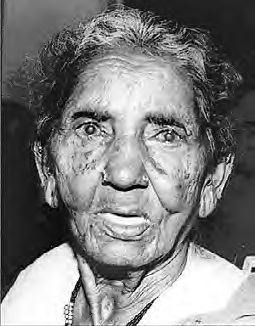
Chityala Ilamma (1919-1985), born at Krishnapuram village of Warangal district, played a key role as a revolutionary during the Telangana Peasants Armed struggle. Her revolt against the feudal lord, Zamindar Ramachandra Reddy, to save her four acres of land when he tried to occupy it, inspired many others during the rebellion against the feudal lords of Telangana, during that epoch of history.

According to officials, all the crucial phases of Ilamma’s life will be portrayed in the documentary. The government also plans to produce similar films on the lives of other iconic figures of TS in the days to come.

source: http://www.newindianexpress.com / The New Indian Express / Home> States> Telangana / by Express News Service / August 08th, 2016

#20Memoirs: An arty homecoming

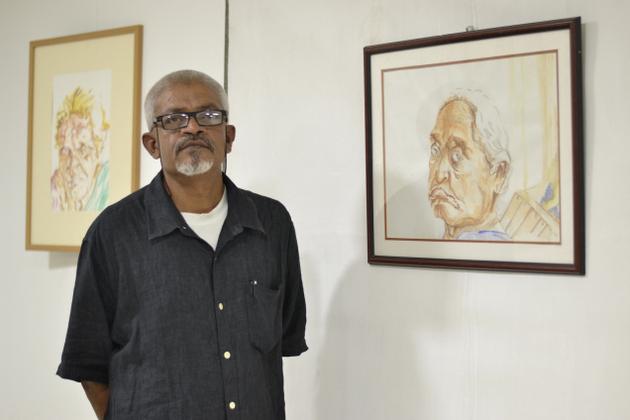
Satya Srinivas with a portrait of his mother Photo: Sangeetha Devi Dundoo / The Hindu

Satya Srinivas pays a tribute to mothers and grandmothers at Goethe Zentrum, the space where his former house stood

Satya Srinivas grew up in Journalist Colony, Banjara Hills, before a few office complexes came up in the residential colony. His father was a journalist with Andhra Jyothi and Srinivas grew up interacting with children of fellow journalists in the locality.

Memories of the 80s and 90s are vivid, especially those associated with his mother and mothers of his friends. “We were a small family, but my mother would cook food that’s sufficient to feed 10 people. My friends used to visit frequently and she loved to feed them,” he says. A watercolour portrait of his mother is his way of paying a tribute to her.

On display at Goethe Zentrum, the very plot where his house once stood, are watercolour paintings and sketches of elderly women. “Mothers are nurturers,” he says, sharing another anecdote. “A friend, Vagesh, lived in a village in Mahabubnagar. His grandmother would cook more than required on a daily basis. There was a bus stop close to their house; passengers would get off the last bus and spend the night at the bus shelter until they get another bus at dawn. She found happiness in feeding these strangers. We rarely find such mothers and grandmothers today.”

Satya Srinivas works as a development and environment consultant, with a focus on community-based natural resource management. He exhibited his photographs along with his friend, T.Sivaji, who was showcasing his paintings, in 2004.

That exhibition, ‘The Green Shadows’, stemmed from their work in forests and tribal development. “Nothing inspired me to hold an exhibition after that,” says Srinivas.

The idea of painting portraits of mothers appealed to him. He sourced photographs from family and friends. “Some shared group photographs, a few gave passport-sized images and some didn’t share any image. I had to rely on memory,” says Srinivas. He chose watercolours to arrive at varied skin textures and moods and each painting took him anywhere from three hours to a few days, depending on the season and the type of paper used.

It’s a homecoming for him to showcase his work at Goethe Zentrum. “When I learnt that Goethe Zentrum had opened here, I was pleased. My mother played veena, my sister was a dancer and my brother-in-law was a theatre artiste. So it was heart-warming to know that our former house is now a space for education, art and culture,” he says with a smile.

On August 8, the artist will host ‘#20:Down Memory Lane’, a session with poems and memoirs of the neighbourhood; from 5.30 p.m. to 8 p.m.

#20Memoirs is on view at Goethe-Zentrum till August 13.