Solar energy solutions provider Freyr Energy has completed 640 KW solar rooftop projects in Manipur.
Announcing this, a release from the Hyderabad-based firm on Wednesday said the list of projects include off-grid 100 KW battery-powered systems. The inverter maximises solar power generation and helps stabilise power from the grid. It also has the functionality to smartly optimise and export solar power when the cost of grid power is at its highest, and draws power when it is low. The system helps withstand power fluctuations and guarantees power round the clock and can also be monitored remotely, the company said.
Co-Founder and Managing Director of Freyr Energy Saurabh Marda said the projects were completed within the stipulated timeline of six months. The projects include four 100 KW system each in City Convention Centre, Interstate Bus Terminus, National Sports Academy Hostel in Imphal and at the Central Agricultural University. The project supports the Khwairamband Bazaar through a 50 KW system, which is incidentally, the world’s only all-women marketplace and one of Imphal’s main tourist attractions. The systems were installed at various government buildings after the company bagged the tender from the Manipur Renewable Energy Development Agency, the release said.
source: http://www.thehindu.com / The Hindu / Home> News> Cities> Hyderabad / by Special Correspondent / Hyderabad – April 05th, 2018
Prabhdeep Singh, originally from Chandigarh, and with work experience in Hyderabad, Antoine Poirson of France, and Jose Leon, a Costa Rican – OLYMPUS DIGITAL CAMERA
A trio of MBAs launches a service that’s taking patients and their families across State borders.
They were from three continents and they met at a business school in France. Their idea: simplified medical transport as easy as ride-hailing for patients and caregivers. Prabhdeep Singh, originally from Chandigarh, and with work experience in Hyderabad, Antoine Poirson from France, and Jose Leon from Costa Rica, came up with StanPlus.
The year-old Hyderabad start-up opened with an offer to send an ambulance in under 15 minutes.
It got the most unusual requests. An ailing man was transported from Hyderabad to Guwahati – a 2,500 km drive –after his doctors informed his family that he was at the end of his life and suggested he be taken to his native place. The patient’s son turned to StanPlus and was even prepared to face a crisis en route. Mr. Singh, the CEO, says, “We arranged for an ambulance equipped with a body freezer and two drivers. Luckily, the person reached home alive.”
It recently ferried a four-hour-old baby from Hyderabad to Vizianagaram, a distance of 700 km. The vehicle had an incubator and a facility for light therapy. “A few days back, a lady gave birth to twins in an ambulance .”
The idea originated when Mr. Poirson, working with an energy major in Rajasthan, saw his colleague die in an accident because no ambulance was nearby. Mr. Singh, with his healthcare stint, saw the demand for a responsive ambulance service. The company is plugged into real-time live tracking, aided by a call centre. “We are not in the pay of hospitals, so the patient takes the call. The option is to go to the nearest hospital and charge per km,” he says. Hyderabad also has the emergency-only “108” ambulances. Only 20% of ambulance calls are emergencies, says Mr. Singh, who runs 300 vehicles.
source: http://www.thehindu.com / The Hindu / Home> News> Cities> Hyderabad / by Serish Nanisetti / Hyderabad – April 04th, 2018
Students of Kakatiya Institute of Technology and Science (KITS) here have brought laurels to the college by winning awards from IT giant TCS.
Institute director Y. Manohar said Sai Pranitha Kanthala, a B. Tech student, bagged the TCS Best Student award while Electronics and Communication Engineering (ECE) student Saivishnu Varma Kalidindi and his team won TCS Best Project award for 2016-17.
V. Rajanna, vice-president and regional head of TCS-Hyderbad, gave away the awards comprising a gold medal, a certificate and a cash prize of ₹10,000.
The award presentation ceremony was held at the TCS Synergy Park Campus in Hyderabad on March 29.
The award-winning project was titled ‘Eye Monitored Wheelchair Control’, crafted by ECE students of the institute.
source: http://www.thehindu.com / The Hindu / Home> News> States> Telangana / by Special Correspondent / Warangal – Urban Dt., – April 03rd, 2018
Rahul Chakravarthy, a city-based businessman, who works in the field of education content, has been selected to train a team of students that would represent India at the International Mathematical Olympiad.
The training camp, run by Homi Bhaha Centre for Science Education, is running a training camp in Mumbai from April 18 to May 16, for which a faculty team is being put together.
Mr. Chakravarthy has been selected as one of the faculty members.
source: http://www.thehindu.com / The Hindu / Home> News> City> Hyderabad / April 04th, 2018
The Sikh community not only has a glorious present in Telangana, making successful strides in every sphere, but it also has a rich history, writes Kota Saumya
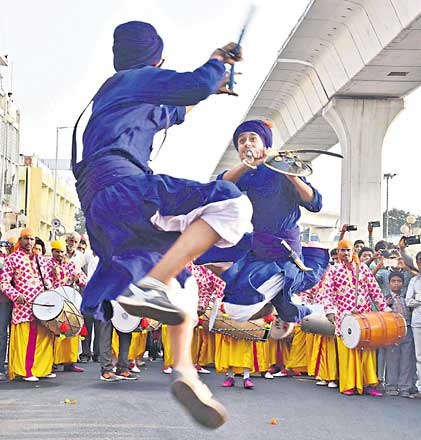
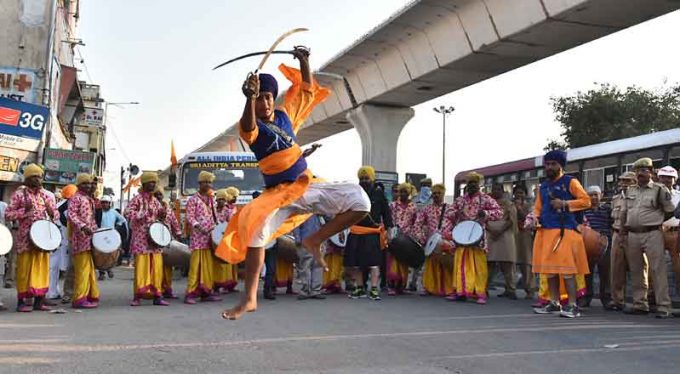
Come April, the streets of Ameerpet will come alive with the sounds of nagar keertans, prabhat pheris in the wee hours of the morning, and a fascinating display of gatka by Sikh youngsters. Thousands of Sikhs will come together for the festival of Vaisakhi at the Gurudwara Sahib in Ameerpet which celebrates it on a large scale.
This year, Vaisakhi falls on April 14 and the office of the Prabhandhak Committee of Ameerpet Gurudwara is abuzz with activity. There is constant ebb and flow of people as its president, Sardar Bhagender Singh tells us about the history of the Sikh community, and how they came to Hyderabad during the Nizam’s time. The story goes that, around 1832 AD, the Nizam of Hyderabad was facing trouble from Jagirdars who were not paying revenue. Upon the advice of his Prime Minister, Chandulal, he wrote to Maharaja Ranjeet Singh, governing the North-West province for help. “Along with the letter, the Nizam also sent a beautiful canopy (chandni) embedded with precious stones, gems and diamonds to the king,” explains Bhagender Singh.
Obliged by the beautiful canopy, King Ranjeet Singh sent a 14,000-strong army led by Risaldars (chieftain) to Hyderabad.
Their ordinance was — “It is the duty of the Sikhs to give protection to anyone, who comes for protection.” The soldier’s wages were to be paid by the Punjab treasury. The forces carrying the 14 Nishans (holy flags) were placed at the Sikh Chawniat, Attapur, and the place came to be called Barambala. “Later, the Sikh forces were absorbed into the City Police. Most members of the community are self-employed now and run small-time businesses, factories or work in the IT industry or part of the defence forces,” adds Bhagender Singh.
Oldest gurudwara
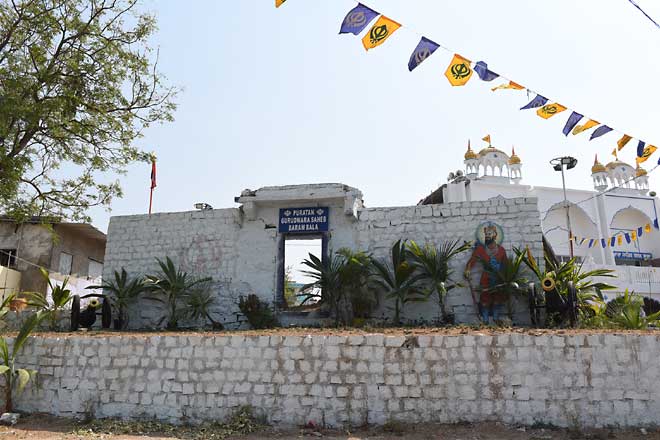
Today, the Sikh Chawni is known as Maharaja Ranjeet Singh Nagar which is home to some 1,200 Sikh families. Tucked away in a quiet lane of the area is the historic Gurudwara Sahib Barambala constructed in Kishanbagh in 1832 AD.
Recently, a new gurudwara, said to be the largest in the State, was inaugurated in January, next to the almost 150-year-old gurudwara. At a time, it can seat some 5,000 to 6,000 devotees at its langar hall. One interesting aspect of this place is old religious texts, marriage invitations with Gurubani are cremated here.
“Old and damaged copies of the Holy Book, Guru Granth Sahib, are given a ritualistic cremation at the Guru Granth Bhavan known as Angeetha Sahib. We do this for two days once in a year,” says Harbans Singh, chairman, Sikh Chawniat, whose family lineage goes back to the Risala force.
The old gurudwara constructed during the Nizam’s time, seen in the background is the newly-built gurudwara.— Photo: Surya Sridhar
Core philosophy
Philanthropy is ingrained in the Sikh community for whom seva and simran (service and meditation) are sacrosanct. A monotheistic religion founded by Guru Nanak Dev around the 15th century, the word Sikh originates from the Sanskrit word, ‘shishya’ meaning disciple. Sikhism is based on the spiritual teachings of Guru Nanak and the nine Sikh Gurus who succeeded him. “The tenth guru, Guru Gobind Singh, named the holy scripture, Guru Granth Sahib as his successor ending the line of human gurus. The scripture is the eternal religious and spiritual guide for Sikhs and is considered a living Guru,” says Gyani Jagdev Singh, head granthi, Gurudwara Sahib, Secunderabad.
Guru Nanak Dev travelled far and wide to pilgrimage centres, propagating his beliefs and teachings which became the guiding principles of the Sikh religion. His successors, the nine Gurus, are: Guru Angad, Guru Amar Das, Guru Ram Das, Guru Arjan, Guru Hargobind, Guru Har Rai, Guru Har Krishan, Guru Tegh Bahadur and Guru Gobind Singh.
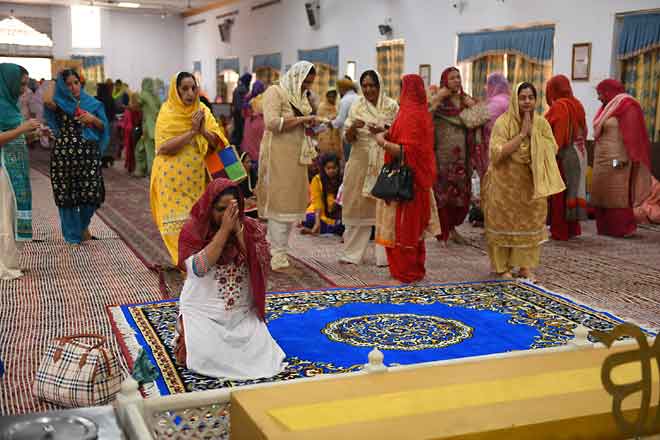
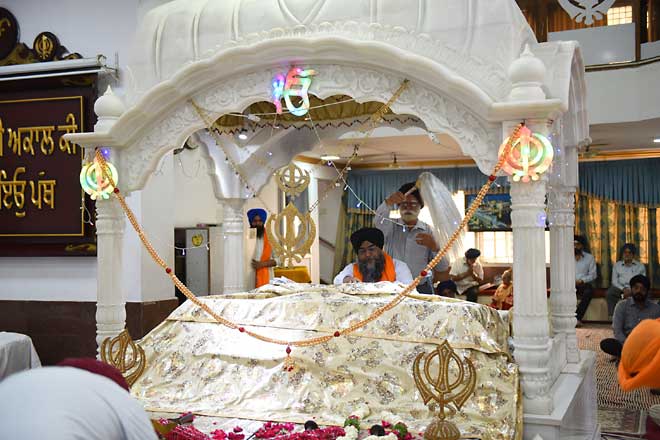
Devotees offer their prayers in front of the Guru Granth Sahib at the Secunderabad gurudwara. — Photo: Surya Sridhar
In service to humanity
During the Mughal conquest, the Kashmiri Pandits went to the ninth Guru, Tegh Bahadur, to safeguard the Hindu community from forcible conversion. “Guru Tegh Bahadur said, ‘If they can convert me from Sikhism, then the entire community will convert. He went to the Red Fort, where he was martyred. The forcible conversion stopped then,” says Bhagender Singh. Subsequently, Guru Gobind Singh called a congregation and told them that he wanted a community distinctive from others and asked for volunteers willing to give their heads. The five volunteers who sacrificed themselves and were reborn were called Panj Pyaare.
It led to the formation of the ‘Khalsa’ (pure) and a code of conduct for Sikhs. The code being they keep five items —kesh (uncut hair), kangha (comb), kada (steel bracelet), kirpan (a small dagger) and kacchera (shorts) on their person at all time. “They are also prohibited from cutting their hair, consuming Halal meat, committing adultery, and consuming tobacco and liquor,” explains Sardar Harbans Singh of Sikh Chawniat.
Generally, most Punjabi families go by the name Singh, but in actuality they should take the name only after being initiated into the faith in a ceremony called Amrit Sanchar or Khande di Pahul. “There is no timeline as to when it should be done. The child must understand the significance of the rite and be able to take care of the five items. It must be done at least before they marry. The initiated people are known as Amritdhari Sikhs,” says Sardar Bhagender Singh. After this, the men take the name ‘Singh’, while the women take ‘Kaur’.
Sacred scripture
A truly secular book, the Guru Granth Sahib is a unique amalgamation of compositions of not only the Sikh Gurus but also of saints such as Ravidas, Ramananda and Kabir. Written in the Gurumukhi script, the first scripture called Adi Granth was prepared by Guru Arjan, the fifth Sikh Guru. It later expanded into the Guru Granth Sahib. The compositions, called Gurbani, (Guru’s own words) are devotional hymns and prayers to the God, and propagate message of love, truth, humility, brotherhood, equality, service to others and purity of mind and soul. The hymns numbering 3,384 spread over 1,430 pages are arranged under different ragas known as shabad kirtan which are sung by ragi jathas (person who sings the hymns).
Granthi Gyani Jagdev Singh reads a passage from the holy book at Gurudwara Sahib, Secunderabad. — Photo: Surya Sridhar
Festivals galore
The Sikh community is a sizeable one in the city, so it’s a given that the festivals are also going to be equally grand in scale. A number of gurudwaras dot the city landscape, but those who hold a prominent position are the — Gurudwara Sahib, Barambala; Gurudwara Sahib, Secunderabad; Sri Guru Singh Sabha, Afzalganj; Central Gurudwara, Gowliguda; and Gurudwara Sahib, Ameerpet.
Traditionally, celebrations of any festival were observed by spending quality time with close relatives and friends at local gurudwara with shabad kirtans playing in the background. But, over the years, with influx of more and more Sikhs in the city, centralised celebrations of Vaisakhi, Guru Purab, Prakash Utsav, etc; have become a norm. To avoid a clash and through mutual understanding, each of these gurudwaras celebrate one festival on a large scale with the others observing it on a smaller level.
For instance, Vaisakhi, also known as the Khalsa Foundation Day, is celebrated by the Ameerpet Gurudwara with great fervour where ragi jathas and speakers from other cities are invited.
“The day begins with ardaas (prayer) at the gurudwara followed by nagar kirtan and a vishal deewan (mass congregation of Sikhs) which takes place at the Sri Guru Gobind Singhji playground,” says Bhagender Singh, president, Ameerpet Prabhandhak Committee.
Similarly, Guru Nanak Jayanti which falls on November 4 is observed by organising a procession from Secunderabad Gurudwara. “We carry the Guru Granth Sahib on a beautifully-decorated vehicle flanked by religious flag-bearers called Nishaan Sahebans. Children who have learnt gatka (martial arts) in the summer camps show their skill here as well,” explains Baldev Singh Bagga, president, Prabhandak Committee, Gurudwara Sahib Secunderabad.
Charity, their second nature
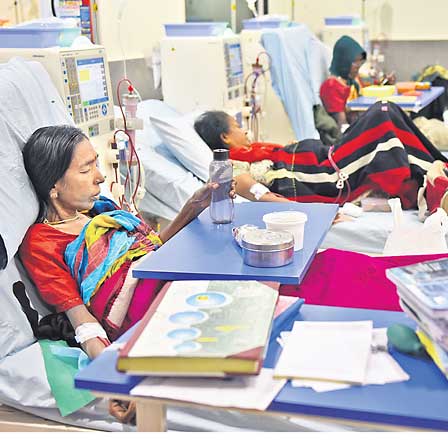
Patients undergo dailysis treatment at the Guru Nanak Medical Centre in Secunderabad. The treatment charges are kept nominal for those who can’t afford the procedure. — Photo: Surya Sridhar
Helping others through small acts of kindness like making sure the underprivileged get access to education, healthcare, and monetary support to widows is managed by the Prabhandhak Committee of the gurudwaras. The larger gurudwaras like those at Ameerpet and Secunderabad provide well-equipped rooms at nominal rates of Rs 300 and Rs 600, respectively, to anyone who is either in the city for work or medical reasons.
“Many parents of girls who come to the city for work stay here since they feel very secure. They stay till they find a permanent place. We also give accommodation for two months in exceptional cases. Many needy people who are relatives of patients at nearby hospitals also stay here,” states Baldev Singh Bagga who also serves as the chairman of the Guru Nanak Medical Centre near the Secunderabad Railway Station. The polyclinic and diagnostic centre provides free medical treatment to the needy from all communities. A similar clinic is being planned near the Ameerpet Gurudwara premises now.
“Over 36 patients come here for dialysis daily. Most of the patients get to know about the centre through word of mouth. We also provide free annual checkup for senior citizens twice a year,” adds Baldev Singh Bagga whose wife Jasbeer Kaur serves as the chairperson of the ladies wing of the gurudwara. Their son Dilpreet Singh owns the well-known Hotel Royal Reve in Secunderabad.
Match made in heaven
While arranged marriages are the norm in the community, these days, parents are also taking due note of their children’s wishes. A Sikh wedding is a simple affair, which begins with roka that happens a few days prior to the engagement ceremony, where parents of both bride and groom give their consent. Following a few more rituals near the wedding day, the groom’s family visits the bride’s side for the chunni chadana ceremony where they give the bride her wedding dress, jewellery, etc. Other ceremonies similar to a Hindu one are the vatnaa which is like the haldi ceremony.
Synonymous with the Sikh bride is the chooda, a set of 21 red-and-white bangles gifted to her by her maternal uncle. She also wears umbrella-shaped metallic ornaments called kalire attached to her bangles. “It is believed that if the kalire fall on the head of an unmarried girl, she will be the next person to get married,” adds Dr Meeta. After ceremonies such as Sehra bandi, milni, the actual wedding ceremony called Anand Karaj takes place at the gurudwara. The bride and groom sit side by side facing the Guru Granth Sahib, during which ardaas is offered by singing shabads. The granthi recites the four lavaa or stanzas from the book, and the couple slowly walks around the book clockwise after completion of first stanza, the same ritual is followed for the next three stanzas which are called lavaa pheras
Melange of cultures
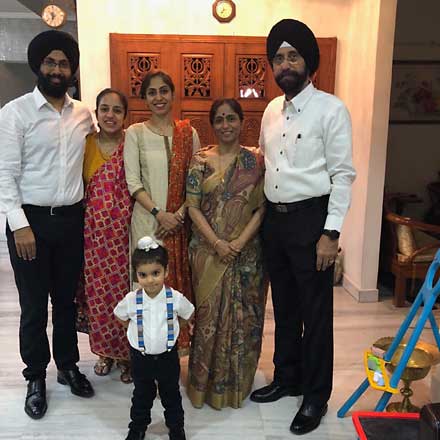
(From Left) Harinder Singh, Akanshi Madan, Tanvir Meeta, Naunihal Singh and Samarth Singh. The family runs the well-known Tanvir hospital in the city.
Since many of the Sikh forces settled here, many married local girls leading to an intermingling of traditions and food. While the Dakhni Sikhs follow the same rituals and traditions as the Sikhs who came here later, the staple food in their households is a tad different. “Usually, roti is a staple but they also eat rice, there is a lot of Maa chole ki dal and tur dal in the diet. Chole bhature and paneer are also used extensively in dishes. These days, it’s become very cosmopolitan. We make dry fruit laddoos and kadha prasad (rava with ghee and sugar) at home on auspicious occasions or birthdays and marriages,” says Dr Meeta whose husband’s grandfather, Sardar Khem Singh, was a Risaldar and the first president of the Ameerpet Gurudwara.
A community which is self-sufficient to the nth degree and doesn’t turn away anyone from their door when they ask for help, it continues to astound others with its giving nature.
Langar
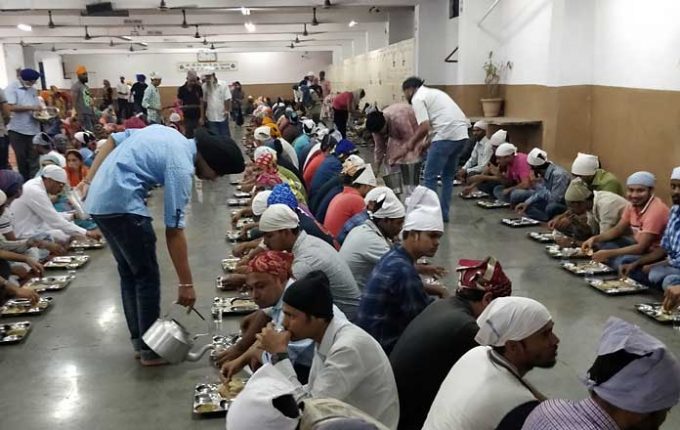
Anyone who has visited a gurudwara at least once can attest to the delicious and homely food served at the langar. At the Ameerpet gurudwara which serves langar to some 600 people during weekends, the menu comprises rotis, maa chole ki daal and salad. The food is prepared by kar sevaks (volunteers). Kar seva can be anything, from washing the vegetables, cooking the dal, making chappatis, serving the food or even washing used utensils or sweeping the hall.
“A lot of hostellers studying in nearby institutes tend to miss ghar ka khana and come here to have meals. On weekdays, we also serve full meals along with sweets like kheer. The idea is no one should leave here without a full stomach,” says Bhagender Singh. Caste, creed, financial status are done away with in a langar, where people from various communities or stratas of societies come and eat together. Devotees also sponsor the langar and have the option to decide what they want on the menu.
Kar sevaks serve food at the langar at Ameerpet gurudwara which sees close to 600 people eating the meals. — Photo: Hrudayanand
source: http://www.telanganatoday.com / Telangana Today / Home / by Kota Soumya / April 01st, 2018
Irrigation Minister T. Harish Rao (not seen in picture) hoists the national flag in Siddipet on Saturday. | Photo Credit: Mohd Arif
This development fills me with pride, says Harish Rao
Inspired by the national flag flying high at Neclace Road in Hyderabad, Irrigation Minister T. Harish Rao on Saturday unfurled the national flag at the district headquarters.
The flag, which is 30 feet wide and 20 feet long, would fly at a height of 100 metres.
It was hoisted at the auditorium located at Komaticheruvu. Mr. Harish Rao felt the flag would inspire the locals. “This development fills me up with pride.
The flag was prepared by a Hyderabad-based agency, which prepared a similar flag that is hoisted at Necklace Road,” Municipal Commissioner P. Srinivas Reddy said.
MP K. Prababhakar Reddy and others also participated in the programme.
source: http://www.thehindu.com / The Hindu / Home> News> cities> Hyderabad / by Staff Reporter / Siddipet – April 01st, 2018
Fine pearls, pearls made of shell, shell-beads, and tortoise-shaped beads found
The Satavahana dynasty rulers had very good regular trade and cultural exchange programmes with all the countries in the world as was evident with the recovery of 40 fine pearls with holes and other material including metals during the excavations conducted by the State Archaeology and Museums at Peddabonkur village of Peddapalli district.
The department had launched the excavation works in a scientific manner in a sprawling 67 acres of land in the village since February 18 to unravel the history of Satavahana dynasty.
During the excavations for the first time the authorities had found the fine pearls, pearls made of shell, shell-beads, tortoise-shaped beads, gold-plated pearls, mud pearls, crystals, bangles, pottery, measurement pottery, dice made of bones, horn of deer, metal products etc.
Director of Archeology and Museums N.R. Visalakshi, who inspected the excavations on Wednesday, told newsmen that the recovery of pearls and other materials indicate that the Satavahana rulers were prosperous 2,000 years ago. The recovery of pearls and other materials show that they had trade and cultural relations with other parts of the world.
She said that they had unearthed pottery dump-yard and huge collection of pottery during the excavations. The coins and metals recovered from the spot would be sent for metallurgical survey to conduct non-invasive survey to analyse when it was first fired and the textures etc. without causing damage to the metals, she added. All these recoveries were collected after conducting excavations for 30 cm to 60 cm depth.
During the earlier excavations in the village in 1968 and 1973-74, the department had unearthed brick constructions, brick wells and the coins used by the Satavahanas, Mauryas and Romans.
She said that they were taking up the excavations in a scientific manner to preserve the ancient history and legacy of the Satavahana dynasty. She added that they would further continue excavations in coordination with district administration.
source: http://www.thehindu.com / The Hindu / Home> News> Cities> Hyderabad / by Special Correspondent / Peddubonkur (Peddapalli)- March 29th, 2018
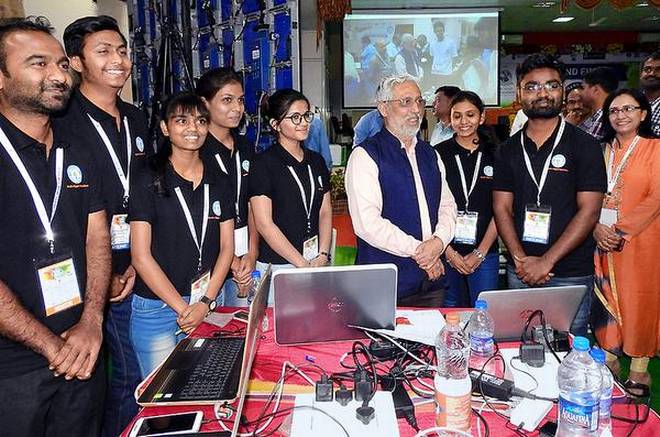
Dr. Anil Sahasrabudhe, chairman of the All India Council for Technical Education interacting with students at the Smart India Hackathon at CVR College of Engineering on Friday
CVR College, CMRCET are nodal centres in State for the two-day national event
Hundreds of students are putting their creative skills to test to find solutions to the pressing problems of government departments at the grand finale of Smart India Hackathon 2018 that took off at CVR College of Engineering, Ibrahimpatnam and CMR College of Engineering and Technology (CMRCET), the two nodal centres in Telangana.
The two-day national event being held in 28 colleges across the country is a unique initiative to identify new and disruptive digital technology innovations for solving challenges faced by our country. It was inaugurated through video conference by Union HRD Minister, Prakash Javadekar.
The hackathon went live at 8.25 a.m. and coding began at 8.30 a.m. on Friday and will end at 6 p.m. on Saturday. As per rules, three students from each team have to be present at the table at any point of time till the coding ends.
The students were allowed to move from the table only for breakfast, lunch, dinner and recreational activities while tea and snacks were served on the table.
“We are happy to be among the 28 colleges in the country to be hosting the finale,” said Ch. Gopal Reddy, secretary and correspondent, CMRCET, where 42 teams of six students each are competing to write the best code to the most pressing problem. The chief guest at the venue was Rama Devi Lanka, Officer on Special Duty, ITE & C, Telangana Government.
J. Satyanarayan, Chairman of UIDAI, who was the chief guest at CVR College, told students that “innovation is based on two things — doing things differently and doing different things”.
Discussing how digital identity (Aadhaar) has changed the country’s ecosystem, he appealed to the students to create new products and protocols that will address the country’s needs.
The Hackathon witnessed participation from 27 Central Ministries, Departments and 17 State Governments who sent more than 900 problem statements. After scrutiny, 408 problems were finally selected.
Of the 17,400-plus teams, 1,296 entries consisting of 8,000 students were selected for the grand finale. There are prizes to be won for different categories at each centre. The HRD Ministry is also engaging with DST to support with Technology Business Incubators (TBIs) as startups for selective teams.
source: http://www.thehindu.com / The Hindu / Home> News> Cities> Hyderabad / by Special Correspondent / Hyderabad – March 30th, 2018
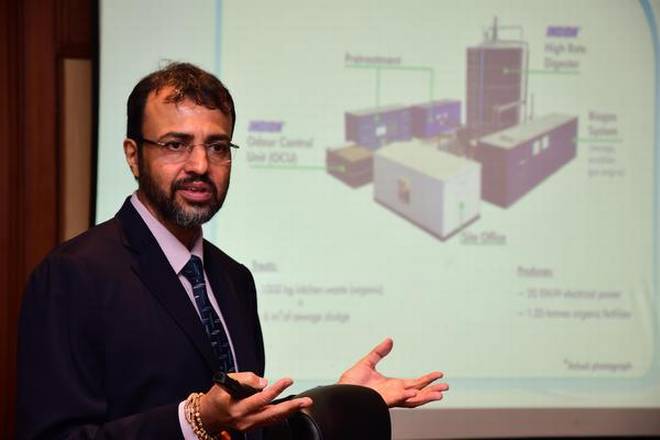
Ajay Popat, president of Ion Exchange (India) Ltd, addressing the media in the city on Thursday.
Ion Exchange sets up waste-to-energy project with ₹7 crore
Water and environment management solutions provider Ion Exchange (India) Ltd commissioned a waste-to-energy project in Hyderabad that integrates technology to combine solid organic waste and waste water to generate power, purified water and fertilizer.
The company intends to use the facility, established at Akshaya Patra’s community kitchen on the city outskirts, as a demonstration project for prospective customers.
Stating that it was the country’s first such waste-to-energy system, Ion Exchange (India) president Ajay Popat said it was based on the ANDICOS (anaerobic digestion by combining waste stream) design. While projects based on ANDICOS had been deployed for the industrial consumers, it was being used for the first time for community segment, he told presspersons here on Thursday.
Organic fertilizer
The project, established by the company at Akshaya Patra, has a capacity to treat around 1,000 kg of organic kitchen waste and 2-6 cubic metre of sewage sludge on a daily basis. It will generate about 20KW/H of electrical power along with 1.35 tonnes of organic fertilizer per day.
Noting that the company had set up the plant with ₹7 crore, Mr. Popat said the company would be showcasing the facility to prospective customers in the government. Among the agencies that were either working or evaluating the prospects of engaging with Ion Exchange include the municipal corporation of Mumbai, Delhi Jal Board as well as the Administrative Staff College of India (ASCI) on behalf of the Telangana government.
source: http://www.thehindu.com / The Hindu / Home> News> Cities> Hyderabad / by Special Correspondent / Hyderabad – March 30th, 2018
General Bussy enjoyed an unassailable position in the Nizam’s court
If Pondicherry was a colonial trading pocket for the French, Hyderabad by the middle of the 18th century became their nerve centre of great political activity much before the British could establish their power in this part of the country.
The French were the first European power in Hyderabad state to have huge territorial gains when they were granted the Circars (present coastal Andhra) for their military support to the Nizam, thus becoming the forerunner for the Subsidiary Alliance the British replicated decades later.
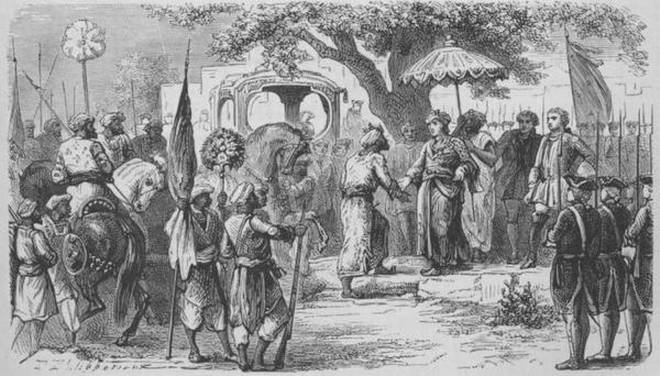
The architect of this French policy of Indirect Rule in Hyderabad was the indomitable General Bussy, the French commander, who at the express orders of Dupleix, the Governor of Pondicherry, arrived in Hyderabad in February, 1751 at the head of a strong French contingent. It was Bussy who declared Salabath Jung as the new Nizam, after the murder of Muzafar Jung. Bussy enjoyed an unassailable position in the Nizam’s court at Hyderabad.
War of succession
After the death of Nizam-ul-Mulk the first Asaf Jah, in May 1748, there was political turmoil in Hyderabad due to war of succession among his immediate descendants.
The Nizam had six sons and an equal number of daughters. Ghazi ud din, the first son was a representative of his father at the Imperial Mughal court in Delhi and was not inclined to be his father’s successor. The second son, Nasir Jung therefore proclaimed himself as the Nizam of Hyderabad. But an ambitious, Muzafar Jung, grandson of the dead Nizam, (son of his favorite daughter, Khairunnisa begum) claimed the throne for himself.
The French governor at Pondicherry, General Dupleix, saw an opportunity to fish in troubled waters at Hyderabad.
There was also a war of succession brewing at Arcot, where Chanda Sahib laid claims to the Nawabi as successor to his father-in-law, Anwar ud din, against the claims of Mohammad Ali, Anwar ud din’s son. Dupleix decided to side Chanda Sahib at Arcot and Muzafar at Hyderabad.
He asked Muzafar Jung to come to Arcot to first settle the dispute there, promising to make him the Nizam at Hyderabad later.
Muzafar and French armies under Dupleix defeated Anwar ud din in a battle at Ambur and Chanda Saheb was declared as Nawab of Arcot.
The British at Madras who wanted to arrest the growing French power, advised Nasir Jung, the Nizam to come to south to check Muzafar- Dupleix nexus. Nasir Jung accordingly went with his forces but when engaged in a fight, was killed in one of the minor skirmishes near Arcot on 25 December, 1750. Muzafar Jung immediately was declared the Nizam of Hyderabad by Dupleix.
Victorious Muzafar was taken in great pomp by Dupleix to Pondicherry where a grand Durbar for the new Nizam was held. Muzafar was toasted, feasted and entertained by the French General.
In return, Muzafar was so pleased that he made Dupleix as a jagirdar of Villianallur with a personal grant of 80 villages. He also conferred the title, “Subedar”, and the French governor was happy to be addressed as Dupleix Sahib. After a month of festivities, and French hospitality, Muzafar set out to Hyderabad accompanied by a strong French contingent sent for protection by Dupleix headed by his close confident and an able commander, General Bussy.
However, on way back to Hyderabad, Muzafar Jung, 38 days after becoming the Nizam, was treacherously murdered in a spine chilling melodrama. As the contingent came close to Cuddapah and entered Lakkireddypalle pass, Muzafar was assassinated on February 3, 1751, by the Nawab of Kurnool, who earlier supported him but was disillusioned when the new Nizam, he thought, was not keen to keep the promises made.
An astute diplomat that he was, Bussy continued his journey with his French armies to Hyderabad and made Salabath Jung, an younger brother of Nasir Jung as the new Nizam. The death of Muzafar and the march of French armies to Hyderabad through the territories carrying fire and thunder under Bussy, made him such an object of terror that even now in the Telugu States the mothers try to silence their crying babies with the arrival of “Booochi”, a corrupted version for Bussy!
Marquis de Bussy worked under Dupleix at Pondicherry for a long time. He married Marie, a step daughter of Dupleix. His arrival in Hyderabad marks a new era of French connections with Hyderabad and the northern Circars.
Bussy wanted to make use of the opportunity to the best of the French advantage as the new Nizam, Salabath Jung was at his mercy. He decided to stay back with his army to give protection to the Nizam. His army consisted of 900 European and 4000 of sepoys and was a strong instrument of war fare.
In order to meet the expenses for the maintenance of army, estimated at ₹21 lakhs a year, Bussy got the entire coastal Andhra, from Guntur to Srikakulam, which yielded an annual income of ₹31 lakhs. Masulipatam and Yanam were granted as personal jagirs to Bussy.
Charminar as home
When Bussy arrived in Hyderabad, as there was no immediate accommodation worthy of his position and importance, he decided to put up in the very Charminar, the majestic, sturdy and the “tallest structure in the entire city”, then. Huge curtains were tied on all sided making Charminar as his home.
Muhammad Quli Qutub Shah who built Charminar in 1591 must not have ever dreamt that it would one day serve as home to a French General, Bussy. When the beautiful Charmahal on the banks of Musi got readied, Bussy shifted there and Salabath Jung built Khilwath Mahal (part of Chowmahal palace complex) for his own stay. Charmahal, where Bussy finally shifted to, was a multi floored beautiful palace with cloth of gold used as door curtains, (Charmahal stood on the grounds where now the High court buildings are located.)
When the Seven Years War ( 1756- 73) broke out in Europe, the French and English armies in India also started to fight. Robert Clive buoyed by his stunning victory at Plassey in 1757, sent Col. Forde who with his armies occupied Northern Circars, held by the French.
Count de Lally, the French General who arrived from France to fight the English, on reaching Pondicherry, recalled Bussy from Hyderabad to make a combined attack on the British at Madras. However, in the battle at Wandiwash, the French armies were defeated and both Lally and Bussy were taken prisoners. They were let off later and Pondicherry was returned to the French.
The French influence in Hyderabad steeply declined on the departure of Bussy. His name is immortalised in the Hyderabad dominions for his participation in the famous Bobbili battle that took place in January, 1757.
Bussy supported Vijayarama Raju of Vizianagaram in vanquishing Bobbili. There is a street in Yanam today named after Bussy. He became the French governor at Pondicherry two years before he died in 1785. Thus, while Bussy’s rise in Hyderabad heralded the high watermark of French power in India, his withdrawal from here marked the collapse of its political power.
After the departure of Bussy from Hyderabad, the British with the tacit agreement with Shah Alam, the Mughal emperor, deposed Salabath in September and made his younger brother, Nizam Ali Khan as the new Nizam in 1762. Salabath Jung was imprisoned by the new Nizam in the fort at Bidar, and was killed a year later.
By recognizing Nizam Ali as Asaf Jah II, the Mughal emperor has derecognized the three predecessors, Nasir Jung, Muzafar Jung and Salabath Jung who all had violent deaths as the rulers, though between them they had a rule of 14 long years from the death of Nizam ul Mulk in 1748 up to the accession of Nizam Ali II in 1762. If those three Nizams were also counted, there were ten Nizams who ruled Hyderabad ; and the last Nizam, Osman Ali Khan must have been the X th Nizam and not the VII, as he is generally considered.
source: http://www.thehindu.com / The Hindu / Home> Society> History & Culture / by K S Seshan / March 24th, 2018