Collaborative training for Telangana women weavers

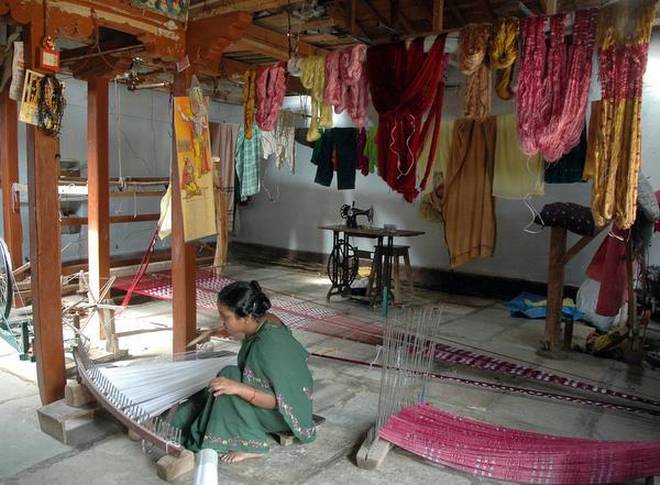
Yarn dyed in natural colours drying at a weaver’s home

As part of a programme called Disha, UNDP, Creative Bee and IDF will help women weavers step up the quality of handlooms and form a cooperative movement.

Government-mooted schemes meant for the betterment of weavers and craftspeople have benefited some pockets of the State, but there are many other regions where weavers struggle to make ends meet, relying on daily wages to get by. Some of these villages in far-flung areas see women making barely ₹500 to ₹1000 per month, after spending 15 to 20 days weaving a sari. “It’s heartbreaking; the women hold on to their craft because they don’t know anything else, but they haven’t been able to leverage their skill to better their livelihood,” says Bina Rao of Creative Bee.

Rao has been travelling extensively in the interiors of Telangana and has just wrapped up a training programme for 140 women in a village near Pochampally. The training is a part of a year-long programme called Disha. Training modules will be held in villages across Yadadri, Nalgonda, Warangal and Siddipet districts, with the support of IKEA Foundation, IDF (research body India Development Foundation) and government of Telangana.

The prime objective is to promote entrepreneurship by equipping women weavers and craftsmen to understand changing market needs and learn the ropes of direct marketing. At the end of the programme, Disha will function as a women’s cooperative body. Disha is a pan-India initiative by UNDP (United Nations Development Programme) in collaboration with several government and local bodies to conduct training in textiles, agriculture, handicrafts, education, women empowerment, and more.

In Telangana, UNDP is working with Creative Bee and the focus is on textiles. Creative Bee is harnessing its two-decade experience in the textile sector to help 2000 women weavers learn direct marketing and step up their production quality.
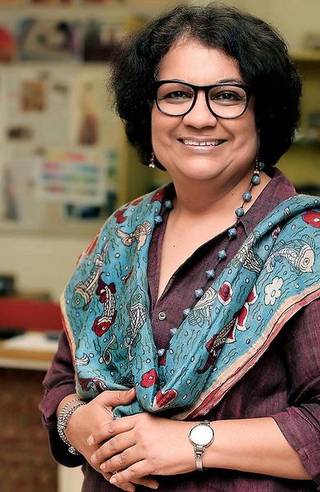
“Weavers will be trained to use internationally approved and environmentally safe VAT, reactive and acid dyes for cotton and silk; these dyes are safe on their skin as well, unlike the dyes they now use. We found many villages using naphthol dyes that are carcinogenic and environmentally harmful,” says Rao.

Challenges ahead

To get things underway, despite the partners on board, Rao says there were challenges. They didn’t have funds for yarn, fabric, dyes, stipend and food requirement for the training days. “Weavers won’t turn up for training unless their daily wage loss is compensated,” she points out. She knocked the doors of corporates seeking CSR (corporate social responsibility) funds. Some of them were willing, but only after the current financial year. Since the training had to begin, she used yarn and fabric from Creative Bee Foundation and dyes were sponsored by Gujarat-based Colourtex.

Rao points out that while many pockets specialise in ikat weaving, after the division of Telugu states into Andhra Pradesh and Telangana, we don’t have a plain fabric weaving stronghold like Mangalagiri. She mooted the idea to weaver pockets in Siddipet and Sirsila and plans are on to step up plain fabric weaving.

Thinking big

Creative Bee is also reaching out to pan-India retail stores such as FabIndia and Westside, exhibitions and e-commerce portals for better reach of the products developed by the women. In addition, 40 women will be trained to form a manager cadre and handle marketing and administrative responsibilities. In principle, Rao notes that the state government has agreed to have a building that will work as an aggregation centre. “But we are also looking at a contingency plan in case it doesn’t take off. For this, we are hoping corporates will chip in,” she says.

Efforts are also on to enable each of these women reap the benefits of the sale of their products through proceeds that will be deposited in their bank accounts.

As a first step, women weavers will directly interact with buyers and showcase their handloom products in Hyderabad on March 30 and 31; 11am to 5pm, at Saptaparni, Road no.8, Banjara Hills.

source: http://www.thehindu.com / The Hindu / Home> Life & Style> Fashion> Handloom / by Sangeetha Devi Dundoo / March 27th, 2018
Global University Systems opens office in city

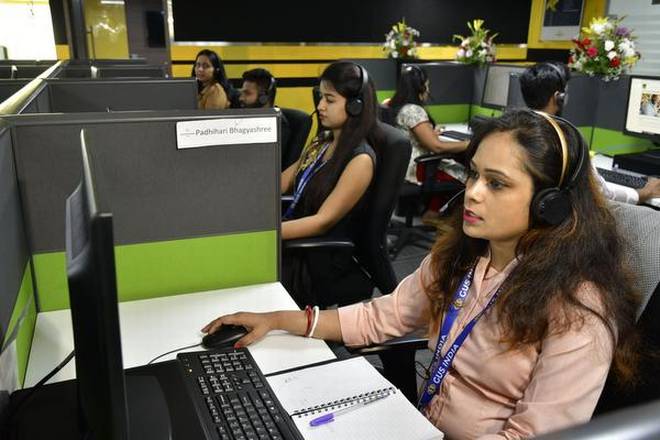
Global University Systems (GUS), an international network of higher-education institutions, has established a presence in India with an office in the city.

GUS Education (India) LLP would work to boost technological developments, digital initiatives and enterprise capabilities for the education sector. The new entity would support GUS’ global operations as well as work with national level universities and colleges in the country.

Besides creating local jobs, the company proposes to make global use of the skilled workforce available in India, a GUS release on Industries and IT Minister K.T. Rama Rao inaugurating the Hyderabad office on Monday said.

The Minister said Hyderabad was attracting great deal of talent from across the country and world. Home already to facilities of several leading technology firms, including Apple, Microsoft, Google and Amazon, the city offers good growth potential, he said, hoping GUS to scale up operations soon.

Describing GUS Education (India) LLP as the “fastest growing part of our business,” GUS founder and CEO Aaron Etingen said the headcount of the new office was 100 and there are plan to grow further in the coming years.GUS Education (India) LLP managing director Shashi Jaligama said a wide range of career opportunities would be offered for technology professionals in Hyderabad.

source: http://www.thehindu.com / The Hindu / Home> News> Cities> Hyderabad / by Special Correspondent / Hyderabad – March 26th, 2018

City taekwondo champ on a kick

B. Sai Deepak is gunning for six more world records this year.

Sai Deepak giving his all to qualify for 2020 Tokyo Olympics

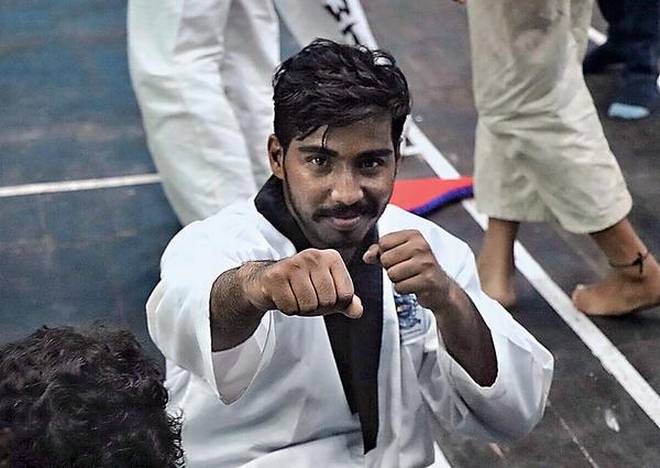
Being a son of an auto-rickshaw driver was never an impediment for 22-year-old B. Sai Deepak, who was the youngest to set two Guinness World Records in taekwondo recently, to give his all to qualify for the 2020 Tokyo Olympics.

Deepak’s desire to make it big in the world of sports began when he watched ace shooter Abhinav Bhindra stand on the podium with the gold medal in 2008 Beijing Olympics.

“Since then, I have always been chasing the dream of representing India in Olympics,” the engineering graduate, who is now pursuing MBA, told The Hindu.

Deepak set his first Guinness record in full contact with alternate elbows (142 in 60 seconds) in November 2017 and then another full contact with knee strikes (though he did 205 in three minutes, it was ratified at 175 itself) in December last.

A trainee under renowned taekwondo expert M. Jayanth Reddy from the city, who himself has set many world records, this fitness freak is now gunning for six more world records this year starting in March trying to beat Pakistan’s Irfan Mehmood’s single elbow strikes record of 128 in 60 seconds.

A silver medallist in the nationals, Deepak’s biggest achievement was a gold in the Indo-Nepal International Taekwondo Meet last May.

Ironically, this gifted taekwondo expert couldn’t make it to the U.S. Open Championship for want of financial assistance.

What is the route to Olympics? “It’s a demanding task. You have to win at least two medals in two Grade-II events featuring more than 60 countries and it’s never easy. But thanks to Jayanth Reddy sir, we are training with that specific goal of getting the qualifying mark,” says Deepak, a resident of Krishna Nagar.

“I am determined to achieve another first by making it to the Olympics by working hard despite all odds,” he signs off.

source: http://www.thehindu.com / The Hindu / Home> News> Cities> Telangana / by V.V. Subrahmanyam / Hyderabad – March 24th, 2018

Recognition for retired scientist

Thirmandas Narayana Gowd

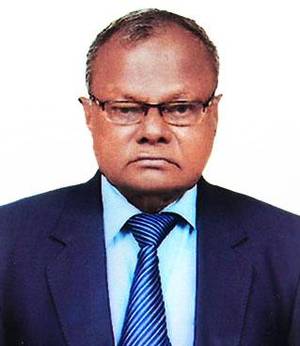
Thirmandas Narayana Gowd, a 77-year-old retired scientist and former head of Rock Mechanics and Mineral Physics division of National Geophysical Research Institute, has been conferred with the ‘Best Citizens of India Award-2017’ by the International Publishing House.

Hailing from Kollapur region of erstwhile Mahabubnagar district, Mr. Gowd completed his masters and Ph.D. in geophysics at Osmania University.

He was recognised for his lifelong research on the stress and orientation of the rock fractures/geological faults as the reason behind the earthquakes in the ‘shield area’ comprising Indian states south of Himalayas, a press communiqué said. He theoretically analysed the role of pore fluid pressure in Koyna earthquake.

He had also received German academic exchange service (DAAD) fellowship for laboratory investigations on his chosen subject.

source: http://www.thehindu.com / The Hindu /Home> News> Cities> Hyderabad / by Special Correspondent / Hyderabad – March 24th, 2018

Hyderabad golfer achieves unique feat

Sri Myneni

Hits two ‘hole-in-ones’ in a single round

Hyderabad golfer Sri Myneni achieved the unique feat of sinking two ‘hole-in-ones’ in a single round at the Boulder Hills Golf Course here on Tuesday.

Myneni, a member of the Boulder Hills Golf Club, achieved this in the third and eighth holes of the Par-72 championship layout in Hyderabad during a casual round of golf with friends.

“I’m still in a bit of shock about it. It is an unbelievable feeling. I have never had a hole-in-one before in my life. Hopefully, this will be the start of many more in the future!” said a visibly excited Myneni in a chat with The Hindu.

The 50-year-old, who is the CEO and co-founder of Knoah Solutions, said, “After the first hole-in one, I just moved on. I was delighted when it happened again in the eight hole and I could not believe it. When we checked with the statistics, we realised that it doesn’t happen often. The implausible odds are 67 million to one! It did not sink into me for a while,” says Myneni, who is a big fan of Tiger Woods.

source: http://www.thehindu.com / The Hindu / Home> News> States> Telangana / by V.V. Subrahmanyam / Hyderabad – March 22nd, 2018

Indian company among finalists in ‘water from air’ competition

Los Angeles-based XPRIZE, which designs incentive competitions to solve humanity’s big challenges, is running the water abundance prize with the support of the Tata Group and Australian Aid.

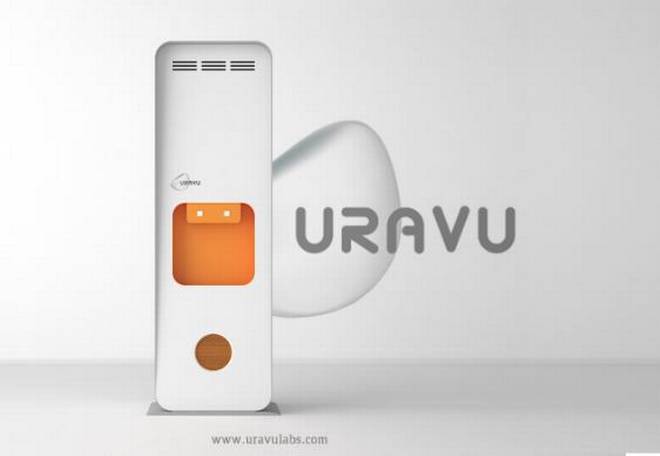
Indian startup Uravu that has developed a technology to create water from the air is among the five finalists in a global competition. The two-year competition is to create a device that extracts a minimum of 2,000 liters of water per day from the air using 100% renewable energy.

The Hyderabad-based company will compete with four other companies in the final round of the Water Abundance XPRIZE, worth $ 1.75 million. The five finalists were selected from 98 teams in the previous round, from 25 countries, and will share a $250,000 milestone prize purse. The winners will receive $ 1.5 million, to be announced in August 2018.

Los Angeles-based XPRIZE, which designs incentive competitions to solve humanity’s big challenges, is running the water abundance prize with the support of the Tata Group and Australian Aid.

Uravu is run by a multidisciplinary team of five, with engineering, sciences, architecture and design backgrounds. The young team says it “believes in working on hard problems which are technologically achievable and also culturally and socially salient.” “Solving challenges around water not only requires amazing technology but also empathy and systems thinking,” a release from XPRIZE said on the team’s vision.

Led by Swapnil Shrivastav, Amit, Bharath, Sandeep and Venkatesh are other members of the group. “….the team is developing a completely off-grid water from air device, spinning together the magic of material sciences and solar thermal energy,” the release said. A scalable device of this nature could revolutionise access to fresh water.

The finalists will begin round 2 testing in July 2018 at a location to be determined. During this phase, teams must fully demonstrate that their device can extract a minimum of 2,000 liters of water per day from the atmosphere using 100 percent renewable energy, at a cost of no more than two cents per liter, XPRIZE said. “At the end of this testing phase, the team whose solution enables the greatest ability to create decentralized access to water – giving people the power to access fresh water whenever and wherever they need it” will win the prize.

source: http://www.thehindu.com / The Hindu / Home> News> International / by Varghese K. George / Washington – March 22nd, 2018

Dravidian language family is 4,500 years old: study

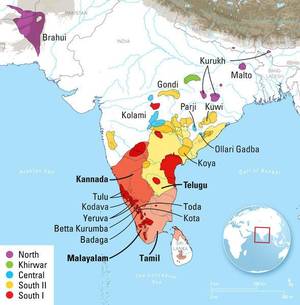
The Dravidian language family’s four largest languages — Kannada, Malayalam, Tamil and Telugu — have literary traditions spanning centuries, of which Tamil reaches back the furthest, researchers said.

The Dravidian language family, consisting of 80 varieties spoken by nearly 220 million people across southern and central India, originated about 4,500 years ago, a study has found.

This estimate is based on new linguistic analyses by an international team, including researchers from the Max Planck Institute for the Science of Human History in Germany, and the Wildlife Institute of India in Dehradun.

The researchers used data collected first-hand from native speakers representing all previously reported Dravidian subgroups. The findings, published in the journal Royal Society Open Science, match with earlier linguistic and archaeological studies.

South Asia, reaching from Afghanistan in the west and Bangladesh in the east, is home to at least six hundred languages belonging to six large language families, including Dravidian, Indo-European and Sino-Tibetan.

The Dravidian language family, consisting of about 80 language varieties (both languages and dialects) is today spoken by about 220 million people, mostly in southern and central India, and surrounding countries.

The Dravidian language family’s four largest languages — Kannada, Malayalam, Tamil and Telugu — have literary traditions spanning centuries, of which Tamil reaches back the furthest, researchers said.

Along with Sanskrit, Tamil is one of the world’s classical languages, but unlike Sanskrit, there is continuity between its classical and modern forms documented in inscriptions, poems, and secular and religious texts and songs, they said.

“The study of the Dravidian languages is crucial for understanding prehistory in Eurasia, as they played a significant role in influencing other language groups,” said Annemarie Verkerk of the Max Planck Institute for the Science of Human History.

Neither the geographical origin of the Dravidian language nor its exact dispersal through time is known with certainty.

The consensus of the research community is that the Dravidians are natives of the Indian subcontinent and were present prior to the arrival of the Indo-Aryans (Indo-European speakers) in India around 3,500 years ago.

Researchers said that it is likely that the Dravidian languages were much more widespread to the west in the past than they are today.

In order to examine questions about when and where the Dravidian languages developed, they made a detailed investigation of the historical relationships of 20 Dravidian varieties.

Study author Vishnupriya Kolipakam of the Wildlife Institute of India collected contemporary first-hand data from native speakers of a diverse sample of Dravidian languages, representing all the previously reported subgroups of Dravidian.

The researchers used advanced statistical methods to infer the age and sub-grouping of the Dravidian language family at about 4,000-4,500 years old.

This estimate, while in line with suggestions from previous linguistic studies, is a more robust result because it was found consistently in the majority of the different statistical models of evolution tested in this study.

This age also matches well with inferences from archaeology, which have previously placed the diversification of Dravidian into North, Central, and South branches at exactly this age, coinciding with the beginnings of cultural developments evident in the archaeological record.

source: http://www.thehindu.com / The Hindu / Home> Science / by PTI / Berlin – March 21st, 2018

Hyderabad varsity faculty wins Young Scientist Award

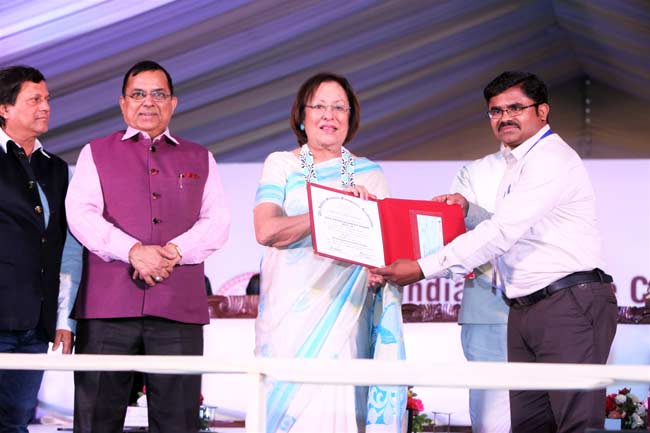
Governor of Imphal Najma Heptulla has presented the Young Scientist Award to Dr Murali Banavoth in 105th ISC.

Dr Banavoth has been conferred with three Young Scientist Awards till now, after his joining the University of Hyderabad in January 2017, according to a press release.

Hyderabad:

For his contributions to the solar energy research during the 105th Indian Science Congress (ISC) held at Manipur University, Imphal from March 16 to 20, Dr Murali Banavoth, faculty in the School of Chemistry at the University of Hyderabad (UoH) has been conferred with the Young Scientist Award in the Materials Science domain.

India Science Congress Association is a professional body under Department of Science & Technology and Ministry of Science & Technology, Government of India. The 105th Science Congress, was attended by about 5,000 delegations including scientists, scholars and researchers from all across the country with a focal theme: “Reaching the unreached through Science and Technology”. Governor of Imphal Najma Heptulla has presented the awards.

Dr Banavoth has been conferred with three Young Scientist Awards till now, after his joining the University of Hyderabad in January 2017, according to a press release. After obtaining his Ph.D., from Indian Institute of Science, he had moved to King Abdullah University of Science and Technology (KAUST) at Solar Center as a post-doctoral associate and carried out pioneering work in the field of hybrid functional materials for solar harvesting, the release added.

source: http://www.telanganatoday.com / Telangana Today / Home / by T Lalith Singh / March 21st, 2018

Power looms to run full steam ahead

Sircilla weavers given orders for school uniforms, Ramzan gifts and Bathukamma sarees

The power loom weavers of Sircilla textile town in Rajanna-Sircilla district have their hands full as the State government has placed bulk orders for school uniforms, Ramzan gifts and Bathukamma sarees.

Following controversies over the distribution of Bathukamma sarees during the last Dasara, this time the government has exercised caution by placing order for Bathukamma sarees only with the Sircilla textile town, providing employment to the weavers and others belonging to various allied sectors of the textile industry, consistently for more than six months.

It may be recalled that last year the government had placed the bulk orders for Bathukamma sarees in the month of May, and the weavers could weave only 60 lakh sarees. In order to avoid last-minute rush, the orders were placed well in advance.

As per the textile calendar, the power loom weavers have already completed working on school uniforms worth ₹55 crore measuring 120 lakh metres under the Rajiv Vidya Mission. They had also handed over fabric worth 10.22 lakh metres to social welfare department and Ramzan gifts of 25 lakh metres for shirting and 30 lakh metres for pyjamas.

A total of 85 lakh sarees worth ₹250 crore would be distributed among the BPL women for the Bathukamma festival this year.

The State government had already placed orders for the sarees and the weavers have also placed orders for the procurement of yarn to begin the production from first week of April onwards. The government’s bulk order would ensure salary worth ₹16,000 per month against the regular salary of ₹8,000 to ₹10,000 per month for the weavers.

Assistant Director (Handloom and Textiles) Ashok Rao told The Hindu that Bathukamma sarees would be weaved by a total of 25,000 power looms providing employment to 10,000 weavers directly and another 10,000 weavers indirectly with allied sectors of power loom industry.

source: http://www.thehindu.com / The Hindu / Home> News> States> Telangana / by K. M. Dayashankar / Rajanna-Sircilla, March 19th, 2018

IT major from city scores big

City-based IT giant Cyient has been positioned in the Winner’s Circle of the HfS Blueprint Report for Aerospace Engineering Services 2017.

The report by HfS Research, a leading analyst firm, is the first time that the HfS Blueprint methodology has been applied to the aerospace and defense (A&D) engineering services marketplace, a press release said.

The Aerospace Engineering Services Blueprint recognised Cyient’s cross-segment expertise and strong focus on mechanical and electronics disciplines.

It acknowledged the company’s end-to-end service portfolio, focus on capability augmentation through acquisitions, and their expertise throughout the aerospace engine life-cycle.

Cyient is a global provider of engineering, manufacturing, geospatial, networks,digital solutions, and operations management services to global industry leaders.

source: http://www.thehindu.com / The Hindu / Home> News> Hyderabad / by Special Correspondent / Hyderabad – March 17th, 2018