Category Archives: Arts, Culture & Entertainment

Tale of Fading Glory

FakhrUlMulkMPOs25nov2014

Hyderabad :

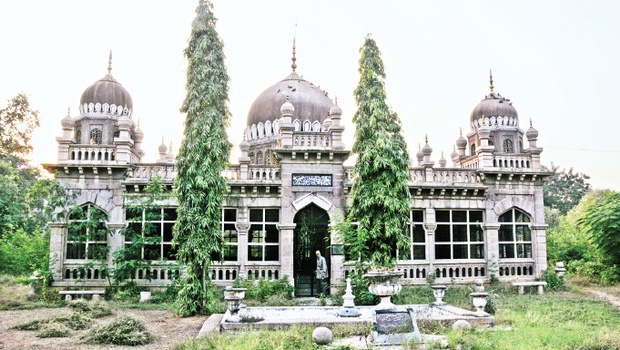
Once a minister in Nizam’s court and a ‘shaukeen-mijaaz’, legend goes that he wore clothes European that were laundered in Paris, ate only European food, threw lavish parties, ‘Umrah-e-Uzaam’ nawab Fakhr-ul-mulk hadn’t wished to live longer to see his small kingdom being swept away by the winds of development, corruption and encroachment. The remnants of the more-than-century-old monument, peeping out from a corner at SR Nagar, tells the story of grandeur and splendour the Nawab was once known for.

Now a private property, as claimed by the great grandson of the aristocrat, the monument has tombs of Fakhr-ul-mulk, his wife, their five sons and other numerous descendants. “Until 1970, we received jaagir from the government to maintain the tomb. But when it stopped, shops and houses started cropping up on the property,” said Mir Sarfaraz Hussain, the great grand son of the nawab and a retired commissioner of commercial tax.
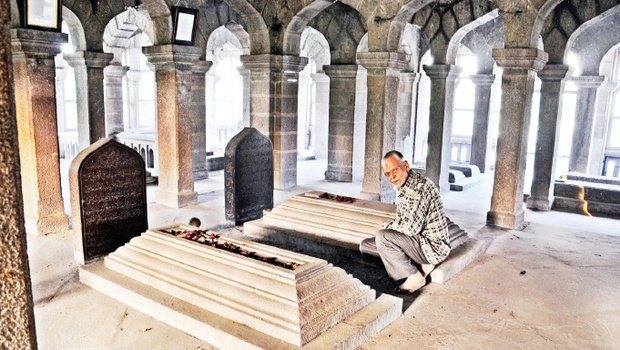
ZananaMPOs25nov2014

Recently the ‘zannana’ or female entrance of the tomb was obstructed when a mulgi was set up along boundary wall of the structure. “We even approached the GHMC commissoner but nothing has come of it,” rues the Sarfaraz Hussain.

Not just encroachment, but in last 100 years, the industrial development and urbanisation tanned down its shine. The structure has endured traffic pollution for decades. With the metro rail passing through the area, the existential troubles have only increased for the the nawab’s tomb. “When the area fell under HMR plan, they negotiated with the encroachers and paid them. If taken away, we fear the beauty of the tomb be lost as it will be further sandwiched in the dust of developing the transport system,” points out the Mir Amanath Hussain, the great great grand of Fakhr-ul-Mulk and adds that the matter is pending in the court at the moment.

Erected on two acres out of the total four acres and 27 guntas estate, the tomb is a pagan symbol of tomb architecture in Hyderabad. It is also marked as the last major monument to be constructed in the Qutub Shahi revival style of architecture. Constructed with stone, lime stone and sand, it is quite modest but imposing at the same time.

The tomb that was awarded the Intach Heritage award in 2011 for being instrumental in the evolution of tomb architecture in Hyderabad, with its creaking iron gate, wild overgrowth, broken fountain, rumbling pool, unkept pathway — are all the tell-tale signs of sheer negligence. It’s ironic that the sixth generation of the family hardly has any knowledge of their glorious past or of the majestic stone structure in which they are associated with.

“Yearly we spend a lot of money on the upkeeping of the tomb but as you can see its not enough. What’s more is that no one takes interest in the upkeep of the place,” rues Sarfaraz Hussain and adds “when family is apathetic towards our ancestors, there is no surprise if the administration takes no heed of our pleas.” While fighting many legal battles, the retired government employee is also battling his relatives to set up a private committee to look after the upkeep of the structure.

M Vedakumar, a former core committee member of Indian National Trust for Art and Cultural Heritage (INTACH) and the President of Forum for Better Hyderabad opines that retaining the rights of the heritage structure and its precinct by the private parties is justified. “The Government should, however, take into account the condition of the structure and provide assistance for its maintenance,” he said.

He feels that there is a need for a heritage cell to look into all the matter pertaining to the upkeeping of heritage structures. And rightly so, for one doesn’t know how many of the 156 heritage sites will exist for our grandchildren to see.

source: http://www.newindianexpress.com / The New Indian Express / Home> Cities> Hyderabad / by Sadaf Aman / November 25th, 2014
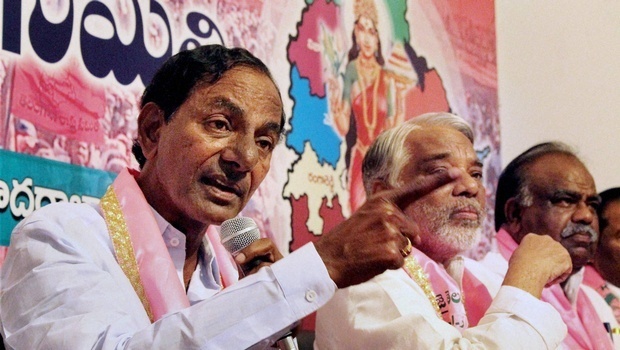
KCR Announces Four Telangana State Icons

KCRiconsTELANGANA18nov2014

Hyderabad :

Chief minister K Chandrashekar Rao on Monday announced Telangana’s four new state icons. They are: the State Animal — ‘Jinka’ (Deer); the State Bird — ‘Palapitta’ (Indian Roller or Blue Jay); the State Flower — ‘Tangedu’ (Tanner’s Cassia); and, the State Tree — ‘Jammi Chettu’ (Prosopis Cineraria).

These icons reflect the culture and tradition of Telangana state and three of them — ‘Tangedu’ flowers, Blue Jay and ‘Jammi Chettu’ — are associated with the popular festivals of Batukamma and Dasara.

While ‘Tangedu’ flowers are used in Batukammas, spotting the Blue Jay on Dasara is considered a good omen and people worship ‘Jammi Chettu’ on that day.

As for the deer, it is present in almost all the districts of Telangana. Though there were numerous proposals from various people for being chosen as the state icons, the chief minister finally zeroed in on these four icons. However, he did not name the official fruit, song, dance and sport of the state

Every state needs to have its own icons, more so a new state like Telangana. While three of the Telangana icons are different from those of the AP, the state bird – ‘Palapitta’ – is common to both the states.

While the icons of the undivided AP were selected keeping Seemandhra in mind, Rao opted for four separate icons to represent Telangana culture and tradition. KCR, who announced his decision on the symbols at a meeting with the officials, explained thus:

‘Jinka’: “Deer is deeply associated with Indian history and a reference to this graceful animal was there in the great epic Ramayana. It can survive in the smallest forests also. It reflects the mindset of the people of Telangana as it is very sensitive and innocent”.

‘Palapitta’: “Lord Rama spotted the ‘Palapitta’ before invading Lanka and vanquished Ravana. ‘Palapitta’ has been chosen to put Telangana on the path of victory”.

‘Jammi Chettu’: “Pandavas had vanquished a large army of Kauravas only after performing worshipping the ‘Jammi Chettu’. They had hidden their weapons on a ‘Jammi Chettu’ when they had been forced into exile in the forests. Now, Telangana requires the blessings of the ‘Jammi Chettu’.

‘Tangedu’ Flower: ‘Tangedu’ flower which is used during the ‘Batukamma’ festival by women folk is the most appropriate choice as the state flower.

source: http://www.newindianexpress.com / The New Indian Express / Home> States> Telangana / by Express News Service / November 18th, 2014

KCR Pays Tributes to Alwar Swamy

Hyderabad :

Telangana chief minister K Chandrasekhar Rao on Saturday paid tributes to social worker and writer Vattikota Alwar Swamy on his birth anniversary. Alwar Swamy, who belonged to Cheruvu Madaram in Nalgonda district, played a key role in the library movement, an official release said.

Chandrasekhar Rao said Alwar Swamy fought against oppression and was even imprisoned for fighting for the poor. Alwar Swamy wrote “Prajala Manishi” novel and also several stories.

Stating that Alwar Swamy gave away his personal library for setting up the present City Central Library, Chandrasekhar Rao said the library would be named after Alwar Swamy. “A statue of Alwar Swamy would also be installed on the premises,” he announced and said the works of Alwar Swamy would be published by the Telugu Akademi.

source: http://www.newindianexpress.com / The New Indian Express / Home> States> Telangana / by Express News Service / November 02nd, 2014

A marathon test of fashion skills

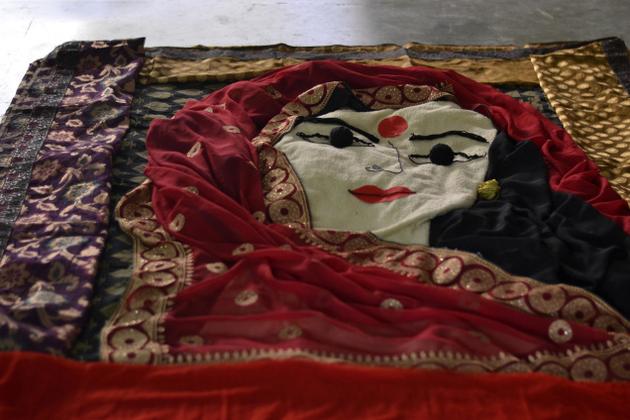
An ethnic creation by Pranaya as part of the Fashion Wall Photo: Sangeetha Devi Dundoo

The first Nift Fashion Olympiad saw students arrive at quirky ensembles and pieces of art

Pieces of paper, a splash of colours, fabric, unbleached yarn, a handful of buttons, dried leaves, empty tender coconut shells… name it and everything somehow became a part of the design. Students pursuing fashion design, art and management who had come together at the National Institute of Fashion Technology campus for the first Fashion Olympiad last week put everything they laid their hands on to good use.

At different venues of the sprawling campus, one could find students gathered in small groups, sometimes arguing if an orange-yellow colour palette should override a green-blue palette to represent a tropical holiday. These were students taking part in a visual merchandising contest, choosing from the two topics — tropical holiday and retro revival.

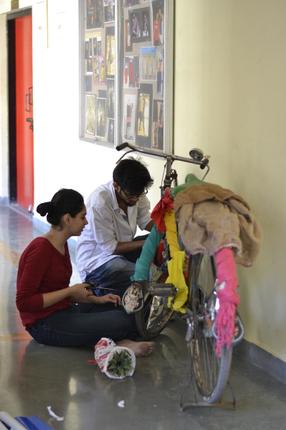
Shivani and her friend work on the concept of Tropical Holiday for a visual merchandising contest Photo: Sangeetha Devi Dundoo

Kavya and Kavya Jha are busy putting together a resort wear ensemble against a beach setting, represented by food, drinks and clothing. A few feet away, Shivani and her friend are decorating a bicycle with colourful props. Tender coconuts and other props in pink, orange and red are being worked upon.

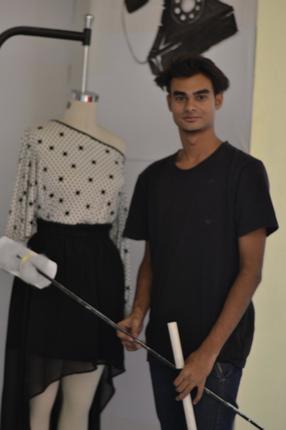
Kumar Shashwat at work for a visual merchandising contest with the theme Retro Revival Photo: Sangeetha Devi Dundoo

A stark departure from the play of colours is Kumar Shashwat’s retro revival set up. In between placing a paper microphone on a make-believe stage of a concert, he says, “I am using images of gramophone and an old-fashioned telephone to take people back to the era of Charlie Chaplin.”

The Nift Fashion Olympiad saw students involved in a fashion marathon over two days, testing them for creative and time management skills.

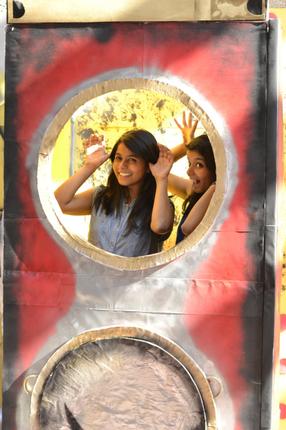
Students get their photographs clicked at a booth as part of Click-o-mania Photo: Sangeetha Devi Dundoo

A quiz contest, photography contest click-o-mania where students captured fashion trends in the city through their cameras and a large fashion wall that had pieces of art put together by students with the use of different textile techniques were all part of the event.

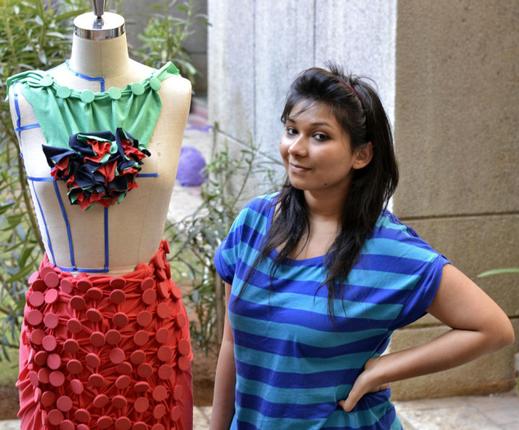
Ruchika, working on an ensemble put together without stitches Photo: Sangeetha Devi Dundoo

In the atrium, we spotted Ruchika designing an innovative ensemble that made use of buttons designed from cola caps. The outfit didn’t require the use of stitches.

Manisha, working with the concept of Midnight Garden, used a mixture of textile yarns and draping techniques to design an outfit without stitches. Elsewhere, Pranaya designed a canvas of an ethnic woman, using layers of different textiles.

Even junk was put to good use to arrive at wearable art pieces or metallic installations in the campus.

source: http://www.thehindu.com / The Hindu / Home> Features> MetroPlus> Fashion / by Sangeetha Devi Dundoo / Hyderabad – November 02nd, 2014

100 SHE teams to curb eve teasing

Hyderabad :

To curb eve teasing against girls, city police on Friday pressed in 100 SHE Teams, who will keep surveillance in all important public places to nab the stalkers.

During a press conference, Hyderabad police commissioner Mahendar Reddy said that the SHE Teams will be working directly under additional commissioner of police (crimes) Swathi Lakra. City police had already identified places and timings where the eve teasing is a menace.

“Stalkers are identified and brought to the CCS police station. Counseling is given to stalker and his familyin the police station. His activity sheet is prepared and kept in the central data baseHis activities are monitored on a daily basis,” commissioner said. Repeat offenders will be charge under Nirbhaya Act. The victims, whose details will be kept confidential, can dial 100 to lodge complaints.

source: http://www.timesofindia.indiatimes.com / The Times of India / Home> City> Hyderabad / TNN / October 25th, 2014

Making a Living From Stage

StageTELANGANA31oct2014

Hyderabad :

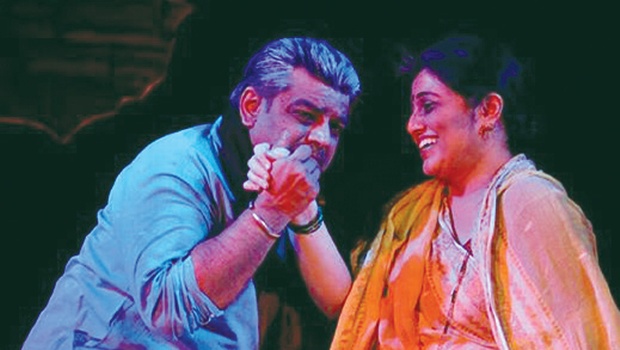
Theatre plays were once a rarity in Hyderabad, but not anymore. The number of plays being staged are increasing and theatre is also finding a lot of takers. However, being a theatre artiste is not considered a full-time profession.

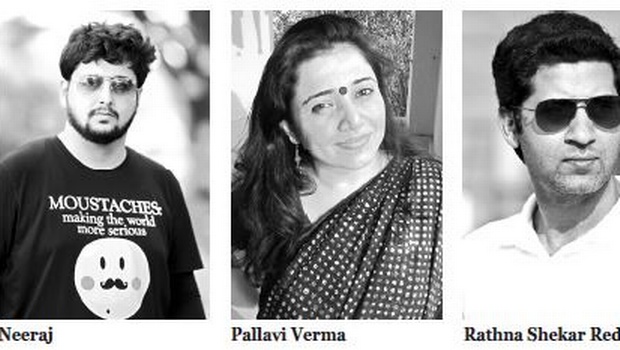
Neeraj Kashikar, a theatre artiste, says he likes theatre because he gets to play a lot of roles and project various emotions through it. He has been into theatre since his school days, but could take it up professionally only in the last four years. And making money out of this was quite a tough job for him in the beginning. “The pay depends on the seniority basis. To increase its popularity, plays should not only be performed in certain pockets of the city, but should be made common for the general public,” says Neeraj, who works in a corporate sector.

“The popularity of a show depends on how well it is publicised and that’s how enough profit can be generated to share it among the participants,” he shares.

While Neeraj thinks that the wages of an artiste largely depends on his seniority, Pallavi Verma, another theatre artiste begs to differ. “Dedication towards the art plays an important role in making a successful career. One should become successful enough to be able to fetch you a respectable income. One has to be smart, focussed and dedicated,” she says. She supports herself through her family business. “I have a passion for theatre but not dedication, which is why I haven’t made it my full-time profession yet,” she adds.

NeerajTELANGANA310ct2014

Agreeing that theatre is not a lucrative profession, Samahaara Theatre Group director, Rathna Shekar Reddy, opines, “It’s important for the people to support themselves with other jobs.” Still, he says, that number of youngsters getting into this profession has been increasing. “At workplace, the environment is stressful. They get to relieve their stress while practising. However, one downside is sometimes they are so stressed, that they may not be able to perform well. So we understand them and work accordingly.”

So how does one make a living while staying true to their passion, Rathna Shekar says, “Many schools and universities recruit theatre artistes to teach drama to their students. One can go for that. They can also work in television. They can try their hand at films too. But the requirement at all these places is limited.”

While many say that making money in this industry is tough, Suzanne Patel and Faiz Al Haq, founders of Mint Tea Creatives, make sure that every artiste, who participates in their drama, gets paid. “It’s all about smart work. If we pick up plays that requires a small cast and perform the same play at around three to four places, we can surely make enough money as every ticket costs around `100 and every place witnesses around 80-100 people.” They also perform plays at corporate companies to add to their revenues.

source: http://www.newindianexpress.com / The New Indian Express / Home> Cities> Hyderabad / by Pratima Shantaveeresh / October 31st, 2014

Go live on radio, make a difference

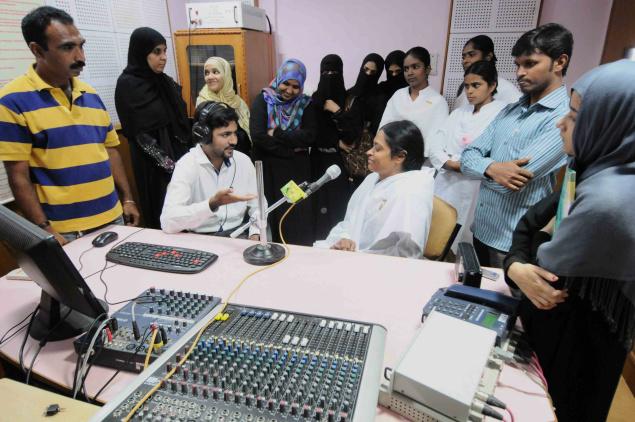
Deccan Radio station manager Zahed Farooqui providing a live interview experience to Radio Jockey trainees at the Siasat daily's office. - Photo: Mohammed Yousuf
Deccan Radio station manager Zahed Farooqui providing a live interview experience to Radio Jockey trainees at the Siasat daily’s office. – Photo: Mohammed Yousuf

Community station Deccan Radio 107.8 FM runs eight-hour social programmes

While we tune in to FM radio stations to listen to our favourite songs and talk shows, the concept of community radios is something that is yet to catch up in the city. And to encourage it and give ordinary people a platform to discuss social issues, Deccan Radio 107.8 FM has begun providing free training to its first batch of students from Monday.

“There is no age bar or qualification required for those interested in enrolling for the training programme. It will benefit those who are interested in participating in social activities,” said Zahed Farooqui, station manager of Deccan Radio 107.8 FM. The programme covers recording, editing, interview techniques and also provides an opportunity to go live on radio.

With a frequency spread across a radius of one kilometre, the radio station also encourages the contribution of local community members. Presently, the station runs eight-hour social programmes, comprising different types of radio shows everyday from 8 a.m. to 12 p.m. and from 4 p.m. to 8 p.m. daily.

“Last time, we conducted a programme for only journalism students, but this time it’s open for everyone,” he mentioned, and further stated that the batch would consist of 50 students. “If more people come forward, we will start more batches. Also, after the course, if we think the students are competent enough to work with us, we hire them,” he added.

source: http://www.thehindu.com / The Hindu / Home> News> Cities> Hyderabad / by Yunus Y. Lasania / Hyderabad – October 28th, 2014

Helping deliver babies is not new to them

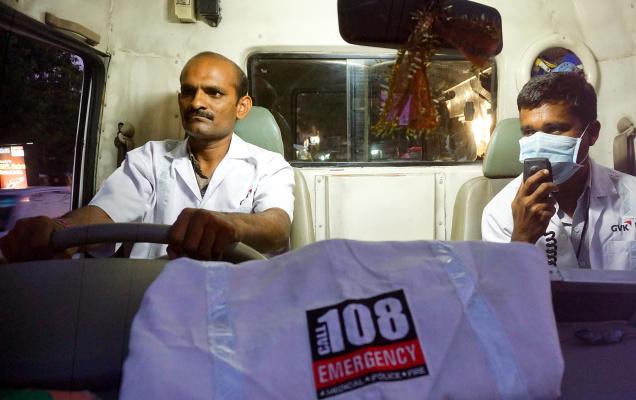
Driver Narasaiah (left) and Emergency Medical Technician Bhumchander (not in picture) helped deliver the baby of a woman in the 108 van on Monday. Photo: Satyanarayana Gola / The Hindu

Deliveries in the emergency van have happened several times prior to Monday’s incident in Hyderabad, says 108 services medical technician. “We are completely ready for such cases,” mentioned Bhumachander, who hails from Karimnagar district.

When 28-year-old Bhumachander, a 108 Emergency Medical Technician (EMT), received a call on Monday afternoon to attend to a pregnant woman, he had no inkling that more than the regular emergency trip to the hospital was awaiting him.

“That we (Bhumachander, and driver Narsaiah) would have to perform the delivery in the emergency van itself was clear 10 minutes after we set off from the Nampally railway station yard,” he recalled. The duo reached the area at around 4 p.m. after receiving a call from a railway officer.

He said the entire operation took about 20 minutes after the woman, Sarda, had gone into labour.

Bhumchander said Sarda was about 40 years old and hailed from Gujarat. “She did not give us any details about herself, but told us that she had travelled alone to Hyderabad. After the delivery, we admitted her to Niloufer Hospital,” he said.

Surprisingly, the EMT said such instances are not rare at all!

“I have helped deliver babies in the car four or five times. The last time, it was near Falaknuma,” he said, and further stated that the emergency vans are complete with all the necessary medical tools required for the task.

“We are completely ready for such cases,” mentioned Bhumachander, who hails from Karimnagar district.

Bhumachander pointed out that other EMTs like him who are in-charge of other areas in the city have also come across instances where they have to assist in delivering babies.

source: http://www.thehindu.com / The Hindu / Home> News> Cities> Hyderabad / by Yunus Y. Lasania / Hyderabad – October 29th, 2014

New Tribal Girls School at Khammam

Khammam:

A tribal girls school established by Integrated Tribal Development Agency (ITDA) was inaugurated by Assembly speaker C Madhusudhana Chary in Rompedu village on Sunday. The school was built at a cost of `80 lakh.

Later, he participated in the opening ceremony of a seeds storage godown, ITDA’s sub-office and farmer’s waiting room at Yellandu.

Mahabubabad MP Ajmeera Seetaram Naik, ZP Chairperson G Kavitha, Yellandu MLA K Kanakaiah, ITDA project officer D Divya and other officials were present at the function.

source: http://www.newindianexpress.com / The New Indian Express / Home> States> Telangana / by Express News Service / October 27th, 2014

Know the magic of ‘four’ in Charminar

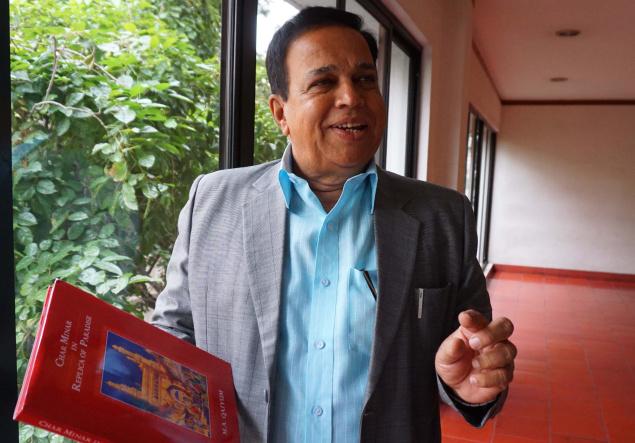
M.A. Qaiyum, historian, with his new book "Charminar in Replica of Paradise" Photo: Satyanarayana Gola / The Hindu
M.A. Qaiyum, historian, with his new book “Charminar in Replica of Paradise” Photo: Satyanarayana Gola / The Hindu

Do you know that great geometric combinations and mathematical reasoning has gone into the construction of Charminar? Visitors are usually astounded by the beauty of the 16 century monument, but not many know how the number ‘char’ (four) and its multiples figure in the designing of the structure. In at least 22 spots the magic of four dazzles.

Of course, the main Minars and arches are four. So are the small arches decorated on each side of the main arch. The number of galleries built in each Minar at different level is four. Again each Minar is divided into four parts. The supporting arches (big petals) to galleries and main dome in each Minar are four. The number of entrance arches built in four directions to enter the Minar is also four. And it was the fourth Qutb Shahi king, Mohd. Quli Qutb Shah, who built the Charminar!

There are also effigies of pigeon, parrot, squirrel and peacock in the delicate stucco work of Charminar. Mind-boggling, isn’t it? If your curiosity is aroused, don’t mind. You can now find all about Charminar, the little known and not so well-known things, in the new book on the monument authored by M.A. Qaiyum, retired deputy director, Department of Archaeology and Museums.

The book titled “Charminar in Replica of Paradise” is, perhaps, the first publication devoted entirely to the legendary Qutb Shahi masterpiece.

“So beautiful, so old and so complete”. One is compelled to repeat this comment of a western traveller after going through the 220-page book. The 190 multi colour photos, illustrations and paintings on real art paper make it a collector’s item.

Mr. Qaiyum traces the 400 years of journey from Qutub Minar to Charminar (1192-1591 AD). He throws light on monuments all over the world which sport Minars to explain the concept of minarets. For instance, there are references with pictures of the first Turkish mosque with four Minars built between 1569-75, the Qaismi Mosque with four minarets built in Iranian architects in Baghdad, the four Minars on the main entrance gate of Emperor Akbar’s mausoleum in Agra. Not just this. The book contains pictures of spiral minaret (Iraq), square minaret (Morocco), cylindrical minaret (Afghanistan).

Mr. Qaiyum discusses in detail the Paradise gardens and their significance in Persian life and culture. A well laid out garden is a symbol of happiness and prosperity. The ‘Char Bagh’ or four garden pattern was introduced in India by the first Mughal king, Babar. This concept was also followed when Charminar was constructed. “In later years the gardens and parks gave way to streets and houses and few know that Hyderabad once had a virtual garden of Paradise”, says Mr. Qaiyum. He can be reached on phone 8978877448.

source: http://www.thehindu.com / The Hindu / Home> News> Cities> Hyderabad / by J.S. Ifthekhar / Hyderabad – October 28th, 2014