Category Archives: Arts, Culture & Entertainment

An architect with broad vision

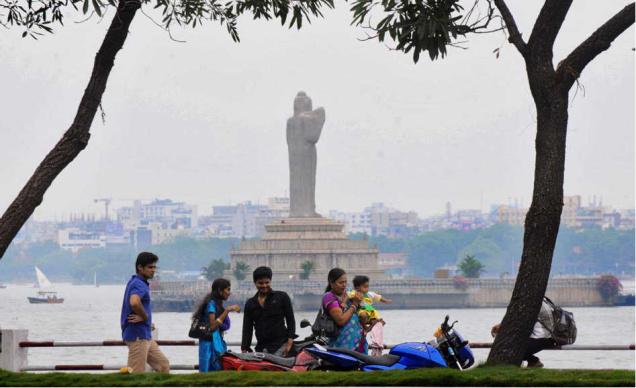
Charles Correa envisioned the Hussainsagar lakefront for the common man.– File Photo

But for Charles Correa’s ideas, Hyderabad would not have been what it is today. Charles never forgot to joke that he had arrived too late in Hyderabad.

The city’s youth are in architect Charles Correa’s eternal debt. For, the seeds of his vision gave Hyderabad its favourite haunt in the modern day – The Necklace Road. It was in 1970s that Mr. Correa’s ideas for developing Hussainsagar lakefront were solicited by the State. The then newly-formed Hyderabad Urban Development Authority (HUDA), however, differed with the architect’s ideas.

V.K. Bawa, who headed the HUDA after it was formed, recollects that he and Mr. Correa differed on architectural matters but interactions with the latter and his peers of the time including B.V. Doshi and Laurie Baker helped him cultivate an understanding of architecture. Reminiscing about his interactions with Mr. Correa during his years in service, Dr. Bawa calls the latter “flamboyant”.

“Charles never forgot to joke that he had arrived too late in Hyderabad, when reminded by people that he should have seen the city during the Nizam era,” he said. Mr. Correa was born in Secunderabad in 1930, but his formative years were spent in Mumbai.

His professional association with Hyderabad began in 1963 when he designed a battery plant for Union Carbide. In 1965 came the ECIL Complex, a successful experiment for its time as it was said to have been designed to conserve energy, when energy conservation or the concept of ‘green buildings’ was decades away. More than two decades later, he designed the Jawaharlal Nehru Institute for Development Banking in Gachibowli.

Noted architect G. Srinivas Murthy terms this futuristic vision of Mr. Correa endearing to both students and professionals.

“We were awed as students given his stature in the profession. He was the first architect to think of architecture in the larger context. It was not just the building. Its utilisation, environs, policy and people were all part of his plans,” Mr. Murthy, who attended Mr. Correa’s funeral on Thursday, said.

In late 1990s, Mr. Correa was again approached by the erstwhile Andhra Pradesh to develop Hussainsagar’s lakefront. The government had several projects planned. He envisioned a lakefront for the common man. Though his ideas were not built up on, Mr. Murthy said the idea of space for public, with venues like People’s Plaza and Jal Vihar incorporate, were seeds of the famed architect’s vision.

source: http://www.thehindu.com / The Hindu / Home> News> Cities> Hyderabad / by Rohit P.S / Hyderabad – June 19th, 2015
Bengaluru misses Charles Correa too

CharlesTELAN19jun2015

The Hyderabad-born architect had strong links with Bengaluru too.

“One has to open up to the skies… only then will your buildings look up to light and ventilation in a scientific way,” renowned architect Charles Correa, who passed away at 84 in Mumbai yesterday, had said during one of his visits to Bengaluru.

He had many ideas on art and architecture and their role in shaping the building environment and urban landscape at large, particularly public spaces of Bengaluru. He passionately combined old-world charm and new age design philosophies that spoke of his strength to retain green values. His book, “A Place in the Shade” strongly exhort habitats to “respond to the overriding parameters of climate, culture and financial resources”.

He was known for his forthright comments on changing Mumabai’s landscape and bringing in local sensibilities into its architectural make-up. The Hyderabad-born architect had strong links with Bengaluru too.

Some of Correa’s buildings well-known in Bengaluru are the Jawaharlal Nehru Science Centre, off Jakkur, his own house that he built for his daughter at Koramangala where Fab India presently operates from, and the renowned LIC Tower or the Vishweshwaraya Centre where his exposed concrete work comes into reference even after 40 years of its historic handling for architects today.

He had strong views on the laying of Metro on M.G. Road. “The track on M.G. Road should have gone underground; or at least the elevated part should have been in steel instead of the ugly concrete expressions with gigantic pillars running all along,” Mr. Correa had said in an interview with The Hindu.

He, however, wanted the metro running elevated especially on the Vidhana Soudha Road. “Although I haven’t studied the buildings and the flow pattern near the Vidhana Soudha, it could have proved a heavenly addition to be above-ground. I can visualise the rail running 20-feet above the ground in steel, this gossamer being a typical contemporary narrative adding to the drama amidst the traditional looking State Assembly and the Karnataka High Court,” he had said.

Architects mourn death

Well-known architect Nagaraj Vastarey says about Correa: “There would never be a masterly figure as him in architecture anymore. Correa, apart from Balakrishna Doshi, was a point of reference to most of us growing up as architects.” Mr. Vastarey explained that in those days studying architecture was different as there wasn’t much of theory, but practical buildings from Correa meant lessons to all of us for references.”

Says architect Sandeep J. of Architecture Paradigm, “Correa rode the architectural world like a colossus, leaving behind a trail of master-pieces that are hard to match. The very aura around the man indicated that you were in the presence of a master architect, making you think twice before you decided to start a conversation.”

We have many architects who create wonderful forms and also those who create great spaces. “Charles Correa stands tall in Indian architecture as a creator of both form and space, as could be seen in Bharath Bhavan, Bhopal,” says Architect Sathya Prakash Varanashi. “His sense of scale, colour and visual aesthetics compliment the overall design, which together resulted in projects like Jawahar Kala Kendra in Jaipur, adding a new dimension to the history of modern architecture in India.”

Mr. Varanashi explained that Correa did not experiment with innovative structures or international styles, which possibly helped him to perfect his ideas across varied building locations and types. Alternately, he explored each project without getting stuck to the earlier projects, to the extent where one building appears totally different from the other. The Bengaluru projects Vishweshwaraya Tower opposite Vidhana Soudha and Jawaharlal Nehru Center for Advanced Studies may not even appear as designed by same architect. Correa had a mind that never got stuck, letting him explore designs like very few world architects could.

Those who have frequented the earlier Fab India showroom in Koramangala, Bengaluru have walked into the house which Correa designed for his stay in Bengaluru! “The fact that a house gets the new avatar as a shop, without losing its spirits, shows the flexibility with which the house has been conceived,” said Mr. Varanashi.

The early buildings of Correa, including the famous Gandhi Smarak Sangrahalay at Sabarmati Ashram, synthesized his international exposure with the local contexts, charted a new road map for architecture in India. His fluency in dealing with residential houses – from LIC Colony in Bengaluru to Kanchanganga Apartments in Mumbai – shows a variety very few architects have been able to even think of.

source: http://www.thehindu.com / The Hindu / Home> News> Cities> Bengaluru / by Ranjani Govind / Bengaluru – June 17th, 2015

Ancient fish market on the road to restoration

Hyderabad :

Set to be razed to the ground by the Greater Hyderabad Municipal Corporation (GHMC) to make way for a modern structure only a few years ago, the ancient fish market in Begum Bazaar is now all set to get a new lease of life. And restoring it back to its past glory is city-based conservation architect Anuradha S Naik, who drew up an assessment report in 2011 on the market that was built by the erstwhile City Improvement Board (CIB) in the 1930s.

“This market is largely run by third generation vendors. After I submitted my analytical report, the GHMC stalled its plans of pulling it down,” the Edinburgh University-educated architect said. Highlighting the “beautiful synchronization of spaces” that the “triangular shaped” market, with courtyards in the middle, showcases, she asserted: “Yes, it needs a lot of repairs, but it definitely can be restored.” The project is being undertaken by the GHMC.

This apart, Naik has a bunch of other exciting projects in her kitty too, and implementing a heritage management plan in the town of Amaravati in Andhra Pradesh is one among them. As a representative of the Indian Heritage Cities Network (IHCN), which was recently appointed by the central government to implement its HRIDAY scheme in the heritage town, Naik, along with her team, will develop some of Amaravati’s distinct heritage sites, create a city museum and enhance the infrastructure in the area to facilitate better tourist inflow.

HRIDAY — the Heritage Development and Augmentation Yojana was launched by the Union ministry of urban development earlier this year with the objective to “preserve and rejuvenate the rich cultural heritage of the country”. The 12 cities selected under this scheme are Varanasi, Amritsar, Warangal, Ajmer, Gaya, Mathura, Kanchipuram, Vellankanni, Badami, Dwaraka, Puri and Amaravati.

“We are collaborating with the International Council for Local Environmental Initiatives (ICLEI) for this project that has just taken off. It is a two-year programme for which we have been sanctioned a fund of Rs 22.3 crore,” Naik said.

“We will also be working closely with the government of AP as it has already done some work in terms of identifying the heritage sites. It is definitely going to be a very interesting project as it is very close to the new capital of the state. We will have to adopt a multi-layered approach so as to ensure that the heritage development project seamlessly merges with the master plan of the area,” she added.

Another ongoing project that Naik fondly talks about is the Domakonda Fort in Nizamabad. She was appointed consultant for the restoration of this approximately 300-year-old structure in 2011 by the Kamineni family to whom this ancient fort belongs.

“Along with using locally available material so as to reduce energy consumption, my focus has also been on creating jobs for locals. The restoration is being done in a very sustainable manner, courtesy the encouragement that came from my client,” Naik shared, stressing the need for focus on ‘environment conscious’ ways of restoration. “In fact, restoration, if carried out properly, drastically reduces energy consumption. Therefore, focus on repairs is the way forward. It is no longer an option but a necessity,” she reiterated.

GRAPHIC

Ongoing projects

* Begum Bazaar fish market: Built by erstwhile City Improvement Board (CIB) in the 1930s, the triangle-shaped market, with a courtyard in the middle, is run by third generation vendors

* Amaravati: As representative of the Indian Heritage Cities Network (IHCN), Naik will develop the Buddhist town’s heritage sites, create a city museum and enhance infrastructure, all in keeping with the new AP capital’s master plan

* Domakonda Fort, Nizamabad: Naik is a consultant for restoration of the nearly 300-year-old fort which belongs to the Kamineni family

QUOTE

We are collaborating with the International Council for Local Environmental Initiatives (ICLEI) for this project that has just taken off. It is a two-year programme for which we have been sanctioned a fund of Rs 22.3 crore Anuradha S Naik, conservation architect

source: http://www.timesofindia.indiatimes.com / The Times of India / Home> City> Hyderabad / TNN / June 14th, 2015

Foodie awards

hym-food award
hym-food award

There were so many enthusiastic participants at the Telangana Food Fest, that the judges confessed it was a tough job to pick the best. Nevertheless a few have scored better than others and walked away with the awards.

The awards were presented to participating hotels in different categories.

In the five-star hotel category, Marriott won the first prize followed by ITC Kakatiya (second prize) and The Park (third prize). The best in four-star category included Hotel Aalankrita (first), Hotel Daspalla (second) and Hotel Golkonda (third) while three-star category winners were Best Western Ashoka (first), Central Court (second) and Hotel Katriya (third).

The winners in the Food Courts category were Aahar bistro (first), Hotel Vivera (second) and Sridevi Swagruha (third) and those adjudged for Best Ambience were Hotel Marriott (first), Aalankrita (second) and Aahar bistro (third).

The Best Food Service category selections went to ITC Kakatiya (first), Aalankrita (second) and Aahar bistro (third) while the best chefs chosen were M.V. Naidu (Marriott), Lakshit (ITC Kakatiya) and Thimma Reddy (The Park).

In the Restaurant category, Dakshina Mantapa (Taj Tristar) was selected as first, Pickles (Basera) as second, and Haritha, Pragnapur, as third.

source: http://www.thehindu.com / The Hindu / Home> Features> MetroPlus / June 11th, 2015

Veteran lawyer still going strong at 90

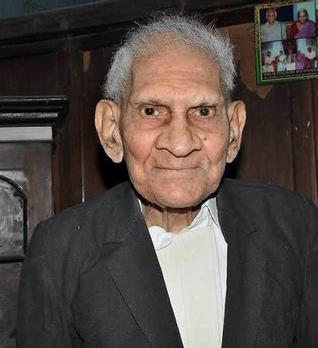
P.V. Raj Ganesh took to writing at the age of 85 and published two works on Western and Indian philosophies.–Photo: K.V. RAMANA.

He has proved that age is no bar to do greater things if one has the will and dedication. He has even overcome physical debility and excelled at writing at an advanced age when most members of his peer group are suffering from various ailments. One of the most senior lawyers in the Nizamabad bar, Penumarthi Venkata Raj Ganesh, fondly called “peddayana” (elderly man) by his juniors and admirers, he took to writing at the age of 85 and published two works on Western and Indian philosophies. Though he attained the age of 90 this year, he intends to publish two more books, “Some Miscellaneous Concepts and Subjects” and “How India Attained the Name of Bharat.” In the first book he discusses at length whether god, soul and rebirth exist. “The manuscripts are ready and I will publish them as soon as possible. I am neither a writer nor a poet. I have got down to this business only to tell something to society,” says Mr. Raj Ganesh with all humility.

Stickler for ethics

Born in Machilipatnam to P.V. Narasimham and Jogamma on July 10, 1925, he completed his education and law in his home town. Seeing an advertisement in a newspaper he had come to Nizamabad to join the Collector’s office as a second grade clerk in 1949. Within two years he left the job and started legal practice at the district court. In his long legal career he had seen so many ups and downs, but never lost heart. Strictly abiding by professional ethics he helped many poor people without charging them anything. He gave up legal practice after 55 years only due to hearing impairment. Though he was not interested in politics some friends and fellow lawyers elected him district president of the Janata Party after the Emergency. During the Emergency he was sent to jail for a few days for his outspokenness and critical comments against Indira Gandhi.

He also got elected as an independent member of the municipal council defeating then chairman and ex-MLA Kishan Das in the 1970s. The council honoured him with the “elderly man” award. Mr. Raj Ganesh is a keen observer of everything and is also an ardent reader of The Hindu for over 60 years now.

source: http://www.thehindu.com / The Hindu / Home> News> National> Telangana / by P. Ram Mohan / Nizamabad – April 06th, 2015

‘My mother had already taught me to win’

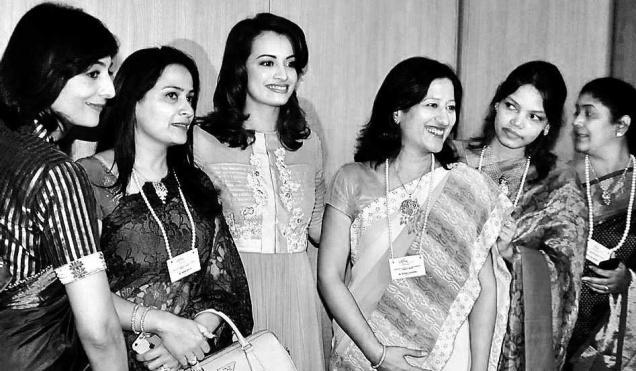
Actor-producer Dia Mirza posing with members of the FICCI Ladies Organisation in Hyderabad on Saturday.– Photo: K. Ramesh Babu

Former MissAsia-Pacific Dia Mirza says she did not have to put in more effort at the contest as her parents had already instilled in her wherewithal to win

When a teenaged Dia Mirza first stepped into the world of beauty pageants by participating in the ‘Miss Asia-Pacific’ contest, she did not enrol with an intention to win. It was only later that she realised that her parents had already prepared her for what she would go through in the event.

“I remember crying a lot. I had written a long letter to my mother on how she had taught me most of the things I was preparing for the programme in Mumbai. All the girls there had come with an ambition to win, but I did not go there to win, but it was very interesting,” explained Ms. Mirza while interacting with members of the FICCI Ladies Organisation (FLO) here on Saturday afternoon.

Dwelling on her Indo-German background, Ms. Mirza mentioned how a 10-day part-time job at the age of 16 led to her first job. “Dr. Neeraj’s Multi Media Studio, which had hired me to work at their kiosk at Walden for those 10 days, had later offered me a full-time job, because they liked my work,” she said.

Ms. Mirza also mentioned how stressed she was during the ‘Miss Asia-Pacific’ competition, which was held in Manila, Philippines in 2000.

“I realised for the first time I was afraid, I could not let my country down,” she stated, and added that apart from acting and producing movies, working with terminally-ill children helped her. “The thing about them is that they don’t whine and ask ‘why me’,” she said.

source: http://www.thehindu.com / The Hindu / Home> News> National> Andhra Pradesh / by Yunus Y Lasania / Hyderabad – March 29th, 2015

This Love has no Boundary

DrGuravaTELANGANA05apr20145

What began as a meeting between the two turned into a love story after years. She was famous, daughter of then chief minister of Andhra Pradesh, Bhavanam Venkatram, whereas he comes from a middle-class background.

But the couple believed they are destined to love each other forever and Dr Gurava Reddy smiles and sings, “Chalo Ek Bar Phir Se, Ajnabee Ban Jaye Ham Dono…”

DrGurava02TELANGANA05apr20145


The beginning of true love story

“I remember the day I first saw her at her house, when I came to Hyderabad from Bapatla to receive my scholarship. It feels like just yesterday. It was in 1975. When I came to Hyderabad again in 1979, that is when my sister-in-law coveyed her feelings for me. It was love. Initially, I was scared, because there is a lot of disparity between us. But looking at her simplicity and her down-to-earth attitude, I also started liking her,” says the orthopaedic and chief joint replacement surgeon Dr Gurava Reddy.
Staying apart

For couples, who get along very well and love one another, everything conspires so that they cannot stay away from one another for long. These two doctors too truly could not bear to be apart. During their courtship period, Dr Gurava wrote countless letters to Bhavani. “We dated for almost seven years before marriage. That time we didn’t have telephone for communication. So, I wrote a letter every day for almost a year when I was in Delhi,” recalls Gurava Reddy.


Support from family

Luckily for them, their families were very supportive. “I loved him, I was sure of that then. I wanted to marry him and live happily ever after. I wrote a letter to my father and explained to him. And since we were relatives (my aunt and his uncle were married), our families accepted us and got us married,” shares Bhavani.

Poles apart

There’s no denying it: all couples fight. “We do fight but it is very minimal now. We are more mature. We do agree that arguments and fights are going to happen considering we are two different personalities but its important how we deal with it. If she is angry, it shows on her face. And I take the initiative to pacify her. We can’t be not talking to each other for more than 24 hours,” says Gurava Reddy adding, “I love to be in the company of 100 people and for her even two is a crowd.”

Partners, who work in similar jobs are more likely to work long hours and be more committed to their profession, but in case of Gurava Reddy and Bhavani, they think that working together can enhance mutual understanding of working conditions and bring a balance in their work-life. “She is my soul and being in the same professions its makes our work easier. She understands and can empathise with me. It is attractive to come home to someone who is the head of the household. I fail to understand, how on earth can someone live alone,” he says.

Keeping the flame alive

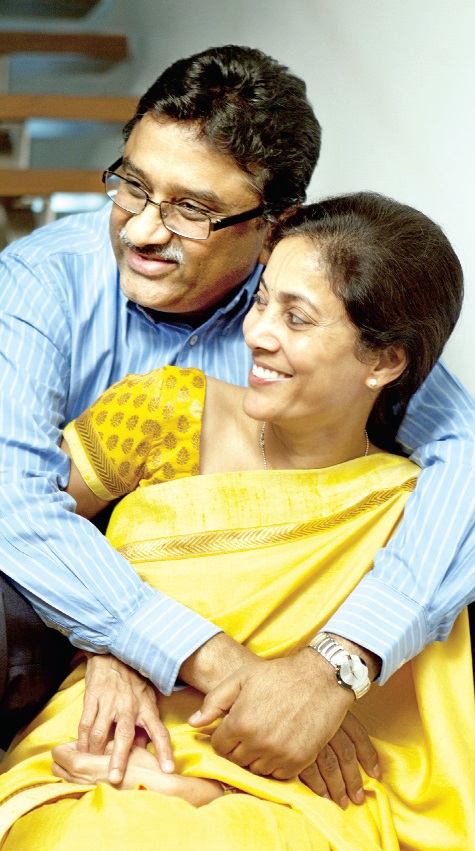
Does love lose its intensity with time? “I don’t think it does, or at least it doesn’t have to. We have been married for 30 years, and we still love each other intensely. It is more exciting, passionate and fulfilling all the time,” feels Gurava.

The couple believes the secret to their long married life is kindness, love and tolerance. “It is a beautiful feeling and we still feel for each other. Marriage is not an event, it is an institution, a process, and we need to nurture it on a regular basis to keep the fire alive. For instance, Bhavani knows that I love piano and for a very long time I was trying to learn but could not due to my busy schedule. So, this Valentine’s Day she got me a tutor. These small things make a lot of difference in relationship,” he says. Adding to this Bhavani says, “We are very romantic. We have had some wonderful holidays. Dr Gurava would often surprise me. For instance, the time when he gifted me an exclusive tennis court. I would love to fall in love with the same person again.”

Meaning of marriage

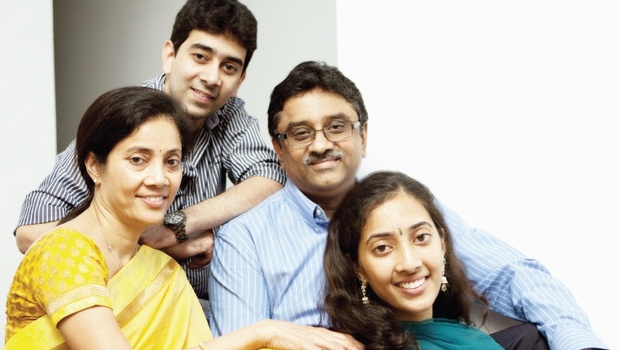
The couple have two children — 27 year-old son Adarsh, an orthopaedic surgeon and 23-year-old Kavaya. They have been happily married to each other for the last 30 years.

“Today, after so many year of togetherness I can tell you that he is the most romantic person in the world,” she says adding, “If either of us ever reach home early, we feel lonely and start enquiring about the other. Filling the loneliness, completing each other – that is what means to be husband and wife for us.”

source: http://www.newindianexpress.com / The New Indian Express / Home> Cities> Hyderabad / by Swati Sharma / April 04th, 2015

Devotional Fervour Marks Rama’s Coronation in Bhadrachalam

SriRamaTELANGANA30mar2015

Bhadrachalam :

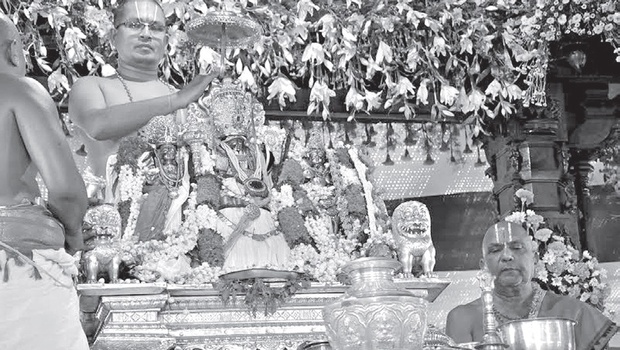
Sri Rama Pattabhishekam was performed on a grand note at Midhila stadium here on Sunday.

The tastefully decorated Mithila stadium echoed to the chanting of hymns as the vast multitude of devotees was engrossed in ‘Ramanama Smaranam’ all through the proceedings.

Special rituals were performed to the divine couple marking the grand coronation ceremony of Lord Rama according to the ‘Pancharatragama Sastra’.

29h-bha

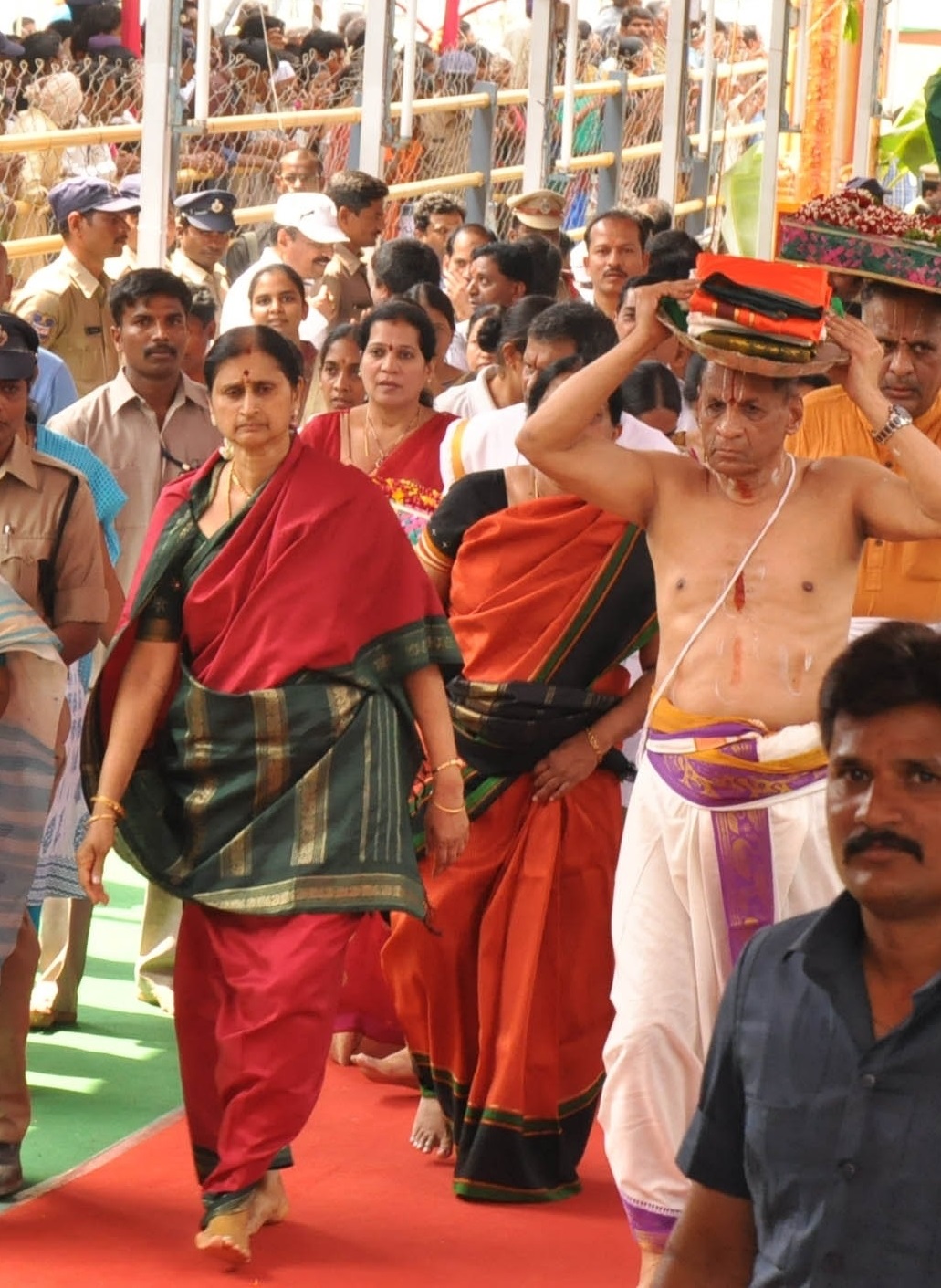
At 10.30 am, the idols of Lord Rama and Goddess Sita were brought in a procession from the main temple to Midhila stadium where the coronation was held. As the processional idols, placed in a decorated palanquin, were carried to the venue in a procession, the devotees stood up and welcomed them with folded hands.
The idols of Lord Rama and his consort Sita, seated facing each other in the midst of the crowds, were adorned with the resplendent jewellery.Governor ESL Narasimhan and his wife Vimala offered silk clothes to the divine couple at the kalyana mandapam.

The temple priests presented padukalu to Lord Rama before pattabhishekam. Later, they adorned the Lord with Pachala Pathakam, Mutyala Haram, sword and crown for the coronation. Goddess Sita was adorned with Chintaku Pathakam and Lakshmana Swamy was adorned with Rama Mada.

The devotees who were desperate to get a glimpse of the ‘Pachala Pathakam’ and ‘Chintaku Pathakam’, were once again found on their feet and hung out of the enclosures.

Later, the temple priests performed Abhishekam to the Lord and the Goddess with holy water brought from various rivers, seas and lakes.Minister Tummala Nageswara Rao, district collector K Ilambarithi, district judge I Ramesh, joint collector D Divya, Aswaraopet MLA Tati Venkateswarlu and temple EO K Jyothi and others witnessed the fete.

source: http://www.newindianexpress.com / The New Indian Express / Home> States> Telangana / by Express News Service / March 30th, 2015

Ugadi awards for Telangana artistes

Hyderabad :

Two film personalities who contributed to the Telangana state struggle have been chosen for Ugadi puraskarams for this year. The Ugadi awards are given annually to personalities from different fields.

The awards announced for the first time by the Telangana government after it came into being also seek to honour film personalities.

Producer-director N Shankar and writer-actor M Bhoopal Reddy have been honoured with the awards for furthering the cause of the Telangana movement on the celluloid.

Shankar produced and directed ‘Jai Bolo Telangana’ for which chief minster K Chandrasekhara Rao penned lyrics. The film was about how the division of the state could make people happy and also help them live together. The movie was a big hit at the box-office in 2011.

“The whole purpose of the film was to explain clearly the reasons why a separate Telangana state was necessary,” Shankar told TOI. He also expressed his happiness at being chosen for the award.

Actor M Bhoopal Reddy who has also been selected for the Ugadi puraskarams played the lead role as Gond tribal leader Komaram Bheem in ‘Komaram Bheem’ which was made in 1990. Allani Sridhar got the state government’s Nandi award for the best debut film director award for ‘Komaram Bheem’.

The film also got the Nandi best film award for national integration. “Bhoopal Reddy perfectly suited for the role. It was important for us to make a film on Komaram Bheem,” Allani Sridhar said. Komaram Bheem who died in 1940 had mobilized the tribals and fought against the Nizam to liberate the tribals in Telangana and end their exploitation.

The film, for which Gautam Ghosh was the music director, however, got a theatrical release in the year 2010. Bhoopal Reddy who played Komaram bheem is also a recipient of the Sahitya Akademi award.

source: http://www.timesofindia.indiatimes.com / The Times of India / Home> City> Hyderabad / TNN / March 19th, 2015

Same story, new approaches

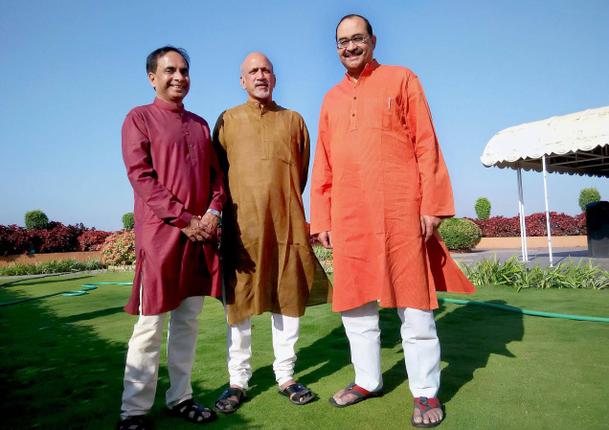
( L to R) Mahalingam, Venkataraman and Sridhar Subhasri of Sri Rama Navami Cultural Festival Photo: K. Ramesh Babu

As the 54th Sri Rama Navami Cultural Festival begins tomorrow, G. Venkatraman, J. Mahalingam and Sridhar Subasri talk about spreading the message of Indian epics and connecting to the younger generation

Every year during the Sri Rama Navami festival celebrations, Hyderabadis, especially Tamilians, gather at Keyes High School to refresh their ties to their roots. As Bharathi Ravikumar makes the announcements in Tamil on stage, the auditorium with a mix of young and old audience reverberates with applause. With a wide panorama of events including discourses, lectures, music programmes, literary and cultural events… the Sri Rama Navami Cultural Festival group helps the gathering to get to know about Indian culture and epics.

This year marks the 54th annual celebrations of the Festival. which takes off tomorrow with a devotional music concert by Bombay Saradha.

The annual cultural festival that was begun by Subasri in the ’60s has since evolved into a unique one. At the first floor of Nagarjuna Fertiliser Office, G. Venkatraman (president), J. Mahalingam (vice-president) and Sridhar Subasri (secretary) recall their journey over the years. “I had moved from Bombay to Hyderabad and was still settling in the new place, when I met Subasri and our association began,” says Venkatraman with a smile. Mahalingam, who came from Chennai and was used to attending such programmes agreed to be one of the office-bearers. While Sridhar, son of Subasri, now continues the legacy, the trio claim it is the fleet of volunteers whose selfless work is the basis for the festival’s success.

Subhasri
Subhasri

“There is a volunteer named Kuppuswamy, who is 80 plus and his enthusiasm in setting the chairs has to be seen to believed,” says Sridhar. Recollecting his growing up years, Sridhar says, “I would be running errands on my cycle and our open house would be buzzing with activities.”

With a crowd of 1000 people, the festival is special, thanks to the illustrious speakers and singers. “We make sure we do not repeat our artistes,” says Venkatraman. Giving an example, Mahalingam, executive director of Nagarjuna Fertilisers and Chemicals Limited says, “Our focus is to present our shows in a unique way. Trichur Brothers presented fusion music, so did Sowmya from Chennai.

This year, Gayathri Girish is presenting an audio visual on Shiva temples.”

Adds Sridhar, “Some of the guests are also professionals like Dushyanth Sridhar, an IT professional, who spoke on Ramayana last year. Dr. Venkatesh is a doctor by profession and is one of the speakers this year.

This is an attempt to connect to the internet crowd and help them look at our epics in a different way.”

The festival’s golden jubilee celebrations were a momentous occasion when the events were held for 50 days! “Fifty years is an important milestone for every institution and we wanted to celebrate the occasion in a grand and fitting manner,” says Sridhar. Another special feature are the sessions on Ramayana. “It is the same story but it is told with new approaches and different formats. Our aim is to build values in children and spread the message,” says Mahalingam.

Venkatraman speaks of the challenges. “We are our own competitors and our real challenge is to maintain the status and see that we do not fall in the quality of artistes.” Sridhar says bringing in more youngsters to the venue is also one of the challenges. “Building a new team and roping in the younger generation is on our agenda,” he points out.

The 54th Sri Rama Navami Cultural Festival is scheduled from March 21 to April 4 at Keyes High School from 6.30 p.m. onwards

source: http://www.thehindu.com / The Hindu / Home> Features> Friday Review / by Neeraja Murthy / March 19th, 2015